
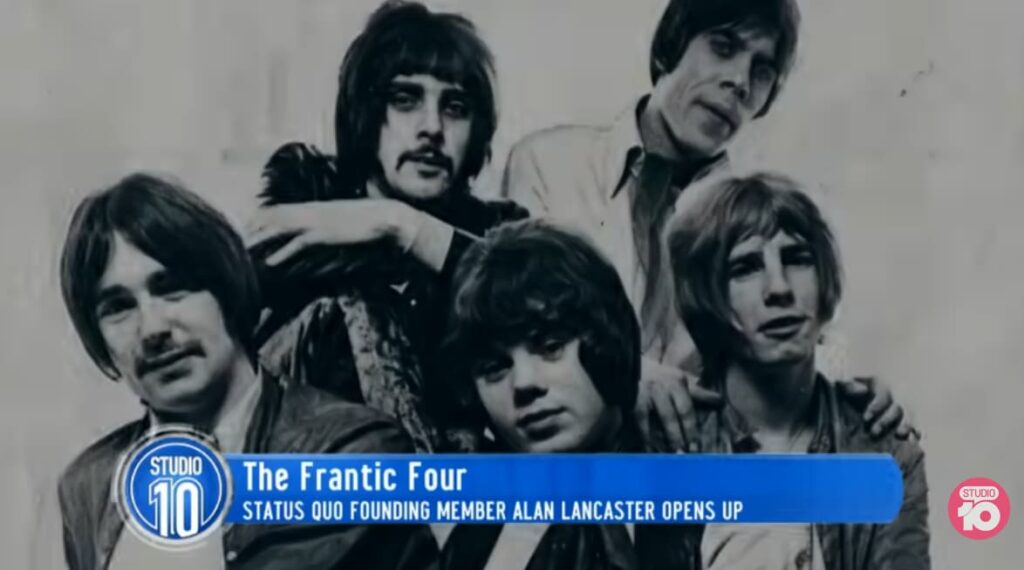
Alan Lancaster Reflects on Status Quo’s Legacy in Candid Studio 10 Interview
In a wide-ranging interview on Australia’s Studio 10, founding Status Quo bassist Alan Lancaster offered one of the most honest accounts of the band’s rise, internal struggles and lasting legacy. Lancaster, whose influence on British rock is widely acknowledged, shared insights drawn from a career that spanned more than five decades with one of the United Kingdom’s most successful rock acts.
Lancaster was a core member of Status Quo from the band’s inception in 1967 until his departure in 1985, and he returned briefly for the reunion tour in 2013 and 2014. During his early years with the band, Quo developed a distinctive hard rock sound built around steady rhythms and tightly locked guitar lines, a style that propelled the group into major commercial success throughout the 1970s. Albums and singles from that period made a mark on the charts and established Status Quo as one of Britain’s most dependable live acts.
In the Studio 10 interview, Lancaster spoke frankly about the pressures and tensions that eventually fractured the band’s original lineup. He attributed part of the discord to the prevalence of cocaine within the music industry at the time, an issue that he felt eroded the sense of brotherhood among band members. According to Lancaster, the drug culture surrounding rock music in the late 1970s and early 1980s helped create divisions that made working relationships less stable and ultimately contributed to the lineup changes that followed.
The bassist also discussed financial frustrations that grew over the years. Having helped form the group and contribute to its early success, Lancaster indicated that disputes over royalties and business decisions left him feeling undervalued and sidelined. He described a sense of injustice regarding how the band’s financial rewards were distributed, observing that while others profited extensively from Status Quo’s long career, the musicians themselves did not always see corresponding returns.
Despite these challenges, Lancaster’s influence on the band’s sound and work ethic remained significant. His bass playing was foundational to Quo’s signature groove, and his songwriting and vocal contributions appeared on many key tracks. Audiences at live shows and on records heard a musician deeply committed to a collective musical vision.
Later in life, Lancaster reflected on Status Quo’s enduring appeal with measured perspective. The reunion tours in the 2010s allowed him to reconnect with fans and former bandmates, even as health struggles increasingly limited his mobility. His comments in the Studio 10 interview revealed a nuanced view of rock stardom—one that acknowledged both the accomplishments and the personal costs of life in a band that defined a genre.
For many fans, the interview provided rare insight into the personal experiences behind Status Quo’s long career, reminding listeners that the stories behind rock history often contain both triumph and adversity.