
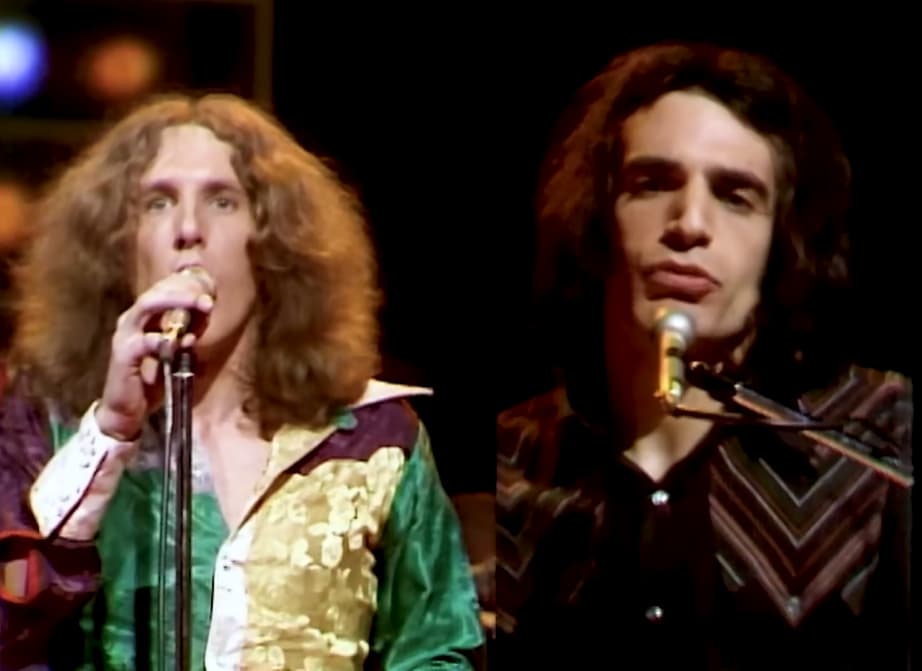
A hypnotic warning about temptation and consequence, delivered with cool precision and restless groove
When Steely Dan performed “Do It Again” on The Midnight Special on February 9, 1973, they brought to television one of the most distinctive songs of the early 1970s. Originally released in 1972 on their debut album Can’t Buy a Thrill, the track climbed to number six on the Billboard Hot 100, announcing the arrival of a band that refused to sound like anyone else on the radio. By the time of this performance, Steely Dan were no longer a promising curiosity. They were a fully formed statement, blending jazz sophistication, rock attitude, and lyrical ambiguity into something quietly subversive.
“Do It Again” is built on a sense of circular motion, both musically and thematically. From its hypnotic electric sitar line to its steady Latin-influenced rhythm, the song feels trapped in a loop, mirroring the behavior it describes. Donald Fagen’s vocal delivery is deliberately detached, almost conversational, yet loaded with implication. He does not judge his characters. He simply observes them, watching as they repeat their mistakes with weary inevitability. The result is unsettling, not because it is dramatic, but because it is familiar.
Lyrically, the song explores cycles of compulsion and consequence. Gambling, betrayal, reckless desire, and the false promise of escape all drift through the verses. Each warning is delivered calmly, as if the narrator already knows the outcome. This emotional distance is essential to the song’s power. Rather than pleading or condemning, Fagen presents inevitability as a fact of life. People do not change because they are told to. They change only when the cost becomes unbearable, and often not even then.
The Midnight Special performance captures Steely Dan at a fascinating crossroads. At this point, they were still a touring band, still willing to place musicianship at the center of their public identity. The television setting strips away studio perfection and exposes the architecture of the song. The groove remains locked and unyielding, the electric sitar line cutting through the mix like a recurring thought you cannot silence. The band’s restraint is striking. There is no attempt to dramatize the message. The tension lies entirely in repetition and control.
This performance also highlights the contrast between image and intent. On stage, Steely Dan appear composed, almost understated, yet the song itself is quietly corrosive. It dismantles the myth of the carefree risk-taker and replaces it with something colder and more honest. The thrill fades. The habit remains. That tension between surface calm and inner decay would become a defining trait of their catalog.
Looking back, “Do It Again” stands as an early blueprint for everything Steely Dan would refine over the next decade. Precision, irony, moral ambiguity, and an unwavering commitment to craft are all present here. The Midnight Special appearance preserves the moment when those elements were still raw enough to feel dangerous. It is not just a performance. It is a document of a band teaching popular music how to sound smarter without losing its pulse, and reminding us that some lessons are learned only by repeating the same mistakes, again and again.
 Oldies Songs