
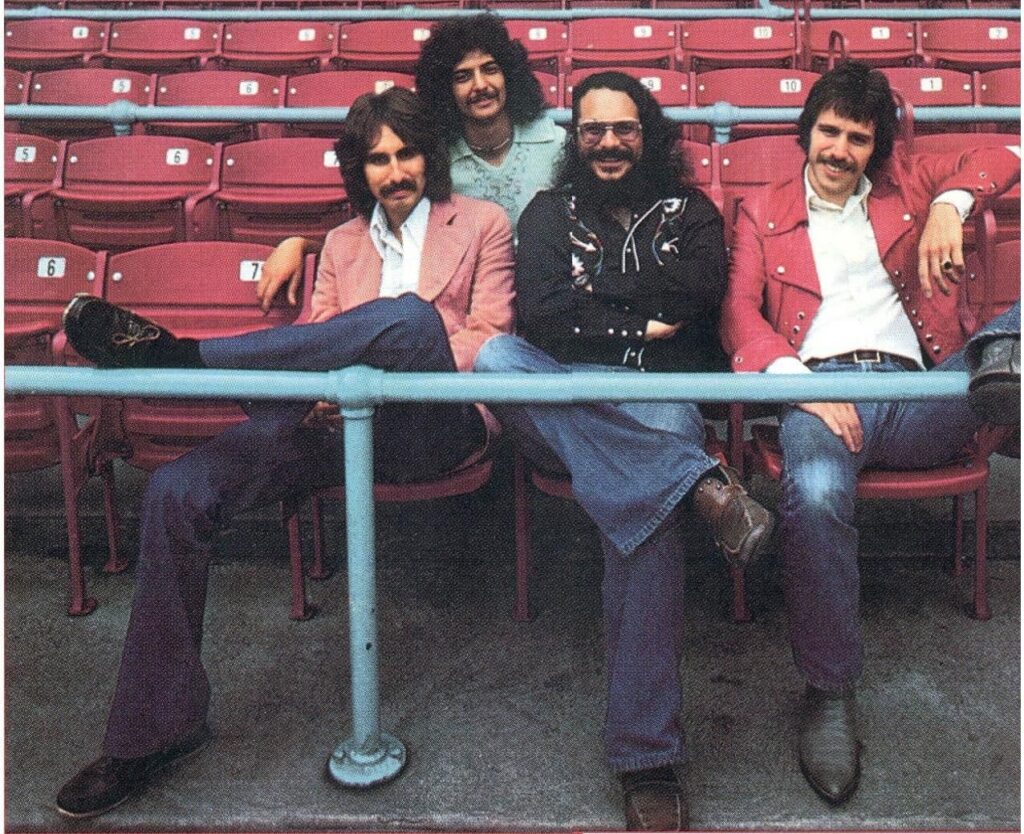
The Raw, Unadulterated Groove: James Gang’s Declaration of Funk-Rock Power
In the scorching summer of 1970, as rock music continued its explosive evolution, a raw and electrifying surge of sound emanated from Ohio, seizing the airwaves with undeniable force. That sound was “Funk #49” by the James Gang, a visceral declaration of intent that cemented their place as pioneers of hard rock and a burgeoning funk-rock fusion. Released as a single from their second album, James Gang Rides Again, this track became an immediate hit, peaking at number 59 on the Billboard Hot 100, and more significantly, becoming an enduring classic of classic rock radio. It’s a song that, even today, ignites a primal urge to move, showcasing a ferocious energy that was both innovative and deeply rooted in the blues.
The James Gang, at this point, was a powerful trio featuring the prodigious talents of Joe Walsh on guitar and vocals, Dale Peters on bass, and Jim Fox on drums. While their debut album, Yer’ Album, had garnered critical attention, James Gang Rides Again was their true breakout, propelled in large part by the infectious intensity of “Funk #49.” The band had already established a reputation for their dynamic live performances and their ability to blend heavy blues-rock with elements of psychedelia. “Funk #49” was a distillation of this raw power, a testament to their tight musicianship and Walsh’s burgeoning songwriting and guitar wizardry. The title itself, “Funk #49,” suggests a continuation or evolution from a previous track (“Funk #48” from their debut), signaling a deliberate exploration of rhythmic, groove-oriented rock that was still hard-hitting. It was a conscious push into a sound that felt both familiar and thrillingly new, particularly for a rock band of their stature.
Lyrically, “Funk #49” is a concise and unpretentious statement, a playful yet direct address to a woman whose attention the narrator craves. The lyrics are stripped-down and focused on the immediate, almost primal, desire for connection and recognition. Lines like “I’m so glad you’re home / I’m so glad you’re here” are delivered with a palpable sense of relief and eagerness, setting a personal tone against the backdrop of the driving rhythm. The song isn’t about complex narratives or deep introspection; it’s about the pure, unadulterated excitement of a moment, the thrill of reunion, and the captivating power of attraction. Walsh’s vocal delivery is both conversational and charismatic, drawing the listener into this intimate yet energetic exchange. The simplicity of the lyrics belies the song’s immense power, allowing the raw emotion and the undeniable groove to take center stage.
Musically, “Funk #49” is a masterclass in economic rock and roll. From the very first percussive strike, the song establishes an irresistible, syncopated groove that is both tight and incredibly loose. Jim Fox’s drumming is foundational, laying down a propulsive, funky beat that drives the entire track. Dale Peters’s bassline is thick and incredibly nimble, locking in perfectly with the drums and providing a deep, resonant bottom end that is the essence of the “funk.” But it is Joe Walsh’s guitar work that truly elevates the song to iconic status. His riffs are instantly recognizable – gritty, wah-drenched, and brimming with attitude. He weaves in and out of the rhythm, delivering a series of short, sharp, perfectly placed solos that are both bluesy and incredibly inventive. The interplay between the instruments is telepathic, showcasing a trio operating as a single, cohesive unit. The famous “talk box” effect on his guitar (though often mistaken for later innovations, it’s actually an early version of the effect, possibly achieved by routing the guitar through a horn into a microphone) adds a distinctive, almost vocal quality to his playing, further emphasizing the “funk” in its title. The production is raw and unfussy, capturing the band’s live energy with remarkable fidelity.
“Funk #49” endures as a quintessential rock anthem, a song that defined a particular moment in music history and showcased the electrifying talent of the James Gang, particularly Joe Walsh. For those who remember its relentless rotation on AM and FM airwaves, it evokes a powerful nostalgia for a time when rock was evolving, embracing new textures and grooves with fearless abandon. It’s a timeless reminder of the sheer power of a band locked into an undeniable rhythm, a raw and exhilarating blast of energy that still feels as vital and electrifying today as it did more than five decades ago.