
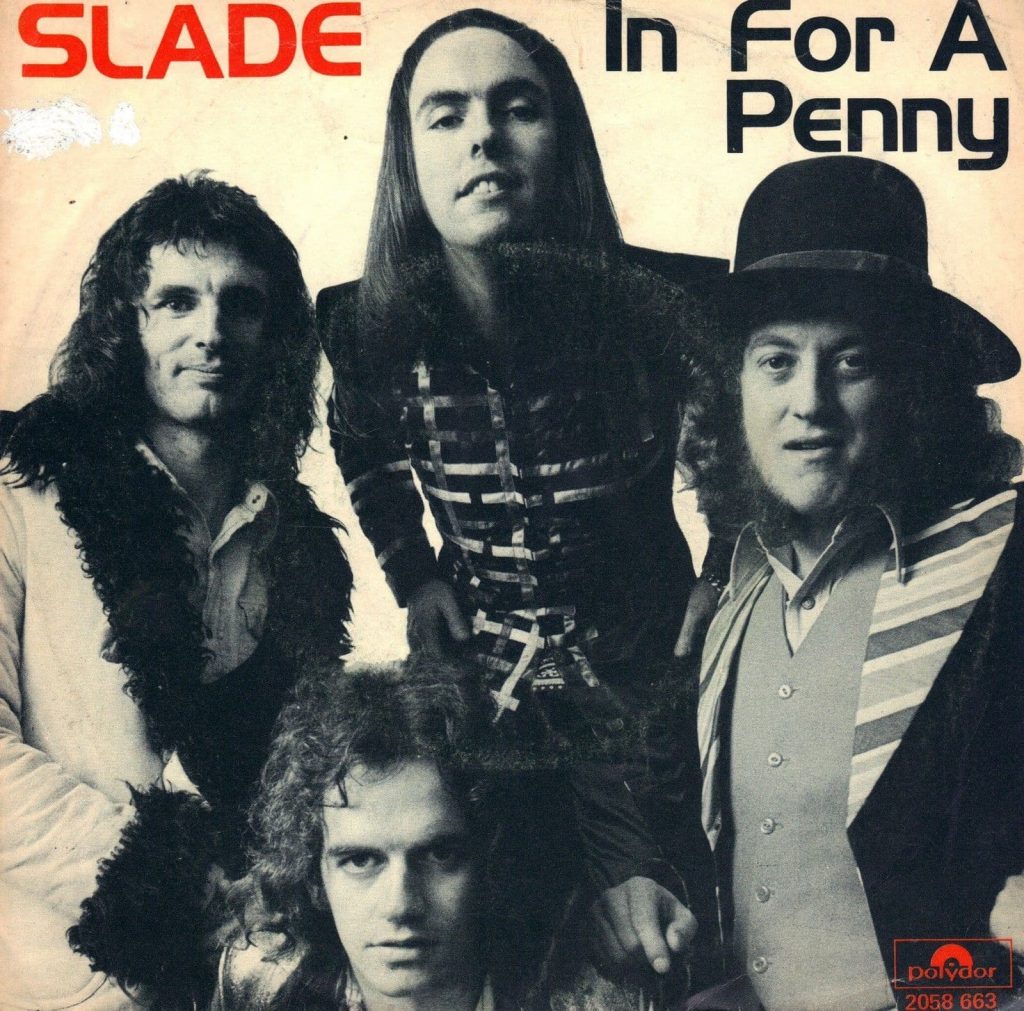
A Desperate and Theatrical Gamble on Fate, a High-Stakes Anthem for a Band at a Critical Crossroads.
By 1975, the unstoppable glitter bomb that was Slade was starting to lose its explosive force. The band that had dominated the UK charts with a string of joyous, raucous number-one hits was facing a new, uncertain era. The glam rock wave they had helped create was receding, and new sounds were beginning to emerge, leaving the kings of the genre at a dramatic crossroads. It was in this moment of immense pressure that Slade made a bold, theatrical move with their single “In for a Penny.” Released in late 1975, a full year before its inclusion on the album Nobody’s Fools, the song was a high-stakes gamble. While it reached a respectable number 11 on the UK Singles Chart, it failed to break through in the American market, a fact that only deepened the drama of the band’s uncertain future. Its power lies not just in its musicality, but in its profound, almost heartbreaking, reflection of a band betting everything on a single, defiant song.
The story behind “In for a Penny” is a classic rock and roll drama of resilience and hope. The band had spent the better part of the previous year trying to crack the elusive US market with their album Slade in Flame, but their American dream proved to be a difficult one. They returned to the UK exhausted, but not defeated. The song is a theatrical monologue, an unvarnished confession of their plight. It’s a defiant admission that they were down, but not out, and that they were willing to put everything on the line for a comeback. The lyrics, written by Noddy Holder and Jim Lea, are a direct reflection of this emotional state, filled with imagery of gambling and high-stakes risk. The song’s very existence feels like a “penny” thrown into the wishing well of their career, a desperate prayer for a return to glory.
The theatrical flair of “In for a Penny” is a key part of its dramatic narrative. The song begins with an unexpected, almost vaudevillian piano and a jaunty banjo, a sound that feels like a defiant nod to the band’s working-class roots. But it quickly gives way to the powerful, stomping glam rock that made them famous. The true dramatic climax, however, comes from Noddy Holder’s signature raspy vocal and his famous spoken-word section. As the music builds to a fever pitch, he growls, “I’ve gone for broke / I’m goin’ to gamble.” This isn’t just a lyric; it’s a raw, emotional confession, a moment of profound vulnerability from a man who was always the face of unbridled rock and roll confidence. This moment makes the song not just an anthem, but a deeply personal piece of art, a mirror reflecting the band’s desperate attempt to stay relevant.
For those of us who came of age with this music, “In for a Penny” is more than a song; it’s a powerful time capsule, a reminder of an era when rock music was a raw, theatrical reflection of life’s struggles. It’s a nostalgic echo of a time when we cheered for the underdog and believed in the power of a simple, honest rock anthem. The song endures because the emotion it portrays—the courage to keep fighting, to risk everything for what you believe in—is timeless. It remains a beautifully raw and profoundly emotional piece of rock history, a perfect document of a band’s dramatic, high-stakes gamble on its own destiny.