
“Yesterday’s Hero”: The Poignant Echo of Fleeting Fame
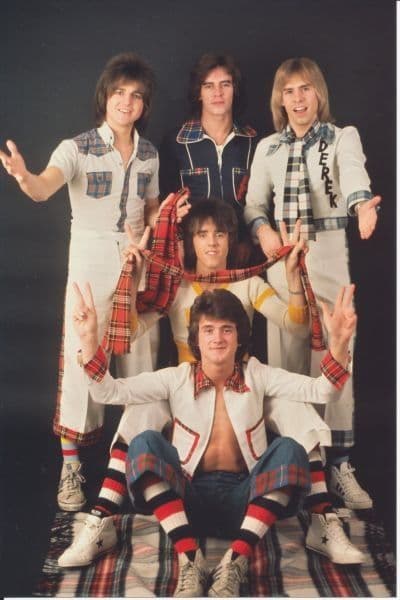
For those of us who lived through the vibrant, often frenetic, pop landscape of the 1970s, the Bay City Rollers were an undeniable phenomenon. With their signature tartan attire, infectious hooks, and a charisma that sent teenage girls into dizzying frenzies, they epitomized “Rollermania.” Yet, amidst the exuberant shouts of “S-A-T-U-R-D-A-Y Night!” and the dizzying heights of chart success, there was a song that quietly, perhaps even presciently, hinted at the ephemeral nature of their fame: “Yesterday’s Hero.” Released in 1976 on their album “Dedication,” the Bay City Rollers’ version of “Yesterday’s Hero” made a respectable showing on the charts, peaking at #54 on the Billboard Hot 100 in the United States and reaching #15 in Australia and #13 in Germany. While not as explosively successful as some of their earlier global hits like “Saturday Night” or “Bye Bye Baby,” its presence on their album and its chart performance solidified its place in the Rollers’ discography and in the memories of their dedicated fans.
“Yesterday’s Hero” wasn’t an original composition by the Scottish quintet. It was a cover, first penned and released by Australian singer John Paul Young in 1975, where it became a significant hit, reaching #8 in Australia and even topping the charts in South Africa. The song’s genesis actually lies in the personal experiences of its Australian writers, George Young (brother of AC/DC’s Angus and Malcolm Young) and Harry Vanda, both of whom had experienced the rollercoaster ride of being teen idols themselves as members of the legendary 1960s Australian band, The Easybeats. They understood, intimately, the intoxicating ascent and the inevitable, often brutal, descent from the pinnacle of pop stardom. This firsthand knowledge imbues “Yesterday’s Hero” with an authenticity that resonates deeply, long after the tartan scarves have been folded away.
The song’s lyrical narrative paints a vivid, almost melancholic, picture of a pop star reflecting on a past glory. “When I walk down the street, see the people who stop and stare and say, ‘Haven’t I seen that face somewhere a long time ago?'” These opening lines immediately plunge us into a sense of nostalgia, a bittersweet recognition of a once-adored figure now facing the fading echoes of their prime. It speaks to the universal experience of aging, of watching time march on, but with a particular poignancy for those whose youth was lived under the harsh, often fickle, spotlight of fame. The hero isn’t a tragic figure, but rather a reflective one, acknowledging the transient nature of adoration. “I don’t wanna be yesterday’s hero, and yesterday’s hero is all that I’m gonna be if I don’t get together, make a new start and be somebody better.” This line, in particular, carries a hopeful undertone, a yearning for reinvention, a desire to escape the confines of a past identity that no longer serves. It’s a testament to the human spirit’s capacity for resilience, even when confronted with the stark reality of waning public interest.
For those of us who grew up with the Bay City Rollers, “Yesterday’s Hero” might not have been the chant-along anthem of choice, but it holds a different, perhaps more profound, significance. It’s a reminder of the fleeting nature of trends, the often-cruel cycle of celebrity, and the quiet dignity that can be found in navigating the aftermath of a meteoric rise. Listening to it now, decades later, it stirs a potent mix of nostalgia for the giddy innocence of those years and a deeper appreciation for the song’s remarkable foresight. The Bay City Rollers, for all their seemingly carefree exuberance, delivered a track that, perhaps unintentionally at the time, offered a poignant commentary on their own destiny. It’s a song that invites us to reflect on our own “yesterdays,” to consider the heroes of our own youth, and to ponder what it means to move forward when the spotlight inevitably shifts. It’s a bittersweet melody that, ironically, ensures the enduring legacy of a band whose very existence was a celebration of the fleeting “now.”