
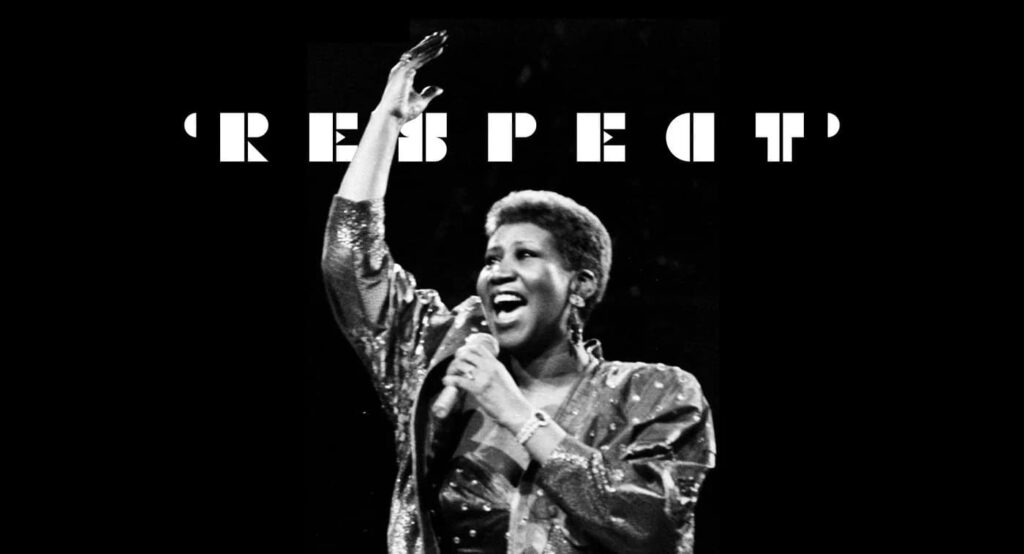
“Respect”: A Roaring Anthem for Dignity, Self-Worth, and Unconditional Reverence.
There are songs that transcend mere entertainment to become cultural touchstones, embodying the very spirit of a movement and resonating with a power that echoes through generations. Aretha Franklin’s iconic 1967 rendition of “Respect” is precisely such a phenomenon – a blistering, soulful, and utterly undeniable declaration of demand for dignity that transformed a simple R&B tune into a universal anthem for civil rights, feminism, and human self-worth. Released at a pivotal moment in American history, this track wasn’t just a hit; it was a revolution distilled into three minutes of pure, electrifying soul. For older readers, it conjures vivid memories of a transformative era, of social upheaval, and the electrifying realization that a song could be both a call to action and an exhilarating celebration.
Upon its release as a single in April 1967, “Respect” exploded onto the charts, becoming Aretha Franklin’s signature song and one of the most important recordings of the 20th century. It soared to the coveted number 1 position on the Billboard Hot 100 chart in the United States, where it remained for two weeks, and also dominated the Billboard Hot Rhythm & Blues Singles chart, topping it for eight consecutive weeks. Its success was immediate and overwhelming, solidifying Franklin’s status as the “Queen of Soul.” The song was a highlight on her Atlantic Records debut album, I Never Loved a Man the Way I Love You, which itself was released in March 1967 and reached number 2 on the Billboard Pop Albums chart and number 1 on the R&B Albums chart. For many of us, hearing Franklin’s powerful voice declare “R-E-S-P-E-C-T” was an awakening, an invitation to a new level of musical and social consciousness.
The story behind “Respect” is a fascinating tale of reimagining and reclaiming. The song was originally written and recorded by the legendary rhythm and blues artist Otis Redding in 1965. Redding’s version, a pleading request from a man to his woman, was a minor hit, showcasing his incredible vocal talent. However, it was Aretha Franklin’s transformative reinterpretation that truly elevated the song to legendary status. Working with producer Jerry Wexler and the seasoned musicians at FAME Studios and Atlantic Records, Franklin took Redding’s framework and flipped its perspective entirely.
Franklin’s version is not a plea; it’s a demand. She infused the song with a fierce, independent spirit, adding the now-iconic “R-E-S-P-E-C-T” spelling of the word and the powerful “sock it to me” ad-libs, which were contributed by her sisters and backup singers Erma and Carolyn Franklin. This shift in perspective, from a man asking for respect to a woman demanding it unequivocally, resonated deeply with the burgeoning feminist movement and the ongoing struggle for civil rights in America. Franklin didn’t just sing the words; she embodied them, injecting every syllable with an urgency and authority that was both thrilling and empowering.
The meaning of “Respect” is multi-layered and profoundly impactful. On a personal level, it’s a powerful declaration of self-worth within a relationship, asserting that love and loyalty must be reciprocated with fundamental dignity and consideration. But far beyond the romantic, “Respect” became an anthem for the civil rights movement, with its call for respect echoing the demands for equality and justice for African Americans. Simultaneously, it was embraced by the burgeoning feminist movement as a rallying cry for women demanding to be treated with equal regard and autonomy. Franklin’s delivery, dripping with conviction and raw emotion, transcends any single interpretation, making the demand for “respect” a universal plea for fundamental human dignity.
For older readers, “Respect” evokes a potent surge of memories from a pivotal era. It recalls the intensity of social change, the vibrant soundtrack of protest and empowerment, and the feeling of witnessing history unfold. It reminds us of Franklin’s unparalleled artistry, her ability to channel collective aspiration into a singular, electrifying performance. Even today, the song retains its raw power, a timeless reminder that respect is not merely given, but demanded, earned, and celebrated with every powerful note. It stands as a magnificent testament to Aretha Franklin’s genius and the enduring, transformative power of music to shape consciousness and inspire generations.