

A weary prayer softened by age, memory and the quiet truth of time passing
When Bob Dylan revisited “Knockin’ On Heaven’s Door” during his 1995 MTV Unplugged performance, the song reentered the charts around the world and gained renewed attention from both longtime followers and a younger generation discovering Dylan through the acoustic revival of the era. Originally written for the 1973 film soundtrack Pat Garrett and Billy the Kid, the composition had already become one of Dylan’s most iconic works. Yet on the Unplugged album, the song returns not as a statement from a young songwriter dabbling in mortality, but as a reflective hymn sung by a man who had lived decades longer than the character who first inspired it.
This performance feels stripped not just of electric instrumentation, but of ego and urgency. Instead of the rough defiance that marked his early years, Dylan offers something gentler. His voice during this recording is weathered and imperfect, yet deeply compelling. Cracks and grain carry the emotional weight that smoothness could never hold. He approaches the song less like an anthem and more like an intimate personal ritual, as if singing it keeps certain memories from drifting too far away.
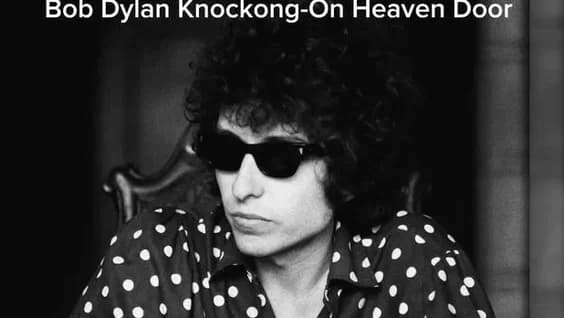
Musically, the arrangement preserves the simplicity that made the original so haunting. The acoustic guitars form a soft rhythmic bed, steady and unrushed. The subtle organ textures linger like distant church tones, adding a fragile warmth to the space between chords. There is no flourish or unnecessary gesture. Every sound exists only to support the quiet spiritual core of the song. It is minimalism with purpose.
The meaning of “Knockin’ On Heaven’s Door” has often been interpreted through the lens of resignation, mortality and the strange peace that arrives when one finally stops fighting the inevitable. Yet in the Unplugged version, something else emerges. It feels less like surrender and more like acceptance. Not despair, but recognition. Not the end, but a crossing. It is a moment where grief and serenity coexist without conflict.
Cultural legacy also hangs over this performance. By 1995, countless artists across genres had covered the song. Some reimagined it as folk, others as rock, gospel or even cinematic power ballad. Yet it is hearing Dylan himself return to it, older and transformed, that gives this recording its unique resonance. It reminds listeners that songs evolve as the person singing them evolves. Their meaning deepens. Their shadows lengthen.
By the time the final chords fade, what remains is silence, and in that silence is a feeling that every listener recognizes. A reminder that all journeys, no matter how wild or ordinary, eventually reach a doorway. And sometimes the most powerful thing a song can do is stand beside us while we gather the courage to knock.