
A Pop-Rock Faustian Bargain: The Allure of a Destructive Love
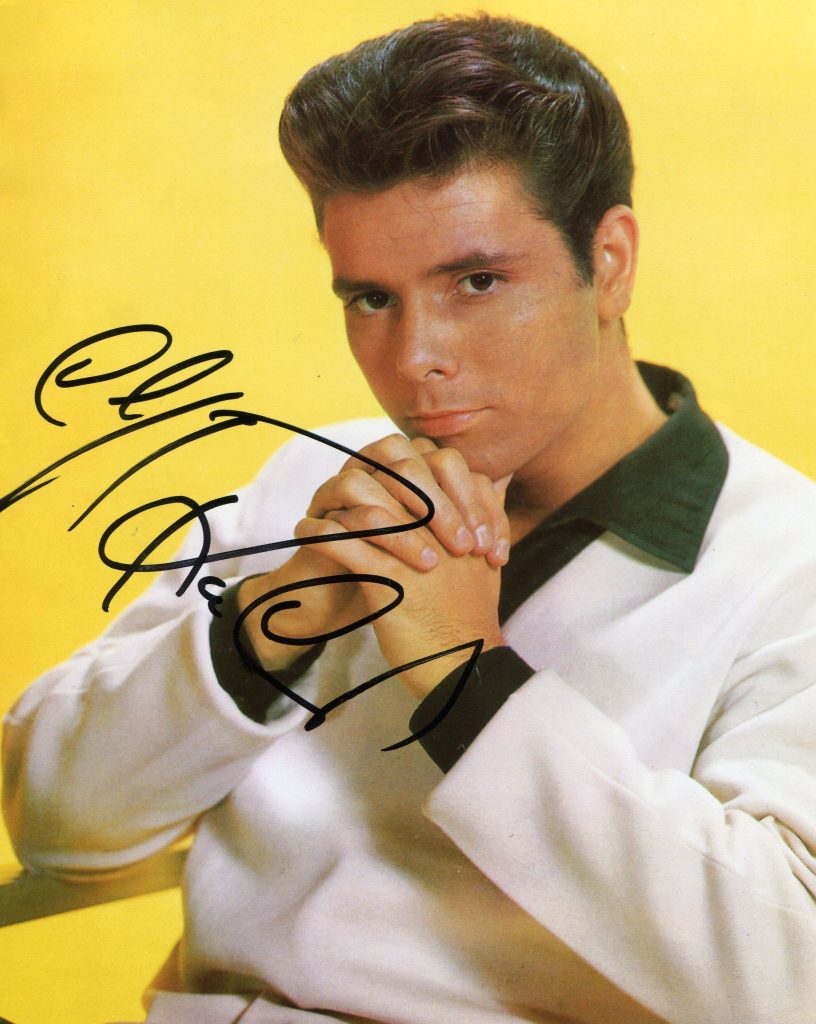
For generations, Cliff Richard was the quintessential British pop idol—the clean-cut, youthful figure who moved from rock and roll pioneer to a beloved national treasure. He was the “Peter Pan of Pop,” a name that evoked wholesomeness, longevity, and a string of gentle, romantic hits. But in 1976, something remarkable and utterly unexpected happened. A different Cliff Richard emerged from the shadows, one who wasn’t singing about summer holidays or bachelor boys, but about a chilling, mystical encounter with a femme fatale. That song was “Devil Woman”, a track so jarringly different from his established persona that it became an instant, electrifying standout. It was a stylistic rebirth that not only revitalized his career but, perhaps more significantly, finally granted him the one thing that had eluded him for decades: major commercial success in the United States.
Released as the second single from his album I’m Nearly Famous, “Devil Woman” arrived during a period of waning chart success for Cliff Richard in his native UK. His career, while still robust, was in a holding pattern. The song, however, turned that all on its head. In the UK, it peaked at a respectable #9 on the Singles Chart, a welcome return to the top ten. But it was across the Atlantic where the true magic happened. “Devil Woman” rocketed up the Billboard Hot 100, reaching a career-high #6 and becoming his first American top 20 hit since “Congratulations” in 1968. It was his biggest hit in the US, ever, and a pivotal moment that cemented his place as an international star, not just a UK phenomenon. The single’s success was proof that a risk-taking artist, even a long-established one, could still surprise the world.
The story behind “Devil Woman” is almost as compelling as the song itself. Written by Terry Britten and Christine Authors, it was reportedly a track that Cliff Richard, a devout born-again Christian, was initially hesitant to record due to its occult themes. The lyrics tell a dark and alluring tale of a man who, plagued by bad luck, seeks out a mystic. Instead of finding a cure, he realizes the soothsayer herself—a “devil woman” with a crystal ball and an “evil-eyed” cat—is the source of his misfortune. The song masterfully uses these gothic, supernatural metaphors to describe a destructive relationship, painting a picture of an enchanting yet manipulative figure who casts a spell over her victim. The tension between the protagonist’s desire for her and his terrifying realization of her true nature is what gives the song its electrifying energy. The sinister, pulsating bassline, the driving rhythm, and Cliff Richard’s remarkably gritty and passionate vocal delivery all contributed to a sound that was far more rock and roll than anything he had attempted in years.
For those of us who grew up with the wholesome, family-friendly Cliff Richard, the song was a revelation. It was the moment the knight in shining armor put on a black leather jacket. It evoked a sense of danger and forbidden pleasure, a sound that was more akin to the glam rock and pop-rock of the mid-70s than the polished pop we were accustomed to hearing from him. It was a song that you couldn’t help but turn up, a guilty pleasure that felt so good. The lyrics, with their ominous warnings and cryptic imagery, tapped into a collective fascination with the mystical and the macabre that permeated the culture of the 1970s. Decades later, the song remains a thrilling and nostalgic piece of music, a testament to an artist’s willingness to evolve and to the enduring power of a single, unexpected song to change the course of a legendary career. It’s a reminder that even the most well-behaved of pop stars can harbor a rebellious streak, and that sometimes, it’s the darker side of a story that makes for the most unforgettable art.