A Bass, a Memory, and a Sound That Changed Everything: Corky Laing Reflects on Felix Pappalardi and the Heart of Mountain
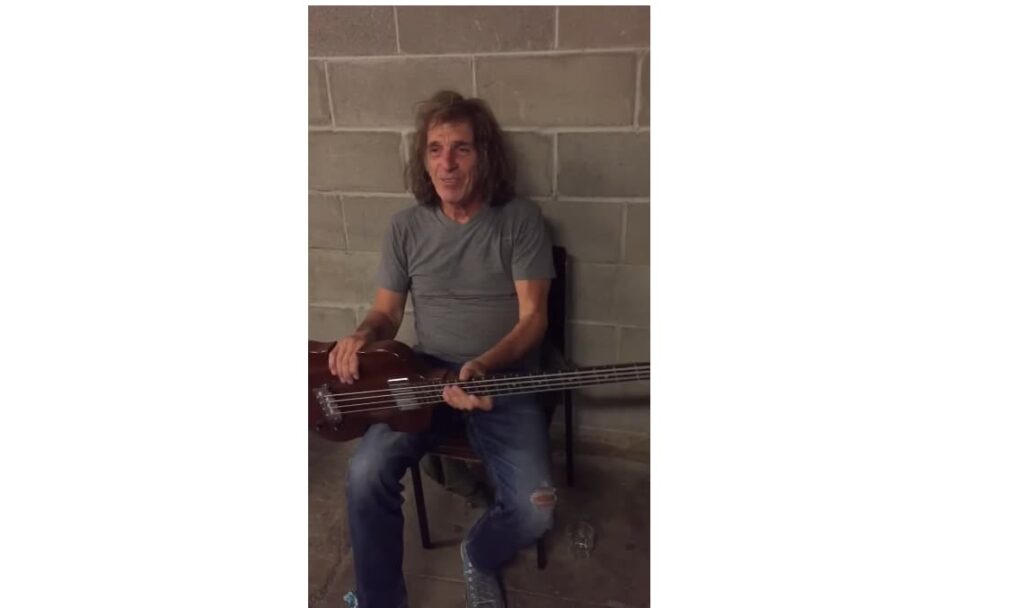
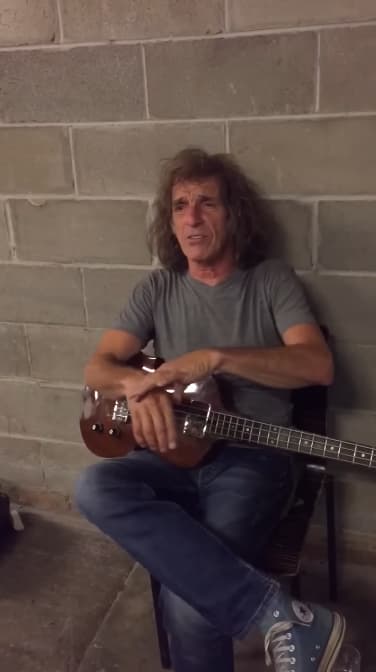
When Corky Laing recently revisited the personal collection of the late Felix Pappalardi, one object in particular seemed to carry the weight of an entire era. In his hands was Felix’s 1968 Gibson EB-1 violin bass, an instrument that was far more than wood and strings. For Laing, it was a doorway back to the formative years of Mountain, and to the creative bond shared between Felix Pappalardi and Leslie West during the band’s golden period from 1969 to 1974.
Laing spoke of the bass with unmistakable affection. Its violin-like shape, elegant and classical, reflected Felix’s musical background and personal taste. Pappalardi, trained in classical music, approached rock with refinement and authority. The EB-1 looked dignified, almost delicate, yet Felix played it with astonishing physical strength. Laing recalled how heavy the instrument was, how surprising it felt to watch Pappalardi handle it so effortlessly, night after night, as if weight and strain simply did not exist.
That bass, Laing explained, was Felix’s constant companion on stage. It defined not only the look of Mountain, but its sound. In those early days, Mountain were not following a blueprint. They were inventing one. The volume, the density, the physical force of the music came from necessity as much as intention. Amplification was crude. Subtlety disappeared in large venues. To be heard, musicians had to play harder, louder, and with absolute commitment.
Laing reflected on how this practical struggle unintentionally shaped what later became known as heavy metal. He described speaking at music conferences years later, asked to explain where the genre came from. His answer was simple. It began with a drumstick striking as hard as possible, metal drums cutting through walls of amplifiers, and bands like Mountain discovering that power itself could become a musical language.
Felix Pappalardi understood that instinctively. Together with Leslie West, he helped create a tone that felt unprecedented at the time. Laing recalled how Mountain’s records famously carried the phrase “sounds better played loud,” a statement that alarmed record executives but thrilled listeners. It captured the band’s philosophy perfectly. This was music meant to be felt physically, not politely absorbed.
Laing also spoke candidly about how difficult it was to label Mountain in their early years. Were they rock, hard rock, metal? The terms did not yet exist in a meaningful way. Leslie West, he noted, was far ahead of the curve, pushing toward heavier sounds long before they became mainstream. Later generations, from hard rock to metal icons, would openly acknowledge that debt.
Standing there with Felix’s EB-1 bass, Laing was not just remembering an instrument. He was honoring a partnership and a moment in time when boundaries were still undefined and everything felt possible. The bass embodied Felix Pappalardi’s class, strength, and vision, qualities that shaped Mountain’s identity and left a lasting imprint on rock music.
For Corky Laing, the memory was deeply personal. For listeners, it is a reminder that the roots of heavy music were not born from categories or ambition, but from musicians responding honestly to their environment, their limitations, and their desire to be heard. In that sense, Felix Pappalardi’s violin bass remains exactly what it always was. A quiet symbol of a sound that changed everything.
Video: