
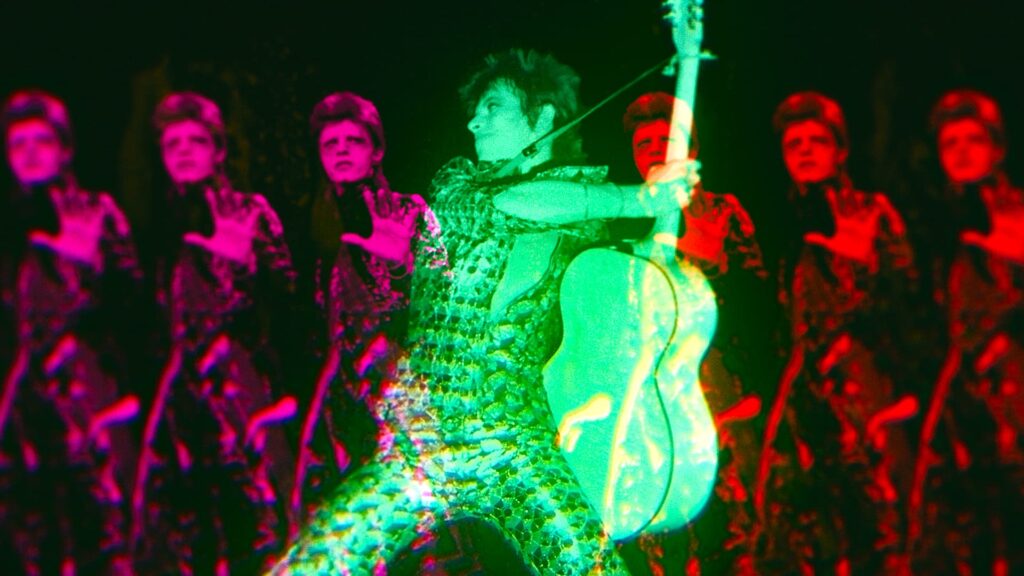
A cosmic declaration of identity, desire, and rebellion wrapped in theatrical stardust
When David Bowie unveiled Moonage Daydream as part of the 1972 album The Rise and Fall of Ziggy Stardust and the Spiders from Mars, the song became one of the defining pillars of the Ziggy narrative and helped solidify Bowie’s ascent into rock mythology. Though it was not released as a major charting single at the time, its presence within the album carried enormous cultural weight, marking a moment when rock fused with theater, science fiction, glam provocation, and raw emotional vulnerability.
From its first explosive guitar chords, Moonage Daydream feels like an announcement rather than a song, a curtain rising on a character who refuses to shrink or apologize. Ziggy is introduced not with modesty but with urgency, sensuality, and cosmic confidence. Bowie had already begun shaping glam rock into a cultural force, but here he sharpened it into something stranger and more transformative. The track embodies the thrill of reinvention, the freedom of defying gravity, and the power of becoming someone entirely new.
The lyrics carry an intoxicating mix of surreal imagery, romantic obsession, and performative alienation. Bowie sings with a voice that blends seduction and danger, suggesting a character who is both savior and outsider, both adored and misunderstood. The references to science fiction are not merely decorative. They serve as metaphors for being emotionally displaced in the world, for seeking connection through extraordinary identity rather than conformity. Ziggy is a lover, a prophet, a freak, and a mirror reflecting the desires of a generation ready to abandon realism for possibility.
Musically, the track showcases a perfect balance between swagger and tension. Mick Ronson’s guitar work is ferocious yet deliberate, with tones that cut through the arrangement like beams of electricity. His iconic solo is less a flourish and more a narrative turning point, expressing everything the character cannot say in words. The orchestration, which Ronson also arranged, gives the song a cinematic dimension. Strings and brass rise behind the guitar as if the universe itself is widening to make space for the character Bowie created.
There is a theatrical sensuality woven into every second of Moonage Daydream, a sense that the song is both spectacle and confession. Beneath the glitter and distortion lies something profoundly human, a longing to matter, to be seen, to ignite something in another person. In that way, Ziggy is not only a character but a voice for anyone who has ever wanted to break free of ordinary life and embrace their own strangeness without apology.
Decades later, the song remains one of Bowie’s most thrilling artistic statements. It is bold, exaggerated, cinematic, and yet deeply sincere. It captures the rare moment when a performer does not merely play a role, but becomes a myth in real time. Moonage Daydream is not just a track on a landmark album. It is the spark that lights the fuse to the Ziggy Stardust universe, a declaration that rock and identity are limitless if one has the courage to imagine them.