
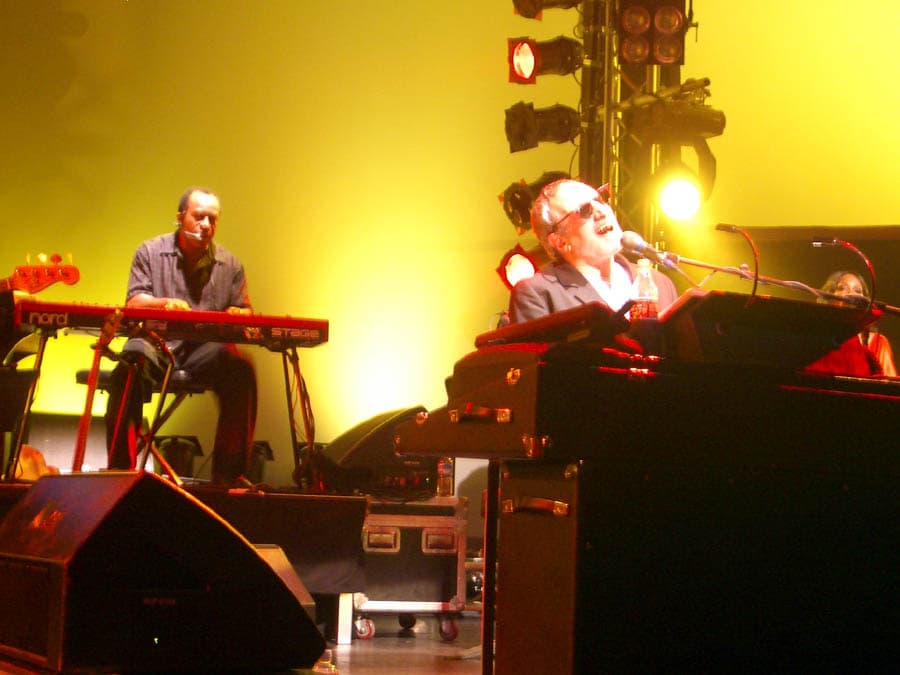
A Midnight Groove Painted in Smoke, Sweat and Jazz-Rock Intuition
When Donald Fagen stepped onto the Frankfurt stage on September 18, 2000, the live performance of “Hank’s Pad” became something far more intriguing than a deep-cut rarity. Though never released as a single and never charting, its inclusion in later archival material connected it to the sonic universe surrounding The Nightfly, Kamakiriad and Morph The Cat, offering listeners a rare glimpse into Fagen’s stage persona outside the meticulous confines of the studio. In this live setting, the track reveals a looser, sweat-slicked sophistication where jazz, R&B and sly humor intersect with the smoky thrill of late-night music.
“Hank’s Pad” feels like a secret invitation. The groove settles in with an unhurried confidence, carried by a rhythm section that doesn’t rush and doesn’t need to impress. Instead, it hypnotizes. The bass line moves with understated authority and the drums sit deep in the pocket, creating a mood that feels both intimate and slyly celebratory. Above it, the horns add conversation rather than decoration, slipping in and out of the spaces between phrases like old friends finishing each other’s thoughts.
What stands out most in this performance is Fagen’s delivery. His vocals aren’t pristine or delicate. They are lived-in, sardonic, relaxed. It is the voice of someone who knows exactly where the beat sits, and enjoys leaning just behind it. His phrasing feels theatrical yet natural, as if he’s narrating the scene rather than performing it. He doesn’t push the melody. He strolls through it.
Thematically, “Hank’s Pad” conjures a setting rather than a character study. It is a place, a mood, an after-hours hideout where the rules soften and everything feels just a little off-center in the best way possible. Listeners can almost picture dim red lighting, worn leather furniture, low conversation and the faint smell of bourbon in the air. The music doesn’t tell you what to feel. It nudges you into the atmosphere and lets you find your own footing.
In the broader arc of Fagen’s work, this live rendition deepens his legacy rather than expanding it. It reminds us that beneath the polished studio constructions lies a musician who understands the thrill of live interplay, the importance of silence between notes, and the way music transforms when played for a room rather than a mixing console.
“Hank’s Pad” may not be a headline moment in Donald Fagen’s catalog, but for those who appreciate subtle artistry and late-night musical alchemy, it stands as one of his most intimate and quietly mesmerizing performances.