
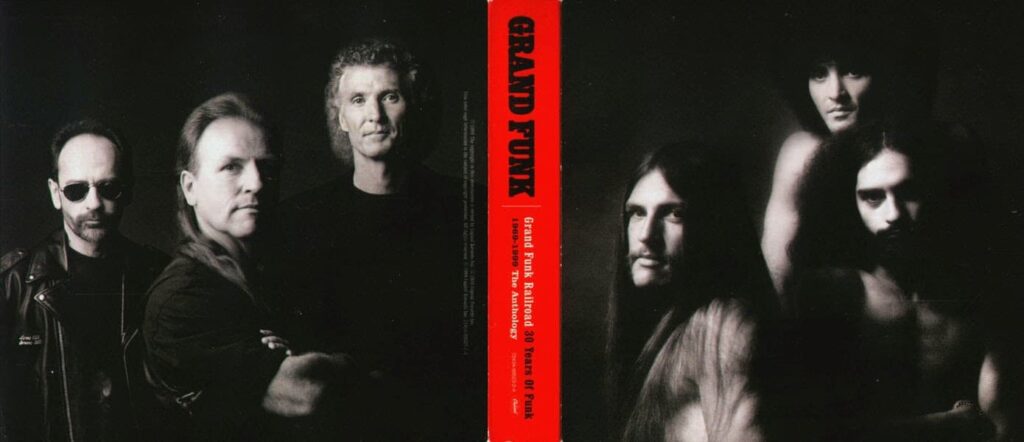
A Thunderous, Primal Exploration of Morality and Temptation, a Raw Confession of the Battle Between Good and Evil Within the Human Soul.
In the blistering summer of 1970, the rock and roll landscape was a battlefield. The psychedelic dreams of the ’60s were fading, and a new, heavier sound was rising from the heartland, a sound that was raw, unfiltered, and unapologetically loud. From Flint, Michigan, came the power trio known as Grand Funk Railroad, a band that had already established itself as a force of nature with a relentless touring schedule and two successful albums under their belt. But it was their third studio album, Closer to Home, that cemented their legendary status, giving the world a collection of songs that were both heavier and more nuanced than anything they had done before. Buried within this album, a deep cut that didn’t chart as a single but became a cornerstone of their live shows and their sound, was the ferocious anthem, “Sin’s a Good Man’s Brother.” The album itself was a massive commercial success, peaking at number 6 on the Billboard 200 and achieving multi-platinum status, but the power of this particular track lay in its artistic, rather than commercial, impact.
The story behind “Sin’s a Good Man’s Brother” is one rooted in the internal struggle of a young artist grappling with fame, faith, and the temptations that come with both. Penned by the band’s visionary leader, Mark Farner, the song is a dramatic, blues-infused narrative about the constant war waged within the soul of a man. The lyrics are a raw confession, an acknowledgment that “sin” isn’t an external force but an intrinsic part of the human condition, a twin to the better, more righteous self. It is a lyrical masterpiece that uses a simple, yet profound, metaphor to explore the duality of human nature. Lines like “I been hangin’ round with a no good friend / He’s goin’ with me to the very end” feel like a dark, personal admission, a recognition that the struggle is lifelong and deeply intimate. The drama unfolds in the sheer sonic intensity of the track, mirroring the anguish and frustration of this moral conflict.
The very essence of the song’s drama is found in its powerful musicality. From the moment the track begins, it hits like a physical blow, a massive, thunderous riff from Mark Farner’s guitar that is both a statement of intent and a primal scream. The rhythm section, with Mel Schacher’s pulsating bass and Don Brewer’s explosive drumming, creates a foundation of raw, unyielding power. Farner’s vocals are a guttural, strained howl, conveying a sense of desperate urgency that transcends the lyrics themselves. The raw, unpolished sound of the recording, a hallmark of their early work, only adds to the song’s intense emotional weight. It feels like a live performance, a moment of spontaneous combustion captured on tape.
For those of us who came of age with this music, “Sin’s a Good Man’s Brother” was more than just another song; it was a revelation. It was a raw, cathartic experience that gave voice to the inner turmoil we all felt. It’s a memory not of a dance party, but of a private moment with a powerful album, of dropping the needle and feeling the weight and power of the music. It remains a cornerstone of Grand Funk Railroad’s enduring legacy, a testament to their ability to create deeply personal and philosophical music that was as heavy as it was profound. It is a timeless piece of hard rock history, a beautifully painful reminder that even the strongest among us must face the demons that lie within.