
A Quiet Confession of Yearning in the Wake of Sunday’s Grace
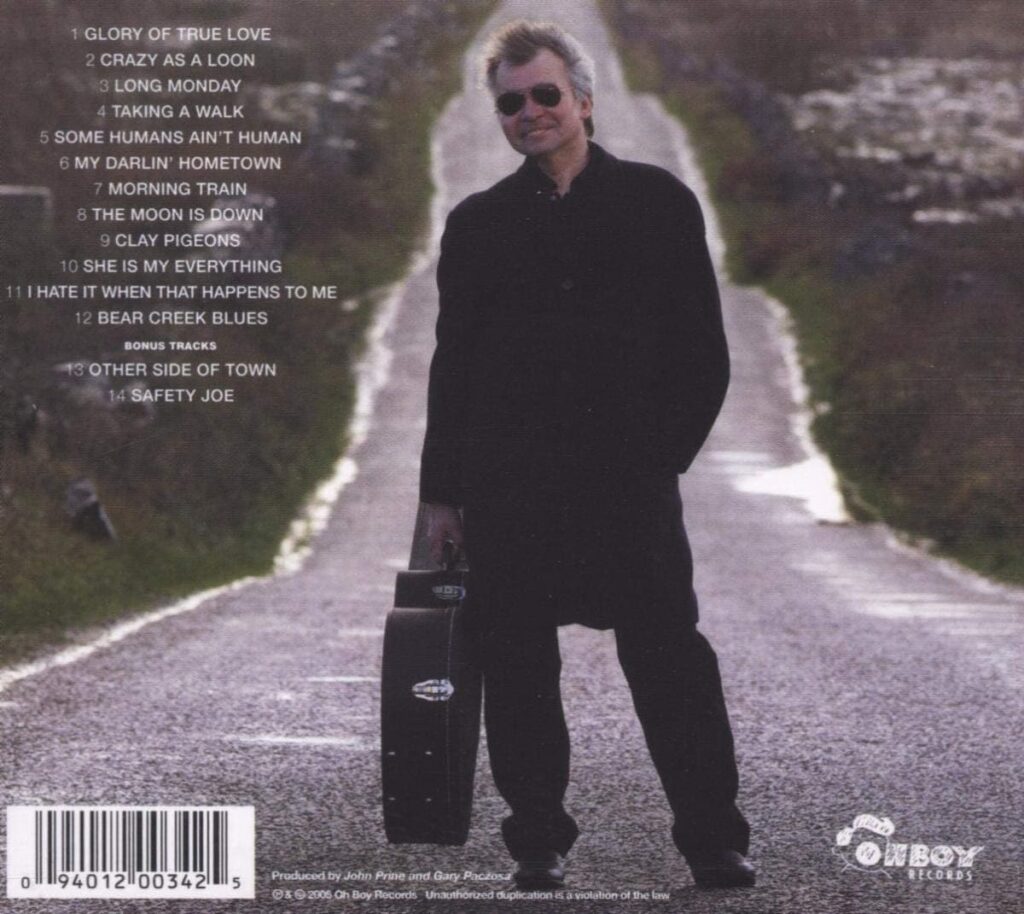
“Long Monday”, co‑written by John Prine and Keith Sykes, appears on Prine’s fifteenth studio album, Fair & Square (released April 26, 2005 via Oh Boy Records). Though not a hit single by traditional chart standards, the album itself reached No. 55 on the Billboard 200, and went on to earn the Grammy Award for Best Contemporary Folk Album.
In Long Monday, John Prine delivers a tender, bittersweet portrait of love’s fleeting sanctuary and the inevitable return to solitude. This song, nestled in the quiet, contemplative heart of Fair & Square, represents more than just a pause in his catalog—it feels like a soft exhale after years of resilience. By 2005, Prine had emerged from serious health struggles, and this record—sparse, acoustic, and deeply reflective—seemed to carry the weight of a life lived fully but not without cost.
Musically, “Long Monday” is uncluttered: gentle guitar work, Prine’s resonant voice, and enough space around each line for emotion to settle in. The arrangement lets the lyrics breathe, and that’s where the song truly resonates. It’s not just about missing someone—it’s about holding on to memories so vividly that they become both balm and burden. Prine sings of sitting “in the back of my memory like a honey bee / Buzzin’ ’round a glass of sweet Chablis,” a metaphor that drips with longing and sweetness.
The imagery in the chorus is especially poignant: “Gonna be a long Monday / Sittin’ all alone on a mountain / By a river that has no end.” Here, Monday stands for more than just the start of the workweek—it’s a symbol of returning to emptiness, to the humdrum of a life once interrupted by love. The “tick of a clock that’s come unwound” suggests time itself has lost its shape, unraveled by the absence of his beloved.
Yet Prine’s sorrow remains tender, not bitter. He doesn’t rail against fate: instead, he leans into the vulnerability of memory, asking for a kiss “that’ll last all week.” That simple, humble request underlines the core of the song—his love was not just passionate but sustaining, something he’d hoped could blur the edges of ordinary days.
Over time, “Long Monday” has become one of those songs that other artists return to in tribute. Eric Church famously covered it shortly after Prine’s passing, calling it a profound lesson in songwriting. John Oates also recorded a version, honoring its “down-to-earth beauty.” These reinterpretations speak to how deeply Prine’s raw emotional honesty resonates beyond his own voice.
As part of Fair & Square, “Long Monday” occupies a special place in Prine’s late-career legacy. It’s not the bombastic high point, nor is it the narrative centerpiece—but it’s a quiet confession. In this song, Prine gives voice to longing, to the ache of departure, and to the shy but unshakable hope that love might linger, knock at the door, or whisper across an endless river.