
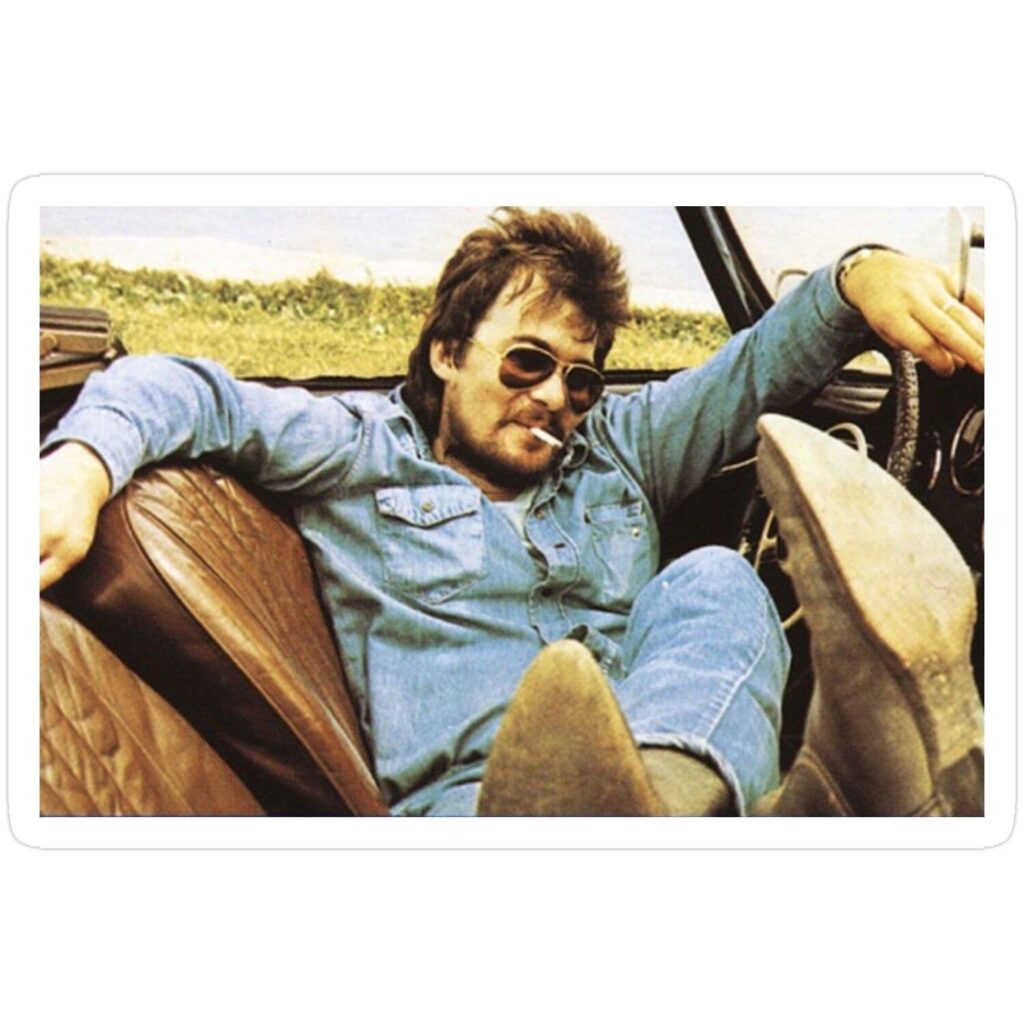
A Gentle, Wry Acceptance of Life’s Unruly Cycles
“That’s the Way That the World Goes Round” is a quietly philosophical ode by John Prine, first released on his 1978 album Bruised Orange, a collection that followed a turbulent chapter in his life. Though not released as a major hit single, the song has become one of Prine’s most beloved and enduring pieces—its chorus chanted by fans in concert, its sentiment echoing long after the needle lifts from the groove.
Written during a period when Prine confessed to growing disillusioned with cynicism—“even in myself at the time,” he later explained—this song was born of his yearning to return to a simpler, more child‑like way of seeing the world.
Prine begins with a portrait of a man who seems outwardly strong—“muscles in his head that ain’t never been used”—yet internally lost, hurtling through life on a dangerous loop of self-destruction: drinking, domestic violence, fleeting attempts at reconciliation. He pairs this character sketch with something deeply personal in the second verse: sitting in a bathtub, counting his toes, when suddenly the radiator breaks, freezing the water. He’s trapped in ice, stripped bare—“naked as the eyes of a clown”—and for a moment, he hopes he’ll die (“cryin’ ice cubes, hopin’ I’d croak”). But then the sun breaks through the window. The ice melts. He stands up, laughs at the absurdity. “Thought it was a joke,” he sings.
It’s a masterstroke of lyrical economy—two vignettes, one about a broken man, the next about Prine himself, tied together by the gentle refrain: that’s the way that the world goes ’round. The chorus is deceptively simple. You could parse it as folk wisdom, fatalism, or a bittersweet shrug. The image of “half an inch of water and you think you’re gonna drown” captures the fragile tipping point between calm and chaos, between control and surrender.
What makes the song so affecting is Prine’s refusal to moralize. He doesn’t preach; he observes. With a weathered voice and spare acoustic arrangement, he lulls us into an acceptance that life’s irrational, unpredictable cycles are neither wholly tragic nor wholly comic—they are what they are. As GRAMMY.com puts it, this song “binds two verses … with a chorus about things we can’t control.”
Prine himself later said that he was “fed up with a lot of cynicism…but I wanted to get back to a better world, more childlike.” This perspective resonates deeply: in the face of life’s absurdities, he wasn’t offering a cure, just a way to live alongside them—with humor, humility, and a willingness to stand up and laugh when the sun finally breaks through.
Over the years, the song has earned its place in the canon—not through chart-topping success (Prine was never primarily a singles artist), but via its emotional legacy. Artists like Miranda Lambert have covered it, reminding us how universal its message feels. It’s become less a song and more a mantra for resilience: life will knock you off balance, but maybe just hold on—because the world keeps turning, in all its messy, beautiful absurdity.
In that bathtub, frozen and vulnerable, Prine captures something we all know: sometimes the only thing to do when reality feels unbearable is to laugh, accept, and keep going. And that, in his wisdom, is exactly “the way the world goes ’round.”