
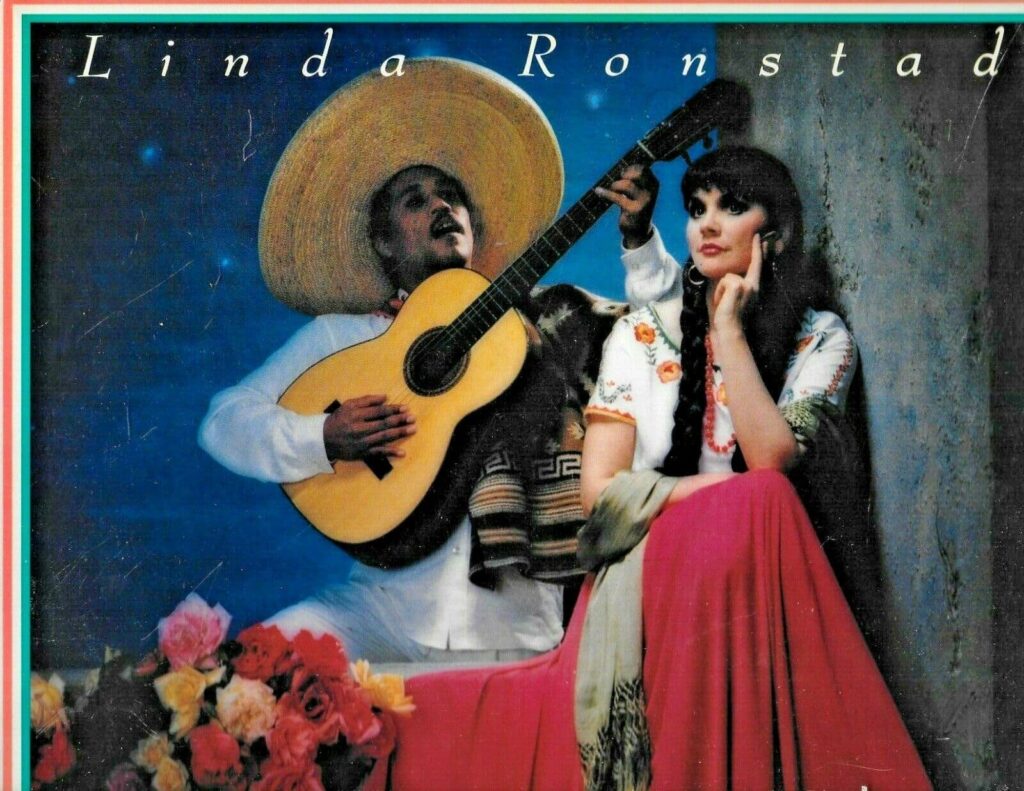
“La Cigarra”: A Soulful Homage to Mexican Folk Tradition and Enduring Resilience.
There are moments in an artist’s career when they venture beyond the familiar, delving into musical territories that speak to a deeper heritage or passion. For the incomparable Linda Ronstadt, such a journey led her to a profound exploration of her Mexican roots, culminating in a series of albums that stand as heartfelt tributes to the mariachi tradition. Among these cherished recordings, her breathtaking rendition of “La Cigarra” resonates with a particular emotional depth, transporting listeners to the sun-baked landscapes and passionate narratives of Mexican folk music. Released in 1987 on her groundbreaking album, Canciones de Mi Padre, this isn’t merely a song; it’s a soulful embrace of cultural identity, a testament to the power of a voice steeped in tradition, and a poignant reminder of the enduring human spirit in the face of life’s inevitable end. For older readers, especially those with ties to Latin American culture or a love for authentic world music, this song is a profound journey, stirring memories and a sense of timeless connection.
Upon its release, Canciones de Mi Padre (Songs of My Father) was a groundbreaking commercial and critical success, defying expectations for a mainstream American artist releasing an album entirely in Spanish. While “La Cigarra” was not released as a standalone single and thus did not chart on the Billboard Hot 100, the album itself was a phenomenon. Canciones de Mi Padre soared to number 42 on the Billboard 200 album chart and, more significantly, spent an astonishing 64 weeks at number 1 on the Billboard Top Latin Albums chart, becoming the best-selling non-English language album in U.S. history at the time. This unprecedented success underscored the deep emotional connection Ronstadt forged with her audience through this music, proving that genuine artistry transcends linguistic barriers. For many who discovered it, this album, and songs like “La Cigarra,” felt like a revelation, opening a window into a rich cultural heritage with Ronstadt as the most eloquent guide.
The story behind “La Cigarra” (The Cicada) is steeped in the rich history of Mexican ranchera music. The song itself is a classic, written by the celebrated Mexican composer Raymundo Pérez y Soto. It’s a standard in the mariachi repertoire, a testament to its powerful imagery and emotional resonance. For Linda Ronstadt, recording this song, and indeed the entire Canciones de Mi Padre album, was a deeply personal undertaking. The album title itself signifies its meaning: these were the songs her Mexican-American father, Gilbert Ronstadt, and his family sang to her as a child. It was a heritage she proudly reclaimed, not as a trend, but as an authentic return to her roots. Ronstadt meticulously researched and selected traditional songs, collaborating with renowned mariachi musicians to ensure the album’s authenticity. Her dedication to this project was unwavering, driven by a desire to honor her ancestors and share the beauty of this music with a wider audience. Her vocal performance on “La Cigarra” is a testament to this commitment – it’s not merely sung; it’s felt with every fiber of her being, a blend of power and fragility that is truly captivating.
The meaning of “La Cigarra” is a profound allegory for life, death, and the indomitable spirit. In Mexican folklore, the cicada (cigarra) is often associated with singing throughout its life, even as its end approaches. The song personifies the cicada, lamenting its impending death but declaring its intention to sing to the very last breath: “I want to sing my last song / Like the cicada that when it dies / Sings until its soul breaks.” It’s a powerful metaphor for facing mortality with courage, embracing one’s purpose, and expressing oneself fully until the very end. Beyond the literal interpretation, it speaks to the human desire to live life passionately, to make one’s voice heard, and to find beauty and expression even in sorrow. For older listeners, this theme resonates with particular poignancy, stirring reflections on life’s journey, the inevitability of change, and the enduring legacy we leave behind. It’s a song about resilience, about finding strength in vulnerability, and about the deep human need for expression in the face of all that life throws our way. Linda Ronstadt’s masterful rendition of “La Cigarra” is a timeless piece that continues to move and inspire, a vibrant thread connecting generations through the universal language of music and emotion.