
A bittersweet confession that love cannot always be forced to reach its final promise
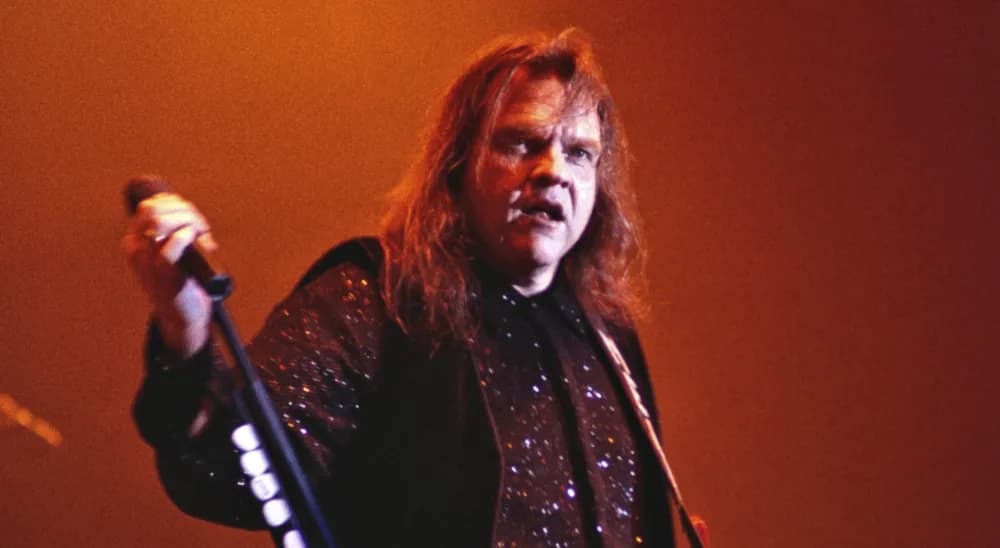
When Meat Loaf released “Two Out Of Three Ain’t Bad” in 1977, the song became a defining emotional counterpoint within his breakthrough album Bat Out of Hell. Issued as a single, it climbed to number 11 on the Billboard Hot 100 in the United States, giving Meat Loaf his first major solo hit and helping propel the album toward its eventual status as one of the best-selling records in rock history. Amid the bombast and theatrical excess that surrounded it, this song stood apart as a moment of restraint, vulnerability, and painful honesty.
Unlike the operatic roar of “Bat Out of Hell” or the youthful urgency of “Paradise by the Dashboard Light,” “Two Out Of Three Ain’t Bad” unfolds slowly, almost cautiously. Written by Jim Steinman, the song strips away spectacle to focus on emotional truth. Its power lies not in volume or velocity, but in its confession. The narrator does not rage or plead. Instead, he admits a quiet, devastating limitation. He wants, he needs, but he cannot give the one thing that truly matters. This is not a rejection fueled by cruelty, but by self-awareness, which makes it all the more painful.
Musically, the track mirrors this emotional tension. The arrangement begins sparsely, with gentle piano and restrained vocals, allowing the story to breathe. As the song progresses, layers are gradually added, swelling into a controlled crescendo that never quite explodes. Meat Loaf’s voice carries an aching sincerity, balancing strength with fragility. He sings not as a conqueror of heartbreak, but as a man trapped inside his own emotional boundaries. The production supports this duality, giving the song room to grow while refusing to let it collapse into melodrama.
Lyrically, “Two Out Of Three Ain’t Bad” confronts a truth rarely spoken so plainly in popular music. Desire and affection, the song suggests, are not always enough. The narrator offers honesty where false hope would be easier, acknowledging that love cannot be manufactured through obligation or guilt. This refusal to say the expected words becomes the song’s central conflict. It is a rejection, yes, but also an act of integrity. By choosing truth over comfort, the song exposes the quiet cruelty of emotional mismatch.
Within the larger framework of Bat Out of Hell, the song plays a crucial role. It grounds the album’s grand themes in reality, reminding listeners that beneath the motorcycles, metaphors, and youthful fantasies lies something deeply human. This contrast is what gives the album its lasting resonance. Steinman’s writing may be theatrical, but here it is rooted in emotional realism, and Meat Loaf delivers it with unguarded conviction.
Decades later, “Two Out Of Three Ain’t Bad” remains one of Meat Loaf’s most enduring recordings. Its legacy is not built on spectacle, but on recognition. Many listeners hear themselves in its admission, in the painful gap between what we wish we could give and what we truly can. It endures because it speaks softly where others shout, offering a truth that never loses its sting.