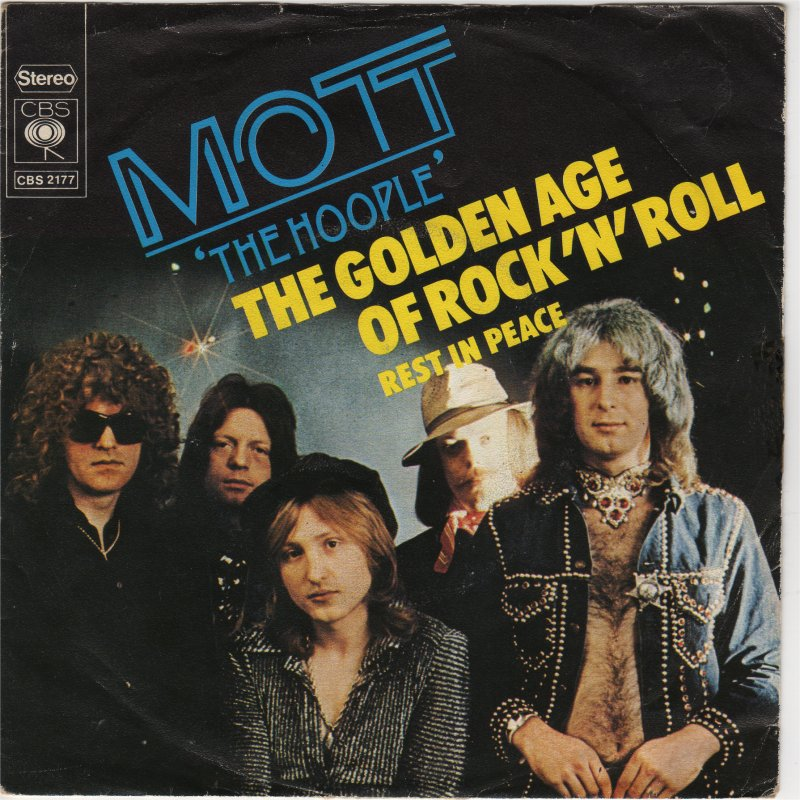
A Poignant and Theatrical Farewell to an Era, a Glorious Ode to the Last Days of Glam Rock’s Golden Age.
By 1974, the glittering, flamboyant wave of glam rock was reaching its dramatic and brilliant crescendo. At the heart of the movement, but always just a little too raw and intelligent to be fully mainstream, was Mott the Hoople. Their career had been saved by the creative intervention of their fan, David Bowie, and they had soared to new heights. But by the time they released their final studio album with their classic lineup, The Hoople, the band was on the brink of collapse. Within this masterful, final chapter lay a song that was both a celebration and a lament, a theatrical ode to an era that was already passing. That song was “The Golden Age of Rock ‘n’ Roll.” Released as a single, it was a respectable hit, reaching a peak of number 16 on the UK Singles Chart and a more modest number 59 on the Billboard Hot 100 in the US. The song’s true power, however, lies in its profound dramatic irony: it’s a magnificent, joyous celebration of a golden age that was, tragically, already ending.
The story of “The Golden Age of Rock ‘n’ Roll” is a piece of rock and roll theater, a farewell performance from a band at the height of its powers but on the verge of splintering. The internal drama of the band was at a fever pitch. Lead guitarist Mick Ralphs had already left, and the genius songwriter and frontman, Ian Hunter, was tired of the relentless touring and the pressure. He was already planning his exit. This song, with its nostalgic lyrics and its title that looks back on an era, was born from this emotional turmoil. It was an acknowledgment that the party was over, that the magic, while still present, was fleeting. The song is a beautiful, melancholic goodbye, a final toast to a time that had made them and was now leaving them behind.
The lyrical and musical drama of the song are a perfect match for the band’s emotional state. The lyrics, penned by Ian Hunter, are a powerful monologue, a theatrical roll call of the rock and roll tropes that they helped to create. He sings about the chaos, the freedom, and the beautiful rebellion of the glam rock scene. The “golden age” he’s singing about isn’t a historical period; it’s the very moment he is living in, a testament to the idea that you never know you’re in the good old days until they’re gone. The music, with its driving, stomping rhythm and a thunderous, brassy sound, feels like a final, desperate burst of energy. Ian Hunter’s vocal delivery is a masterclass in dramatic performance. He sounds both defiant and profoundly sad, his voice filled with a world-weary swagger of a man who knows the show is ending but is determined to go out with a bang.
For those of us who came of age with this music, “The Golden Age of Rock ‘n’ Roll” is a time machine, a powerful reminder of an era that burned bright and fast. It evokes a deep sense of nostalgia for a time of loud guitars, flamboyant clothes, and a sense of limitless possibility. The song is a bittersweet trip back to a moment when a band could be both a commercial success and an artistic, intellectual force. It’s a song that proves that the most beautiful goodbyes are often the ones that pretend they’re just getting started. It stands as a timeless and deeply emotional piece of music, a quiet masterpiece that continues to resonate with its raw honesty and its cinematic drama.
Video: