
A blazing seafaring myth of vengeance, survival, and elemental fury drawn from maritime tragedy
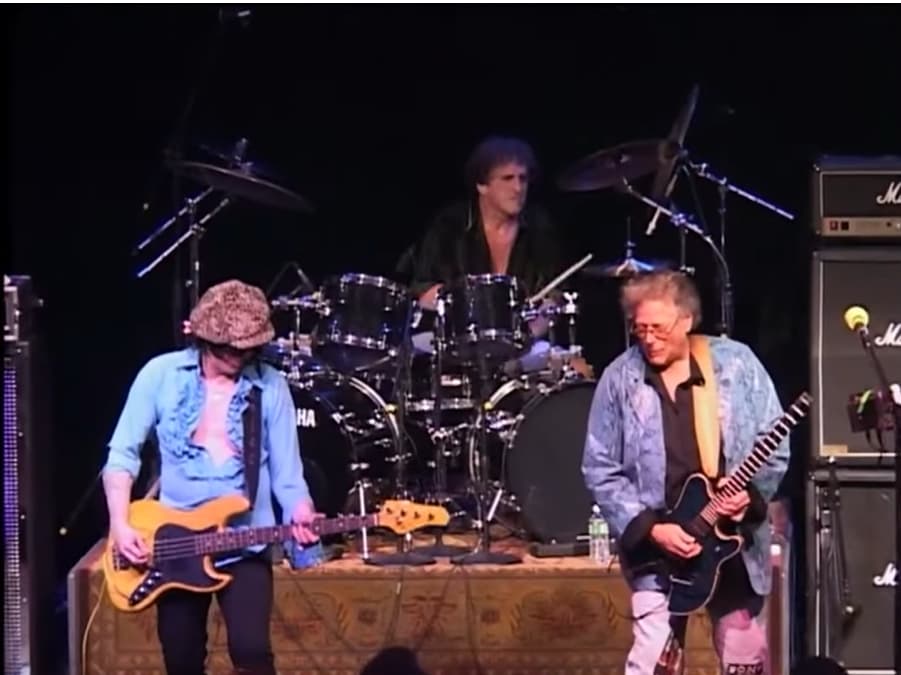
When Mountain perform “Nantucket Sleighride” on the 2002 concert film Sea of Fire, the song stands as a towering reminder of how heavy rock can channel history into myth. Originally released in 1971 on the album Nantucket Sleighride, which reached the Top 20 on the US Billboard album chart, the track was never a hit single, yet it became Mountain’s defining epic. It is a composition built not on trends or radio appeal, but on narrative weight, atmosphere, and a sense of slow-burning inevitability.
The true inspiration behind “Nantucket Sleighride” lies not in social commentary about labor or injustice, but in one of the darkest chapters of American maritime history: the 1820 sinking of the whaling ship Essex and the harrowing fate of young cabin boy Owen Coffin. After the Essex was rammed and destroyed by a sperm whale in the Pacific, the surviving crew drifted for months at sea, eventually resorting to cannibalism. Coffin, barely a teenager, was killed so others might live. Leslie West and Felix Pappalardi transformed this grim reality into a symbolic tale of reckoning, rage, and the ocean’s merciless power.
The title “Nantucket Sleighride” itself is crucial to understanding the song’s ferocity. In 19th-century whaling slang, a “Nantucket sleighride” described the terrifying moment when a harpooned whale would drag a small boat at full speed across open water. It was violent, uncontrollable, and often fatal. By choosing this phrase, Mountain invoked not just danger, but surrender to overwhelming force. The title frames the song as an unstoppable descent, where man is no longer master, only passenger.
Musically, the composition mirrors this meaning. The opening passages crawl forward with ominous restraint, heavy with anticipation. Leslie West’s guitar tone is massive and unhurried, each note sounding as though it has been dragged from the depths. When the song finally erupts, it does so with volcanic authority, less like an explosion and more like an execution long foretold. Corky Laing’s drumming drives the piece with relentless momentum, evoking the pounding of waves and the inevitability of fate.
In the Sea of Fire performance, recorded during Mountain’s 2002 tour, the song gains an added layer of gravity. Decades removed from its creation, West no longer plays it with youthful aggression, but with the weight of experience. The fury remains, but it is focused, deliberate, and monumental. The multi-camera production captures every detail, from the physical strain of the performance to the concentration required to sustain such a long, punishing piece.
Ultimately, “Nantucket Sleighride” endures because it transforms historical horror into elemental rock mythology. It is about man versus nature, about survival stripped of morality, about the thin line between hunter and prey. In its live incarnation on Sea of Fire, the song no longer feels like a tale from the past. It feels timeless, a reminder that some forces cannot be conquered, only endured.