
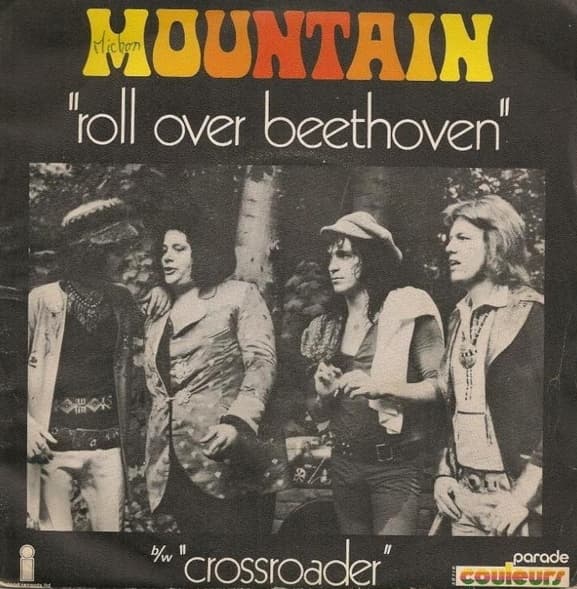
A Thunderous and Defiant Declaration, a Glorious Assault on the Old Order to Herald the Dawn of a New Musical Era.
In the early 1970s, as the psychedelic dream was giving way to a heavier, more visceral sound, a band named Mountain emerged as one of the genre’s most powerful and unashamedly loud forces. A New York power trio forged from the blues, they were built around the immense guitar tone of Leslie West and the production genius of Felix Pappalardi. While their studio albums, including the 1971 release Flowers of Evil, were solid sellers—the album itself reaching number 31 on the Billboard 200—it was their live performances that were the stuff of legend. It was on this very album that they unleashed a cover so ferocious, so full of pure, unadulterated rebellion, that it became a dramatic statement of intent. That song was “Roll Over Beethoven.” While it only bubbled under the surface of the charts as a live single, hitting number 101 on the Billboard chart, its power cannot be measured by sales. Its significance lies in its raw, defiant energy, an unapologetic act of musical revolution.
The story of Mountain’s “Roll Over Beethoven” is not a tale of a song’s origin but a grand, theatrical drama of reinterpretation. The original, penned by rock and roll pioneer Chuck Berry, was already a classic, a playful jab at the stuffiness of classical music. But in the hands of Mountain, it became something else entirely—a sonic assault, a declaration of war. The drama is in the sheer physical force of the performance. This wasn’t a polite cover; it was a thunderous, visceral assault that felt like the earth itself was rumbling. The live recording captures all the raw, unpolished power that the studio could only hint at. Every note from Leslie West’s legendary Les Paul is a defiant roar, a glorious act of rebellion against musical conformity. The lyrics take on a new, heavier meaning, a generational passing of the torch from the rock and roll pioneers to the architects of heavy metal.
The emotional core of the song is its pure, unbridled aggression. The music is a character in its own right, a loud, proud, and unapologetic force that perfectly embodies the spirit of a band that refused to compromise. The song builds with a raw, blues-infused tension, as if every ounce of the band’s collective energy is being funneled into a single, explosive moment. When Leslie West unleashes his signature, feedback-drenched solo, it’s not just a collection of notes; it’s an emotional monologue, a defiant scream against the fading sounds of the past and the polite rock that surrounded them. This is the sound of a new musical era being born, loud and proud, in front of a mesmerized audience.
For those who were there, who witnessed the birth of this heavy new sound, “Roll Over Beethoven” is more than just a song; it’s a profound, nostalgic memory. It’s a testament to the fact that some of the most powerful and meaningful pieces of music are not the ones that top the charts, but the ones that defy convention and change the landscape forever. The song remains a timeless anthem of rock and roll rebellion, a visceral and deeply emotional reminder of a time when the only rule was to play with all the heart and fury you had. It stands as a glorious monument to a musical revolution that truly rolled over everything in its path.