
A Quiet Reckoning of Hearts Drifting Too Far, Yet Still Searching for Sound
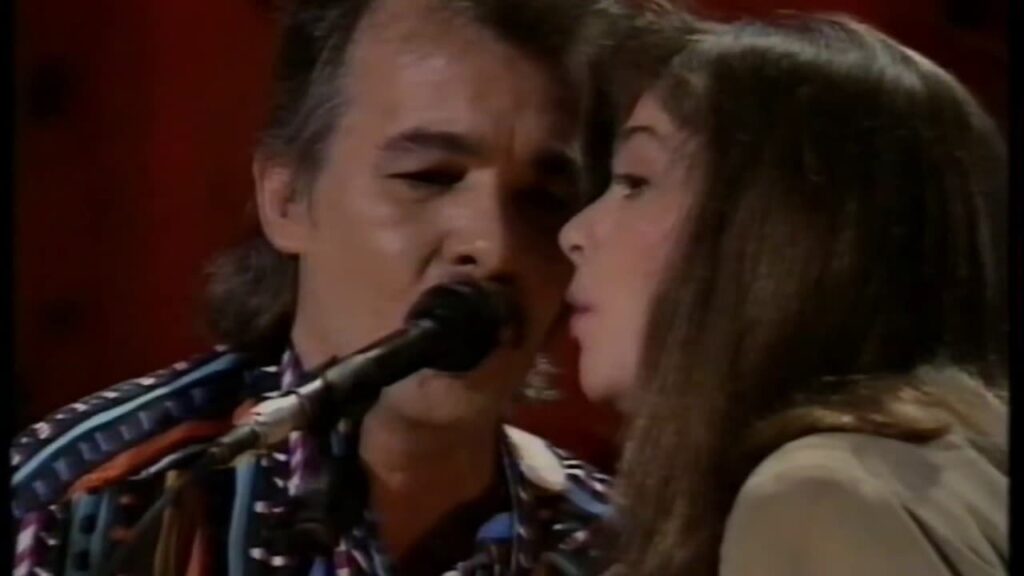
The song “Speed of the Sound of Loneliness” by John Prine, though not a hit single in its original 1986 release on German Afternoons, became one of his most haunting and enduring compositions. Its gentle ache found a new life when Nanci Griffith invited Prine himself to sing alongside her on the version included in her 1993 album Other Voices, Other Rooms. That duet turned the song into a whispered confession that resonated deeply in the folk and Americana world, keeping the song alive, breathing, and relevant long after its first appearance.
From its very first chords the song feels like a slow exhale—delicate guitar lines, a soft rhythm, voices leaning close, as if confiding secrets at midnight. Prine wrote “Speed of the Sound of Loneliness” in the aftermath of a painful breakup, channeling the disorientation and sadness of love unraveling. He once said the image that struck him came from a 1950s photograph of an astronaut’s face contorted by G‑force, comparing that visceral strain to the wrenching feeling of a heart being pulled apart. This emotional origin gives the song its marrow.
In the duet with Nanci Griffith, the impact deepens. Griffith’s clear, tender voice and Prine’s warm, textured tone create a conversation between two souls, not a romantic exchange, but a shared acknowledgment of loss. The song frames loneliness not as a dramatic, cinematic hole, but as a subtle, insidious ache. The lyrics speak of drifting apart, of empty spaces growing between two people who once inhabited the same world. The repetition in the chorus — the sense of running, of being on the run — evokes a restless desperation. The “sound of loneliness” feels instantaneous, like a ghostly echo that travels faster than distance.
Musically the arrangement remains spare. Acoustic guitar drives the song, mandolin or fiddle, when they appear, hover like distant laments. There’s no ornament, no flourish. That minimalism is the point: it draws attention to the emptiness, the quiet spaces between lines, the silent rooms where loneliness lingers. Prine’s signature storytelling is intact, conversational, unadorned, heartbreaking in its simplicity.
As part of Other Voices, Other Rooms, the duet version becomes more than a cover. It’s homage and revelation at once — a recognition of Prine’s songwriting genius through Griffith’s empathetic voice, a bridge between artists who shared reverence for honesty and human imperfection. Her album, filled with tributes to fellow songwriters, allowed “Speed of the Sound of Loneliness” to sit alongside works by influential peers, giving it renewed attention and acclaim within Americana circles. The collaboration underscored the song’s emotional weight and timeless relevance.
Returning to this recording today, one feels the pull of solitude and memory intertwined. The voices of Prine and Griffith linger in the air like two figures walking away on parallel paths, separate yet connected by unspoken longing. The song does not demand catharsis or triumphant resolution. Instead, it offers solace through recognition: that loneliness, even when sharp, can be shared. It allows the listener to inhabit the ache, to feel the distance, and to find, in the strum of a guitar, an understanding that some losses never end, they only reshuffle, carry on at the speed of sound.