
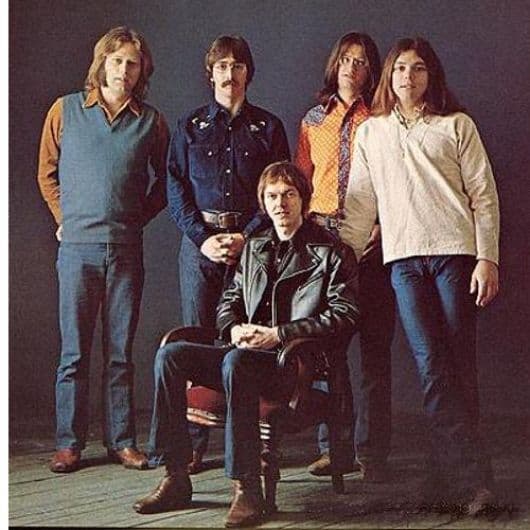
A Bittersweet and Haunting Elegy for a Lost Time, a Profound Reflection on the Passing of Youth and Innocence.
In the early 1970s, as the American musical landscape was giving rise to country-rock, few bands were as skilled at blending pastoral harmonies with raw rock energy as Poco. They were a pioneering force, celebrated for their intricate musicianship and a sound that was both soaring and deeply human. Their 1973 album, Crazy Eyes, stands as a pivotal moment in their history, a record that would reach a respectable number 38 on the Billboard 200 but carried with it an immense, tragic weight. Within its tracklist was a song that was never a single, never a chart hit, but whose power was so profound that it became a cherished masterpiece for generations of fans. That song was “Magnolia.” Its drama is not in commercial success, but in the bittersweet sadness it evokes—a haunting reflection on a love that’s now a memory and a past that can never be reclaimed.
The story behind “Magnolia” is a deeply personal and dramatic one. The album Crazy Eyes marked a turning point for the band, as it was the last record to feature founding member and creative heart, Richie Furay, before his departure. This impending breakup casts a long, melancholy shadow over the entire album, giving the songs a sense of finality and poignant reflection. “Magnolia,” in this context, feels like an elegy, a farewell letter to a time of innocence and a past that is now slipping away. The lyrics are a raw, emotional monologue from a narrator who is looking back at his life and feeling a profound sense of loss. He is not just reflecting on a moment; he is mourning a time, a place, and a feeling that are now out of his reach.
The lyrical drama of the song is a powerful journey through memory. The narrator’s longing for a lost time is personified by “Magnolia,” a symbolic figure for a simpler, happier past. He laments the passage of time, the changes that have left him feeling weary and alone. “Magnolia” is not a specific person; it is an idealized version of a love or an era that he can never return to. The music itself is a character in this drama, perfectly amplifying the sense of nostalgic sadness. The song begins with a gentle, finger-picked acoustic guitar that sets a somber, reflective tone. The signature pedal steel guitar, played with a profound sense of yearning, weeps with a quiet agony, its sound mirroring the narrator’s heartache. The harmonies, so central to Poco’s sound, are filled with a bittersweet nostalgia, a beautiful, poignant echo of a time that can no longer be.
For those of us who came of age with this music, “Magnolia” is more than a song; it’s a touchstone. It takes us back to a time when album tracks could be as powerful and meaningful as the biggest hits. It’s a nostalgic reminder of the universal pain of watching time slip away and the beautiful sadness of a love that is now a memory. The song’s enduring power lies in its ability to speak to a deeper human truth—that while we can never return to the past, we can find a profound, bittersweet beauty in remembering it. “Magnolia” remains a timeless and deeply emotional piece of music, a haunting masterpiece that continues to resonate with its cinematic drama.