
Inside Slade’s Creative Chaos: The Studio Session of 4 October 1980
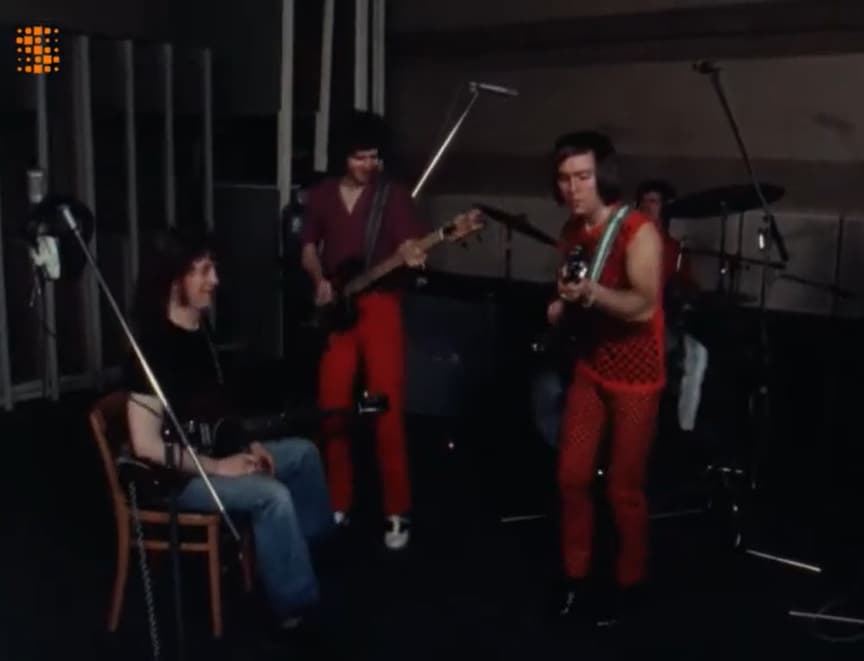
A rarely seen studio video dated 4 October 1980 offers a fascinating glimpse into Slade at a pivotal moment in their career. Titled simply “In the studio – performing and messing around”, the footage captures the band far from the glare of the stage lights, revealing instead the raw, unfiltered chemistry that powered one of Britain’s most enduring rock acts.
Shot during a period of transition, the session shows Noddy Holder, Dave Hill, Jim Lea, and Don Powell in a relaxed studio environment, playing through material, joking with one another, and casually slipping between rehearsal and performance. There is no sense of formality or polish here. What makes the footage compelling is precisely its lack of structure. This is Slade as they really were behind closed doors.
The timing of the recording is significant. By late 1980, Slade had just experienced a dramatic revival following their triumphant appearance at the Reading Festival earlier that year, which reintroduced the band to a younger audience and reaffirmed their relevance in a rapidly changing rock landscape. The studio session reflects that renewed confidence. The band appear loose, energized, and creatively alert, clearly enjoying each other’s company after years of commercial ups and downs.
The clip highlights Slade’s instinctive tightness as a unit. Even when “messing around,” the band’s trademark power is evident. Noddy Holder’s unmistakable voice cuts through the room with ease, Dave Hill’s guitar work remains sharp and playful, while Jim Lea and Don Powell lock into a rhythm that feels effortless rather than rehearsed. It is a reminder that Slade’s strength was never just in their hits, but in their ability to sound formidable even when not trying to impress.
Equally revealing are the moments between the music. Laughter, offhand remarks, and spontaneous bursts of energy paint a picture of a band whose camaraderie had survived fame, frustration, and reinvention. These informal exchanges humanize Slade, showing them not as rock icons, but as working musicians still driven by instinct and enjoyment.
Although the video was never intended as an official release, it has since become a treasured artifact among fans. Circulating online through unofficial uploads, it offers a rare perspective that polished documentaries and concert films often miss. For longtime followers, it reinforces why Slade’s comeback in the early 1980s felt so authentic. For newer listeners, it serves as an introduction to the band’s personality and resilience.
In retrospect, the 4 October 1980 studio session stands as more than casual footage. It documents a band rediscovering its momentum, grounded in friendship, humor, and an unshakable rock and roll core. Sometimes, the most revealing moments in music history happen not on stage, but in the spaces where musicians are simply being themselves.