
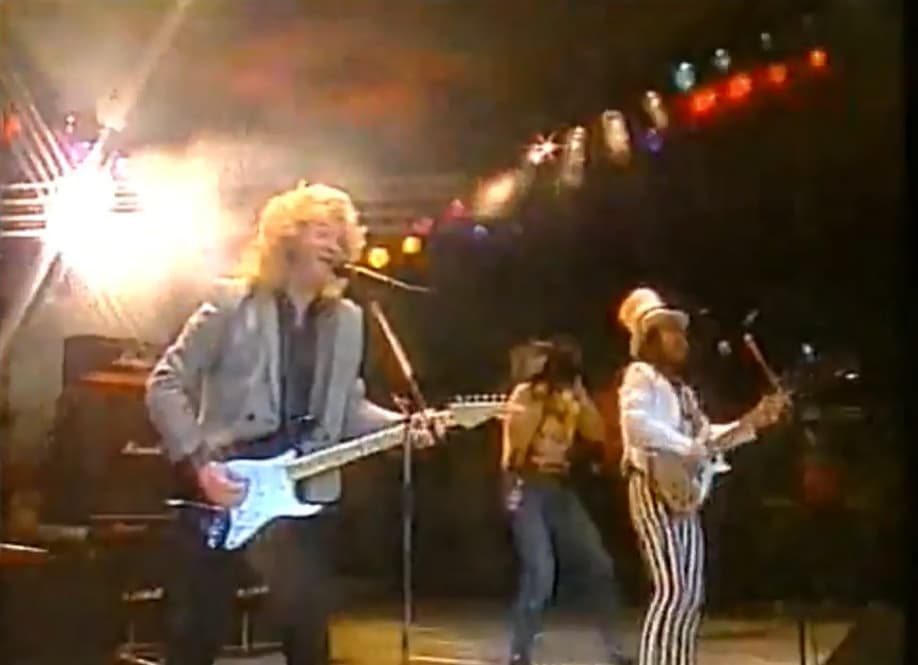
Slade Bring Defiance and Fire to the Final Night of Thommy’s Pop Show in 1984
On 8 December 1984, Slade delivered one of their most uncompromising television performances when they appeared on the final episode of the German music program Thommy’s Pop Show, broadcast on ZDF and hosted by Thomas Gottschalk. At a time when glossy pop and synthesizer driven sounds dominated European television, Slade walked onto the stage carrying something far older and far more dangerous. Pure rock and roll conviction.
Their performance of “Rock and Roll Preacher” was not polished for television comfort. It was loud, direct, and unapologetic. The song itself, built on swagger and belief in rock as a way of life rather than a trend, suited the moment perfectly. Slade were not chasing relevance. They were asserting identity. Watching the performance now, it feels less like a promotional appearance and more like a statement of survival.
By 1984, Slade were veterans of multiple musical eras. They had conquered the glam years, endured shifting tastes, and outlasted countless contemporaries. On Thommy’s Pop Show, that experience translated into authority. Noddy Holder’s voice cut through the studio with commanding force, while Dave Hill, Jim Lea, and Don Powell locked into a performance that felt tight, aggressive, and alive. There was no sense of nostalgia. This was a band very much in the present.
The significance of the occasion adds weight to the performance. This was the final episode of Thommy’s Pop Show, a program that had served as a key platform for international artists on German television. Slade did not treat it as a farewell variety show. They treated it like a rock stage. The additional performance of “All Join Hands” offered contrast, showing the band’s melodic strength and emotional reach, but it was “Rock and Roll Preacher” that defined the night.
In hindsight, this appearance stands as a reminder of why Slade mattered and still matter. They represented a strain of rock music rooted in belief, energy, and connection rather than fashion. On that December night in 1984, as one television era came to a close, Slade delivered a performance that felt timeless. Loud, proud, and completely unfiltered.