
A Raw, Defiant Anthem of Youthful Revolution, a Powerful Prophecy of Glory Released in the Silence Before the Storm.
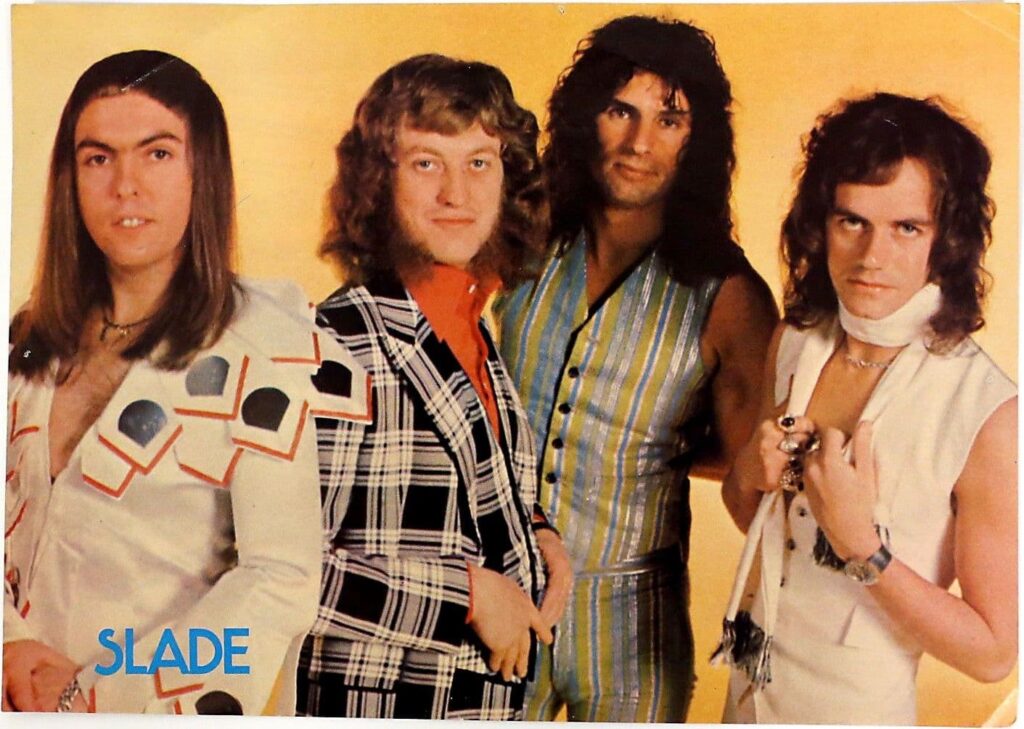
In 1970, the musical landscape was about to be shaken to its foundations, and at the epicenter of this seismic shift stood Slade. But they were not yet the glitter-encrusted, chart-smashing legends the world would soon know. They were a band of working-class men from Wolverhampton, powerful, raw, and still searching for the precise sound and image that would ignite the masses. Their album, Play It Loud (1970), is a crucial, dramatic document of this tumultuous incubation period. Amidst its tracks lay a song that was both an unlikely cover and a startling prophecy. That song was “The Shape of Things to Come.” Released as a single that year, it represents one of the most significant pieces of dramatic irony in rock history. Despite the band’s palpable energy and conviction, the single failed to make any significant impact on the UK charts, meeting the silence before the legendary, stadium-shaking roar that would soon follow.
The story of “The Shape of Things to Come” is a tale of destiny delayed. The original song was a defiant anthem of youth rebellion from an obscure American film, but Slade’s interpretation transformed it into a declaration of their own impending dominance. The drama lies in the band’s frustrating struggle. They were a ferocious live act, commanding stages with a raw energy that was electrifying, yet their early records consistently failed to connect with the mainstream public. This song, with its aggressive guitar work and the unpolished, snarling vocal delivery of Noddy Holder, was their defiant response to that inertia. It wasn’t just a cover; it was a manifesto. They were singing a song about sweeping cultural change and the future belonging to the youth, all while waiting desperately for their own breakthrough moment. The sheer, unbridled power in the recording hinted at the volcanic eruption of fame that was only a short time—and a change of attire—away.
The meaning of the song is rooted in this prophetic defiance. For Slade, it was less about the specific politics of the original and more about the generalized swagger of a band demanding attention. The song is a theatrical expression of their belief in themselves, a shout into the void of the music business that screamed: We are the future. The music itself is the key to this drama. It’s a short, sharp, and forceful blast of rock and roll, heavy on the relentless drumming and churning guitars that would define their sound. They weren’t aiming for sophistication; they were aiming for pure, primal impact. This raw, unpolished sound captured the aggressive spirit of their initial image and was the perfect sonic blueprint for the stadium anthems that would soon make them global superstars.
For those of us who remember the grit and raw power of the early 70s rock scene, “The Shape of Things to Come” is a profound piece of nostalgia. It is a testament to the intense effort, frustration, and sheer belief that often precede immense stardom. It’s a document of Slade’s furious, compelling struggle, a snapshot of the band before the fame, the glitter, and the inevitable chart glory. The song stands as a timeless, defiant piece of rock history, the powerful, often-overlooked sound of a great band demanding the future it knew it deserved, even when the charts initially refused to listen.