
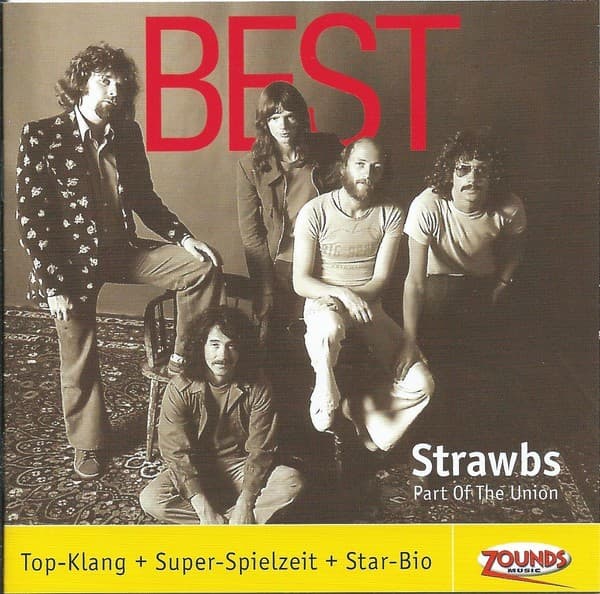
“Part Of The Union”: Strawbs’ Unexpected Anthem of Working-Class Solidarity
For those of us who journeyed through the diverse landscapes of British folk-rock and progressive rock in the early 1970s, Strawbs were a band of quiet distinction. Known for their intricate musicianship, poetic lyrics, and often melancholic acoustic leanings, they carved out a niche that was sophisticated and deeply rooted in folk tradition. Yet, in a surprising turn that broadened their appeal immensely, they unleashed “Part Of The Union,” a raucous, anthemic, and undeniably catchy song that became an unlikely chart-topper and an enduring symbol of working-class pride. It was a moment where their thoughtful folk sensibilities met an irresistible, rollicking rock ‘n’ roll spirit.
“Part Of The Union” was released as a single in January 1973, marking a significant commercial breakthrough for Strawbs. It quickly soared up the charts, becoming their biggest hit by far. In their native UK, the song reached a remarkable number 2 on the Official Singles Chart, establishing them firmly in the mainstream consciousness. It also performed well internationally, reaching number 1 in Ireland and charting prominently across Europe and in Australia. The song was subsequently included on their critically acclaimed 1973 album, “Bursting at the Seams,” which itself peaked at number 2 on the UK Albums Chart. The immense popularity of “Part Of The Union” was a testament to its infectious chorus and timely lyrical themes, proving that a band known for its progressive leanings could also deliver a genuine, widespread pop phenomenon.
The story behind “Part Of The Union” is somewhat unique in Strawbs’ discography. While the band’s primary songwriter was typically lead singer Dave Cousins, this particular anthem was penned by drummer Richard Hudson and bassist John Ford. Hudson and Ford, who would later form Hudson Ford, brought a more straightforward, pop-rock sensibility to the band, often in contrast to Cousins’ more intricate folk-prog compositions. “Part Of The Union” was born from their observations of the burgeoning trade union movement and the growing sense of working-class power and solidarity in Britain at the time. They crafted a song that was both celebratory of this collective spirit and, arguably, contained a touch of satirical irony about joining the “union.” The band, particularly Dave Cousins, has spoken about the tension within the group regarding the song’s commercial nature and its perceived simplicity compared to their usual fare. However, its undeniable catchiness and populist appeal resonated with audiences, making it a powerful, albeit sometimes controversial within the band, highlight of their career.
The meaning of “Part Of The Union” is a boisterous, often humorous, embrace of the concept of collective action and belonging to a trade union. The lyrics directly address the benefits and camaraderie of being a “part of the union,” painting a picture of solidarity and strength in numbers. “You’re a part of the Union / You’re a part of the Plan / You’re a part of the Union Man,” the chorus declares, emphasizing the sense of shared purpose and identity. While it can be seen as a straightforward anthem for the labor movement, some interpretations also suggest a subtle layer of irony or even satire, questioning the absolute benefits or the necessity of conformity within such a collective. However, its prevailing message is one of empowerment through unity, a voice for the everyman who finds strength and security by standing together. The song’s driving rhythm, singalong chorus, and Dave Cousins’ spirited vocal delivery, though often more folk-oriented, here takes on a celebratory, almost defiant, tone, making it an irresistible call to arms for anyone who feels stronger as “part of the union.”
For those of us who recall the vibrant social and political landscape of the early 1970s, “Part Of The Union” evokes a powerful sense of community, shared purpose, and a moment when popular music directly addressed the lives of ordinary working people. It brings to mind protest marches, pub singalongs, and the feeling of belonging to something larger than oneself. It’s a reminder of Strawbs’ versatility and their ability to bridge the gap between niche progressive folk and mainstream chart success, often with a mischievous twinkle in their eye. Even now, decades later, the infectious energy and enduring message of “Part Of The Union” continue to resonate, pulling us back to a time when a simple, direct song could capture the collective spirit and make everyone feel like they were “part of the union.”