
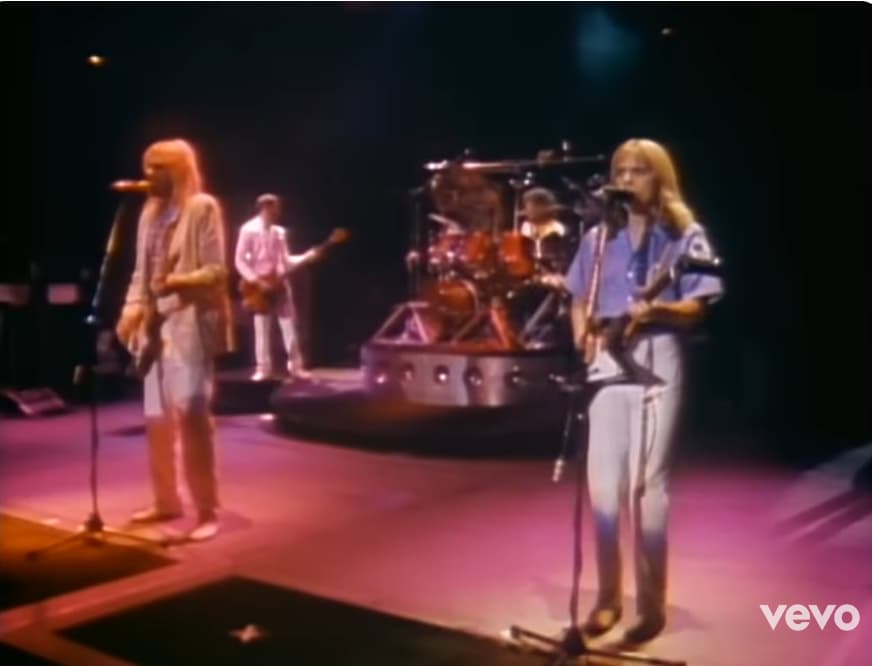
A vulnerable confession of devotion that softens arena rock into an intimate promise
When Styx perform “Babe” live, the song carries with it the full weight of its history as one of the most defining power ballads of the late 1970s. Originally released in 1979 on the album Cornerstone, “Babe” became the band’s only number one single on the US Billboard Hot 100, an achievement that permanently reshaped both their public image and their internal creative dynamics. Written by Dennis DeYoung as a deeply personal love song, it arrived at a moment when Styx stood at the peak of their commercial power, even as questions about artistic direction quietly simmered beneath the surface.
In a live setting, “Babe” reveals its true emotional architecture. Stripped of studio polish and framed by the physical presence of the band, the song feels less like a chart-topping hit and more like a private letter read aloud. DeYoung’s vocal delivery becomes the focal point, balancing fragility and control, allowing each line to breathe. Unlike the band’s more theatrical epics, this performance leans inward. The lyrics do not seek grandeur. They seek reassurance. The promise at the heart of the song is simple and human, rooted in fidelity, patience, and emotional clarity.
Musically, the live arrangement preserves the song’s gentle structure while subtly amplifying its emotional impact. The keyboards provide a soft harmonic bed, while guitars remain restrained, serving the melody rather than overpowering it. The rhythm section holds back deliberately, creating space for the vocal narrative to unfold. This restraint is crucial. “Babe” only works when it resists spectacle, and in performance, Styx demonstrate an understanding that vulnerability, not volume, is the song’s greatest strength.
The emotional tension surrounding “Babe” has always been part of its legacy. Its massive success brought Styx a wider audience, but it also highlighted the band’s internal split between progressive ambition and pop accessibility. Yet live, those debates fall away. What remains is the song itself, and its undeniable sincerity. In performance, “Babe” no longer feels like a commercial compromise. It feels like a moment of emotional truth that demanded to be written and shared.
For the audience, hearing “Babe” live often triggers a deeply personal response. The song has long been associated with weddings, long-distance relationships, and moments of emotional vulnerability. Its message has aged gracefully because it does not rely on trends or cultural markers. It speaks in universal terms about trust and devotion, ideas that never lose relevance. Time has softened any controversy surrounding the song and left behind something warmer and more enduring.
In the broader context of Styx’s catalog, “Babe” occupies a unique space. It is neither progressive rock nor hard arena anthem. It is a confession set to music. Performed live, it becomes a reminder that even the most ambitious bands are built on human emotions, private moments, and songs written not for the crowd, but for one person. That intimacy is what allows “Babe” to continue resonating decades later, long after the charts have faded and the lights have dimmed.