
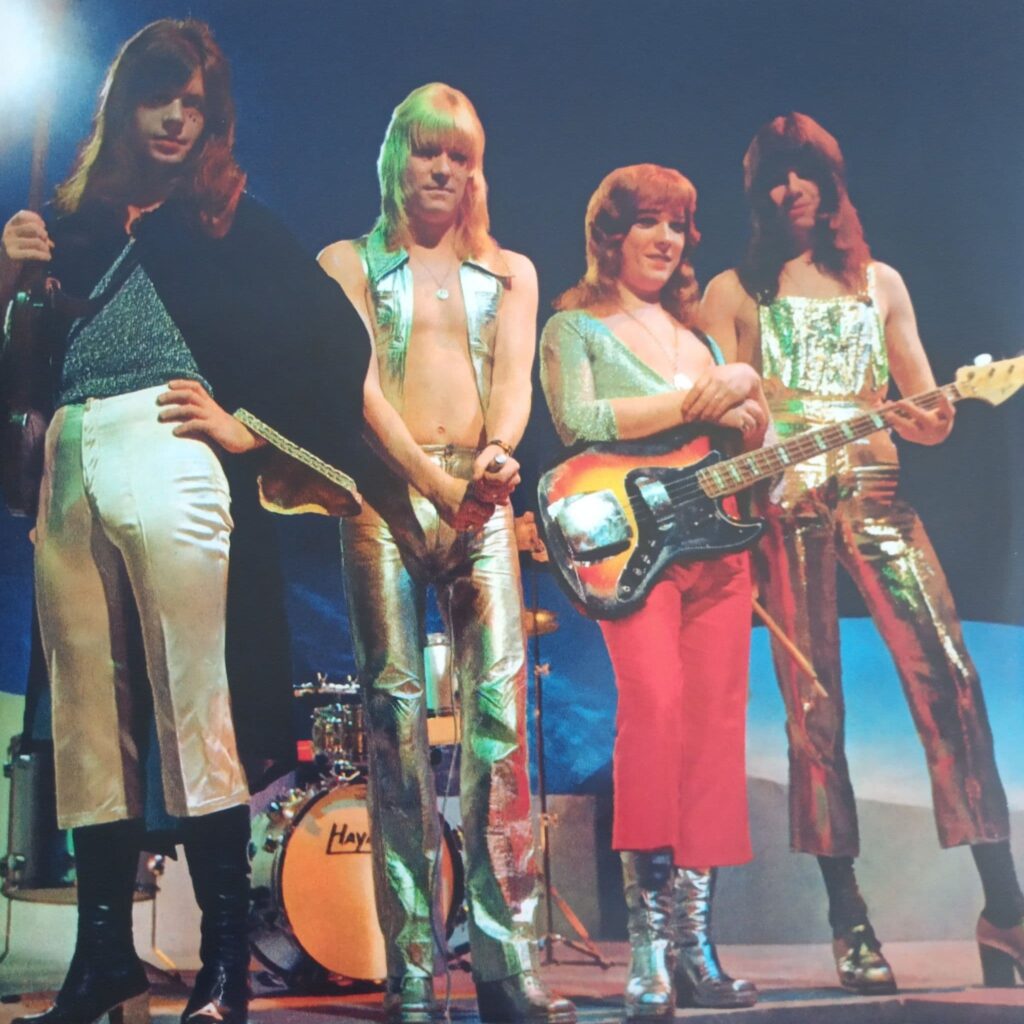
A revealing portrait of fame where glitter fades and reality takes the stage
When Sweet appeared in the BBC documentary All That Glitters, first broadcast in February 1974, the band were riding the crest of extraordinary commercial success. Fresh from a run of UK Top 10 singles and dominating the charts with their glam rock anthems, they were among the most visible groups in Britain. Rather than focusing on chart positions or hit songs, the documentary chose a more probing angle, following Sweet across a 24 hour period and asking a deceptively simple question: is the music business really that glamorous? Central to the film is electrifying live footage filmed on 21 December 1973 at London’s Rainbow Theatre, capturing the band at their raw, unfiltered peak.
What makes All That Glitters so compelling is its contrast. On stage, Sweet are unstoppable. The Rainbow Theatre footage shows a band in total command, roaring guitars, pounding drums, and Noddy Holder’s unmistakable voice cutting through a sea of screaming fans. This is glam rock at full throttle, loud, communal, and euphoric. The audience response is overwhelming, reinforcing why Sweet were seen as one of the most powerful live acts of their era. The music feels larger than life, designed to lift crowds out of the ordinary and into something ecstatic.
Away from the stage, however, the documentary deliberately pulls back the curtain. Cameras follow the band through travel, preparation, downtime, and the quieter moments that surround the spectacle. Here, glamour gives way to routine. Fatigue replaces adrenaline. The band members appear thoughtful, sometimes detached, navigating the pressures of expectation and repetition. The film never turns hostile or sensational, but it is quietly disarming. It allows the viewer to see that success does not erase exhaustion, nor does popularity guarantee fulfillment.
The strength of All That Glitters lies in this duality. It refuses to reduce Sweet to either cartoonish glam idols or cynical victims of fame. Instead, it presents them as working musicians inside a highly demanding industry. The title becomes ironic rather than celebratory. What sparkles under the stage lights carries weight backstage. The documentary captures a moment when Sweet were transitioning from being perceived as a singles band into a fully fledged live force, while still grappling with how they were viewed by critics, industry figures, and even themselves.
The Rainbow Theatre performance footage has since taken on legendary status, not simply because of its sound or visuals, but because of what it represents. It preserves Sweet at the exact point where their popularity, confidence, and power converged. Watching it today, the energy feels undiminished. Yet when placed alongside the quieter moments in the documentary, it gains added emotional depth. The roar of the crowd is no longer just celebration, but also context.
In hindsight, All That Glitters stands as one of the most honest rock documentaries of its time. It captures the tension between image and reality, between performance and personhood. For Sweet, it immortalized both sides of their existence: the thunderous glam rock phenomenon and the human cost that came with sustaining it. Decades later, the film remains a vital reminder that behind every burst of glitter, there is discipline, fatigue, and a relentless cycle that few outsiders ever truly see.