
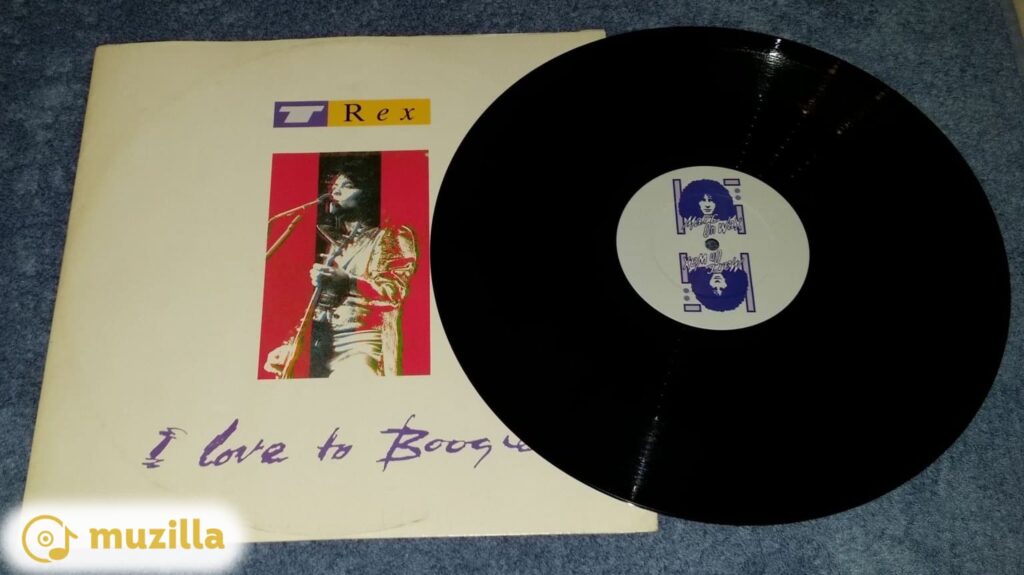
A Defiant Burst of Joy, a Glorious Attempt by a Fallen King to Reclaim His Throne.
By 1976, the glittering empire that Marc Bolan had so masterfully built was starting to crumble. The unstoppable force of T. Rex, which had defined the early years of the glam rock movement, had faded. The singles weren’t hitting the top of the charts with the same explosive force, and the once-lean, otherworldly rock star was grappling with personal demons that had taken a visible toll. The musical landscape had moved on, embracing disco and punk, leaving the pioneers of glam behind. It was in this dramatic, deeply uncertain moment that Marc Bolan made his move, releasing the single “I Love to Boogie.” It was a defiant, joyful, and utterly simple declaration of his enduring love for rock and roll. While it didn’t recapture the glory of his number one hits, it was a respectable comeback, climbing to a respectable number 13 on the UK Singles Chart. The song’s power lies in the fact that it was a non-album single, a desperate, standalone shot at redemption, before eventually being included on his final album, the hauntingly titled Dandy in the Underworld, released a year later in 1977.
The story of “I Love to Boogie” is a tragic, beautiful drama. After the peak of “T. Rextasy,” Bolan had spent several years in self-imposed exile, battling personal issues and watching his commercial appeal wane. The once-bright star of glam had become a shadow of his former self. But in 1976, he returned to London with a clear mission: to prove he still had the magic. The song itself is a masterstroke of deceptive simplicity. It’s not about deep introspection or complex narratives; it’s a raw, pure, three-minute blast of rock and roll energy. The drama is the stark, almost heartbreaking contrast between the song’s joyous, carefree sound and the turmoil in Bolan’s life. It feels like a forced optimism, a defiant smile in the face of a world that had forgotten him. He wasn’t following a trend; he was going back to the absolute basics, to the primal, irresistible rhythm that had inspired him from the very beginning.
The lyrics of “I Love to Boogie” are a love letter to the very core of rock music. He name-checks his heroes, Chuck Berry and Elvis Presley, as if to say, “This is my world. This is where I belong.” The song is a theatrical performance of happiness, an unburdened celebration of the music that still lived within him. The raw, bluesy guitar riff, the stomping rhythm, and the pure, unadorned passion in his vocal delivery are a direct challenge to the slick, overproduced sounds of the time. For older listeners, this song is a profound and poignant reminder of a time when music felt dangerous and alive. It evokes memories of a fallen icon, a creative genius who was fighting with everything he had to stay in the game. It is a moment of pure emotional transparency, a desperate attempt to reconnect with the pure, untroubled spirit of the music that had made him famous.
Ultimately, “I Love to Boogie” is more than a minor hit; it’s a crucial piece of Marc Bolan’s final act. It was a testament to his resilience, a sign that he was regaining his footing both personally and professionally. The song remains a powerful and bittersweet listen, a final burst of light from a star that would tragically burn out just a year later. It’s a song that proves that even in the face of despair, the power of music and the defiant joy of a simple boogie can be enough to carry you through. It stands as a timeless and deeply emotional farewell to a true original.