
Ted Nugent Responds Sharply to David Crosby Remarks Amid Rock and Roll Hall of Fame Debate
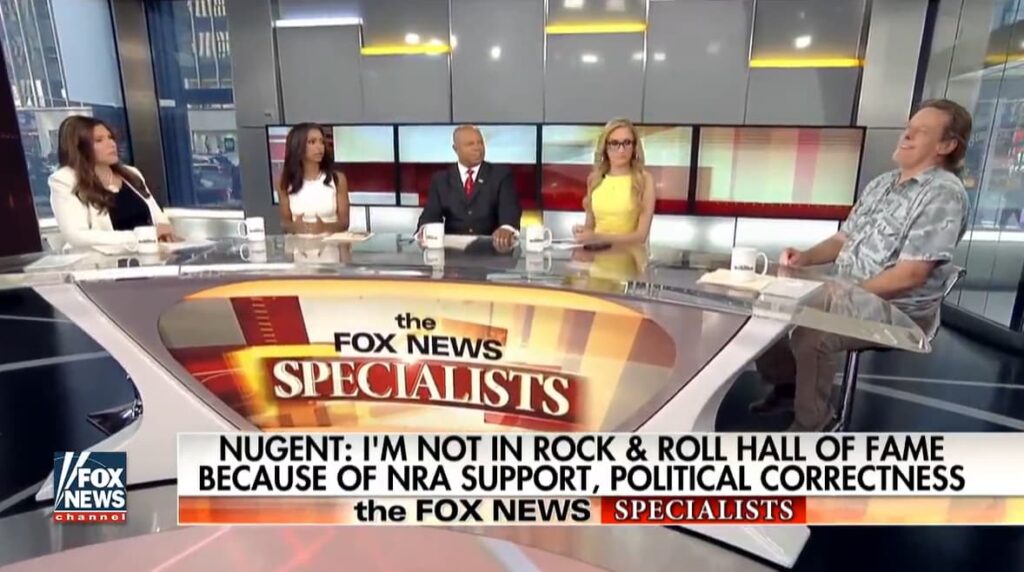
A long running debate over Ted Nugent’s absence from the Rock and Roll Hall of Fame reignited following a recent Fox News interview, where the outspoken guitarist responded forcefully to comments made by David Crosby. The exchange highlights ongoing tensions between music, politics, and recognition within one of rock’s most visible institutions.
During a radio interview, Nugent addressed speculation surrounding why he has yet to be inducted into the Hall of Fame, despite a career spanning more than five decades. Nugent suggested that his outspoken conservative views and strong support for the Second Amendment may have played a role in his exclusion. He pointed to what he perceives as ideological bias within the voting process, stating that his musical record alone should qualify him for induction.
David Crosby later reacted publicly to Nugent’s comments with a post on social media that included offensive language directed at the guitarist. Asked to respond during the Fox News segment, Nugent did not soften his tone. He dismissed Crosby’s criticism outright, stating that such remarks carried no weight in his view. Nugent went further by framing the backlash as a badge of honor, arguing that opposition from figures he strongly disagrees with reinforces his personal convictions rather than undermining them.
Throughout the interview, Nugent emphasized that his focus remains on live performance and his connection with audiences rather than institutional validation. He pointed to his extensive touring history, citing thousands of concerts and record sales numbering in the tens of millions. According to Nugent, the true measure of success in rock music lies with fans who continue to support artists year after year, not with awards committees or formal recognition.
The discussion also touched on Nugent’s political activism, including his involvement with the National Rifle Association. Nugent framed his views as rooted in constitutional principles and personal experience, stating that his beliefs are non negotiable and central to his identity. He rejected the notion that moderating his political stance would lead to broader acceptance within the music industry.
Hosts on the program expressed support for Nugent’s musical legacy, noting his influence as a Detroit born guitarist and his role in shaping hard rock and American arena rock. They argued that the Rock and Roll Hall of Fame was intended to honor artistic contribution rather than political alignment.
While the exchange did little to ease tensions between Nugent and his critics, it underscored a broader cultural divide that continues to shape conversations around legacy and recognition in rock music. For Nugent, the Hall of Fame debate appears secondary to his ongoing commitment to performing and engaging with his audience, which he repeatedly described as his real measure of success.