
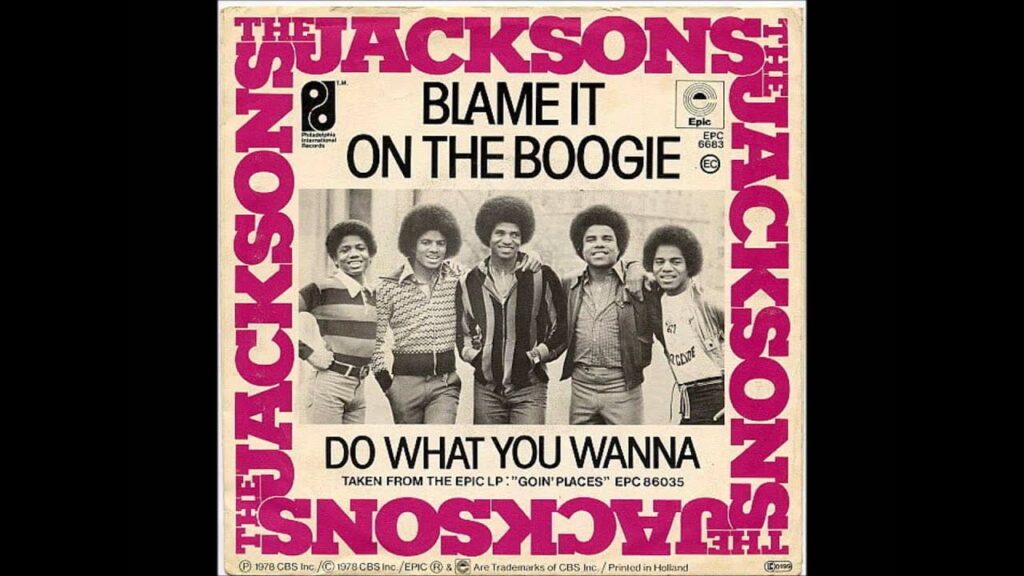
A Jubilant and Defiant Anthem of Freedom, a Celebratory Dance of Liberation from the Chains of a Musical Past.
By the late 1970s, the Jackson brothers were at a dramatic crossroads. After years of being molded into Motown’s hit-making machine, they had shed their old identity as The Jackson 5 and, under their new name, The Jacksons, were ready to write their own story. Their 1978 album, Destiny, was a declaration of independence, a triumphant moment of creative control. Within its tracklist lay an explosive, joyous song that perfectly captured the band’s newfound freedom. That song was “Blame It On the Boogie.” While it would become a global sensation and an enduring classic, its journey to the top was a dramatic saga filled with rivalries and unexpected twists. The song was a massive hit in the UK, soaring to a peak of number 3 on the Singles Chart, but it had a different fate in their home country, only reaching number 54 on the Billboard Hot 100. This stark contrast in its reception hints at the fascinating drama that played out behind the scenes.
The story of “Blame It On the Boogie” is one of the music industry’s most chaotic and compelling sagas. The song was originally penned by British singer-songwriter Mick Jackson (no relation to the band), who had recorded his own version with the intention of releasing it. However, the Jacksons’ then-manager, during a visit to the UK, heard the demo and immediately saw its potential for the brothers. In a whirlwind of studio sessions, The Jacksons rushed to record their version. What followed was a dramatic, head-to-head battle on the British charts. Two versions of the same song, both from artists named Jackson, were competing for airplay and sales. The confusion and the ensuing rivalry only added to the song’s mystique and cultural impact, turning a simple pop hit into a piece of music lore.
But the song’s deeper meaning is a powerful metaphor for the band’s own career. At its heart, “Blame It On the Boogie” is a song about an uncontrollable, irresistible force—the rhythm that takes over your body and makes you dance. “Don’t blame it on the sunshine / Don’t blame it on the moonlight / Don’t blame it on the good times / Blame it on the boogie.” This isn’t just a simple dance command. It is a triumphant, joyous declaration that they were no longer bound by old contracts or external forces. The “boogie” is their destiny, their innate talent, the musical force that they finally had the power to unleash on their own terms. Michael Jackson’s youthful, yet impossibly soulful, lead vocal, backed by the tight, powerful harmonies of his brothers, feels like a release of pent-up energy, a raw expression of liberation.
For those of us who came of age with this music, “Blame It On the Boogie” is more than a disco classic; it’s a time capsule. It’s the sound of a family in transition, of a group of artists who were finding their own voice and asserting their own identity. It’s a song that evokes memories of dancing without a care in the world, of the pure, unadulterated joy that only music can provide. It is a timeless anthem of freedom, a reminder that the best way to overcome your past is to turn up the volume and dance your way into the future. It remains one of the most powerful and meaningful moments in the band’s storied history.