
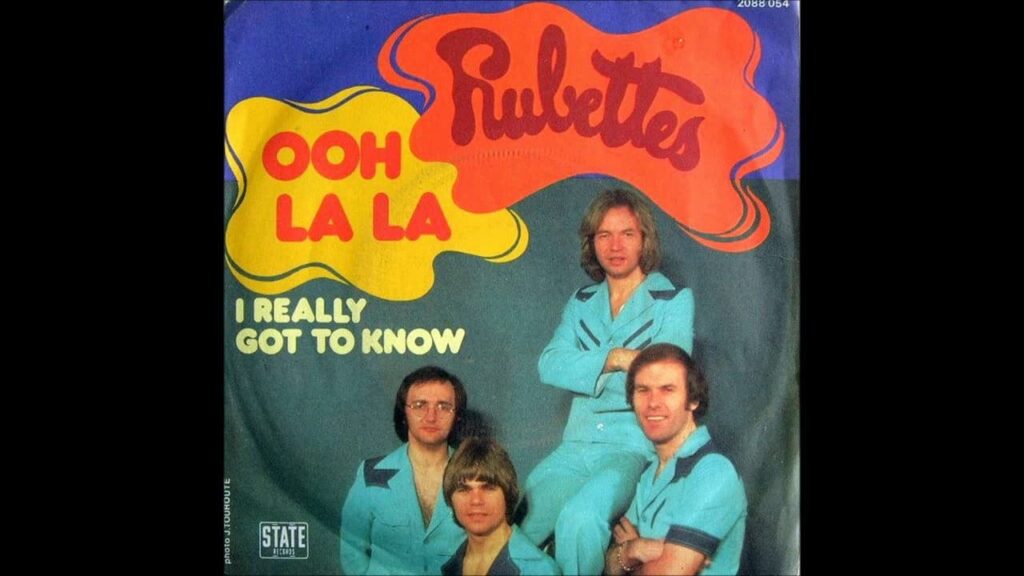
A Moment of Sweet Transition: A Glimpse of Mature Romance and Sophisticated Pop from a Band Shedding Its Glam-Pop Persona.
For many of us who lived through the vibrant, technicolor blur of 1970s pop, the band The Rubettes will forever be synonymous with a single, unforgettable sound: the soaring, falsetto-laden hook of “Sugar Baby Love.” That song, a whirlwind of nostalgia and infectious energy, defined their early career and established them as the kings of a specific, doo-wop-inflected brand of glam-pop. Yet, as the decade wore on, the band began to evolve, quietly yearning for something more than just a place in the pantheon of one-hit wonders. In 1977, they released an album that marked a dramatic turn. On the record Baby I Know, a track emerged that was a world away from their earlier, more flamboyant hits. That song was “Ooh La La.” It was not a grand commercial success; it failed to chart in the UK and was largely overshadowed by the punk explosion that was seizing the nation. However, its lack of chart position belies its profound significance, as it represented a crucial moment in the band’s emotional and artistic journey.
The drama behind “Ooh La La” is a quiet one, a story of a band wrestling with its own identity. After a string of massive hits, including the aforementioned “Sugar Baby Love” and the surprisingly dark and emotional “Under One Roof,” The Rubettes faced the age-old dilemma of a pop group: how to grow up without losing their audience. The year 1977 was a brutal one for traditional pop acts, as the UK music scene was being ripped apart and rebuilt by the raw, furious energy of punk. While others clung to their past, The Rubettes chose to pivot. “Ooh La La” was their elegant, understated response. It was not a battle cry, but a gentle whisper of maturity and a refusal to be defined by a single gimmick.
The song’s meaning is a departure from their earlier lyrical simplicity. While “Sugar Baby Love” was a boyish plea, “Ooh La La” is a song of pure, sophisticated admiration. It’s a celebration of a woman’s allure and a recognition of the magnetic, almost magical power she possesses. The lyrics are delivered with a new kind of confidence, less of a plea and more of a declaration. “Ooh La La, I can’t believe what I see / You just walked into a room and you smiled at me” is a moment of pure, cinematic romance, a flash of recognition and enchantment. The song’s melody and arrangement, too, reflect this maturity. The catchy chorus and harmonies are still there, but they are framed by a more refined, subtle production. The sound is fuller, warmer, and feels more grown-up, a far cry from the stripped-down, retro-pop of their beginnings.
For those of us who remember this period, “Ooh La La” is a piece of forgotten history that resonates deeply. It’s a nostalgic nod to a time when bands were forced to evolve or be left behind. It’s a bittersweet memory of an artist trying to find their footing in a world that was moving on. The song is not a hit that brings back a flood of public memories, but rather a personal, intimate recollection of a beautiful song that deserved a bigger stage. It’s a testament to the band’s enduring artistry and their courageous attempt to create something timeless. “Ooh La La” remains a hidden gem in their catalog, a quiet, soulful moment that reminds us that even pop stars can find grace in a difficult transition.