
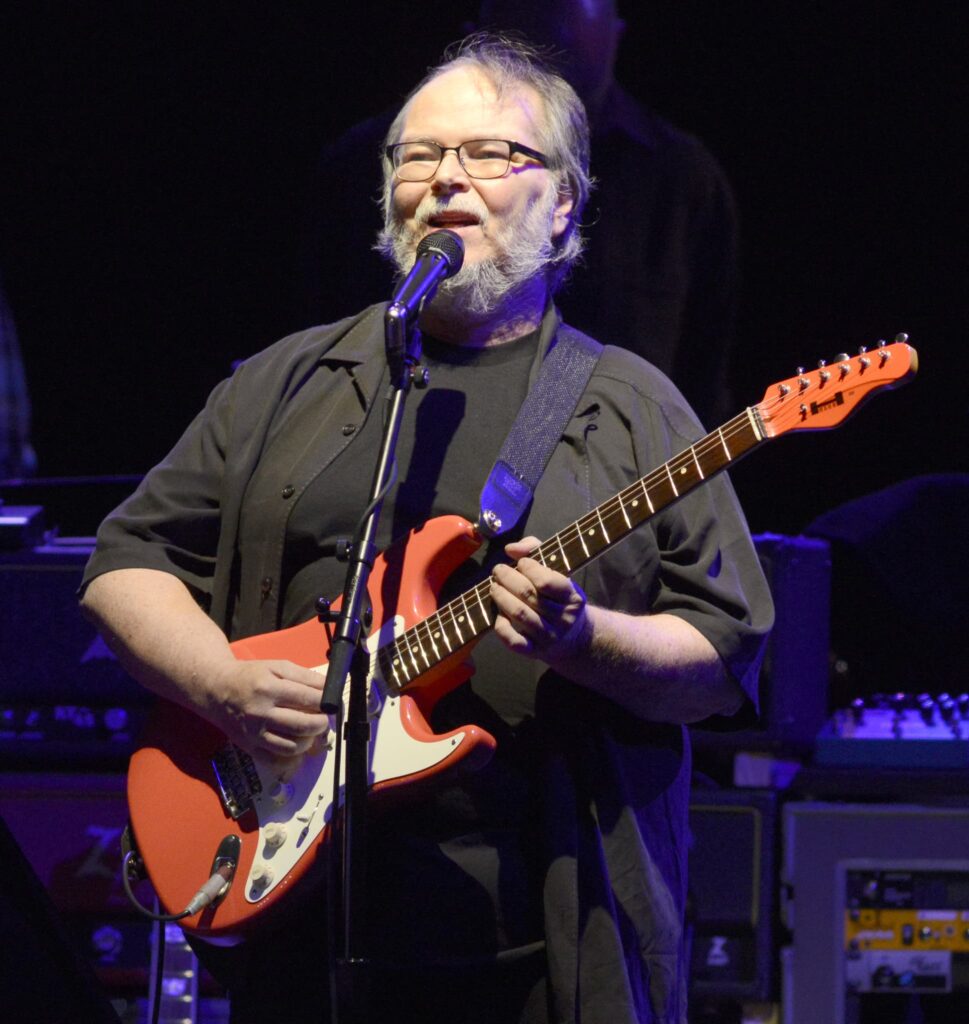
Heartbeat in the Shadows: Walter Becker’s “Dark Horse Dub” as a Languid Echo of Loss and Groove
Released in 2008 as part of Walter Becker’s second solo album, Circus Money, the track “Dark Horse Dub” didn’t chart on Billboard or storm the radio waves—but like Becker himself, it lives in the subtle spaces where the line between experimental jazz, reggae groove, and quiet confession blurs into art. While the album didn’t seek the mass acclaim of Becker’s work with Steely Dan, it stands as a testament to his restless creativity, his refusal to be defined by nostalgia alone, and his pursuit of sonic landscapes that remain compelling long after the amplifiers cool.
“Dark Horse Dub” is, in many ways, quintessential Becker. It’s jazz filtered through a déjà vu of Kingston nights—where the air hangs heavy with reverb and memory. This track is not a lyrical confessional like “Two Against Nature” or a harmonic puzzle like “Peg”; instead, it’s a slow-burning exploration that embraces space, bass, and that unmistakable dub atmosphere. The song breathes at leisure, yet there’s a tension lingering beneath its surface—a dark horse indeed, quietly galloping along the edges of your consciousness.
Circus Money itself stands apart in Becker’s catalog. Co-written and co-produced with Larry Klein, the album leans heavily into reggae rhythms, yet employs them not as cultural tourism but as a frame for a uniquely personal approach to songwriting and arranging. Becker had always been a musician concerned with mood, texture, and sly allusion. Here, with “Dark Horse Dub,” he’s at his most enigmatic—setting up a skeletal version of the album’s closer and leaving listeners inside a hollowed-out temple where each echo matters.
The track is also a case study in restraint. The bass, warm and present, never overplays its hand; the guitar lines are sparse, but each note is placed with deliberate precision. The keyboards shimmer like neon reflections on wet pavement. There’s no rush to resolve, no chorus to hammer home a point. Instead, this dub version moves like smoke through an empty bar, lingering on the air long after the listener has gone. It inhabits a liminal space between composition and vapor.
Ultimately, “Dark Horse Dub” invites us to revisit Becker not as the perfectionist half of a legendary duo, but as a solo artist whose voice—whether whispered through a vocal mic or a flanging delay unit—always carried the weight of something half-remembered, half-dreamt. For those who listen with patience, it rewards with atmosphere, mystery, and a deeper appreciation for a man who was always happiest just beneath the spotlight, tinkering with shadows and groove.
In this track, the dark horse is not the unexpected winner—it’s the one standing quietly at the start line, knowing that the race itself was never really the point.