
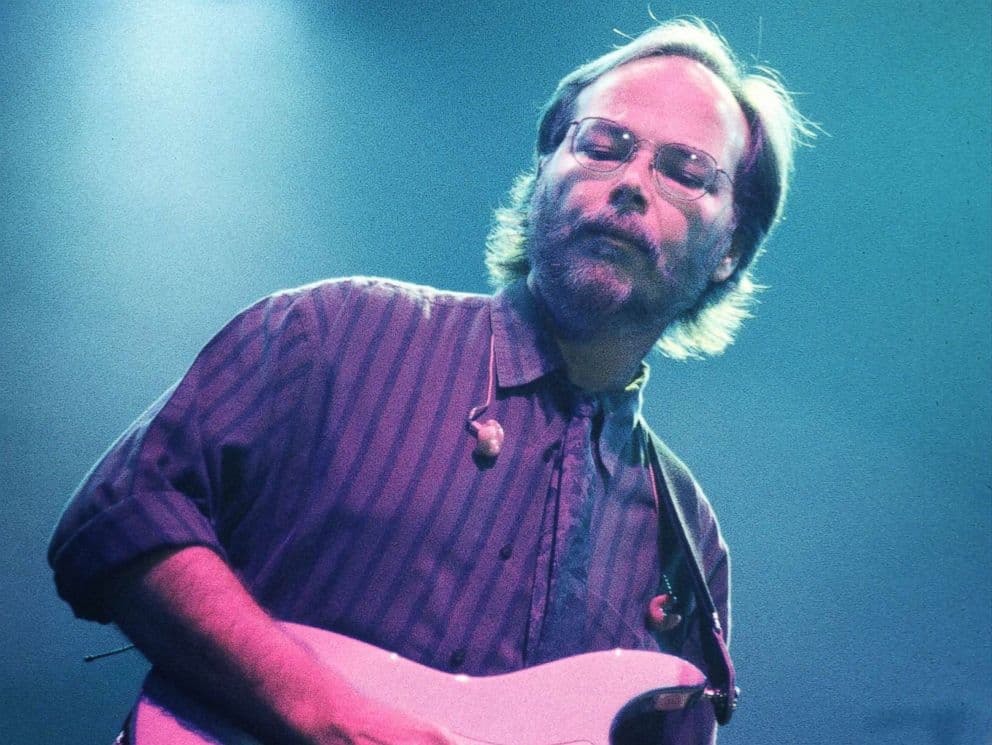
“Paging Audrey” is a soulful, melancholic jazz-rock exploration of loss, regret, and the search for a vanished personal connection, serving as Walter Becker’s most nakedly emotional song.
There are certain moments in the long, winding careers of our rock-and-roll philosophers and musical architects that seem to tear a hole in the usual cynical scrim they’ve thrown up around their art. For the late, great Walter Becker, a man known for his razor-sharp wit, labyrinthine arrangements, and the famously sardonic narrative lens of Steely Dan, that moment arrived, unexpectedly and profoundly, with “Paging Audrey.” This sprawling, six-minute-plus lament is the unmistakable emotional centerpiece of his second and final solo album, Circus Money, released in 2008.
While the album Circus Money itself enjoyed critical acclaim for its sophisticated blend of classic Becker-esque jazz-rock precision and a newly prominent, seductive reggae and Jamaican-music influence, it was not the sort of commercial beast designed for pop chart dominance. True to the meticulous, late-career work of a true musician’s musician, the album, and therefore the single track “Paging Audrey,” did not register on the major, widely publicized Billboard Hot 100 or similar global singles charts. Its triumph was one of artistic depth and mood, not mass market ubiquity. For the discerning listener, the album’s success was measured by its place on the specialty charts—it peaked at a respectable No. 34 on the Billboard Top Independent Albums chart and No. 129 on the overarching Billboard 200 album chart—a quiet confirmation of its resonance within the core, informed audience who truly understood Becker’s genius.
The genesis of “Paging Audrey” is a story of slow burn and quiet resolution, a fascinating glimpse into the less-seen side of a famously secretive songwriter. Becker revealed in interviews that, unlike the majority of the album, which was co-written from scratch with producer and collaborator Larry Klein, this song was one of only two tracks based on ideas he’d had “lying around for years.” That detail, that this song had been fermenting in his private creative space, perhaps even alongside his legendary partner Donald Fagen, gives it a deep, autobiographical weight. It suggests a personal narrative too delicate or perhaps too raw for the shared canvas of Steely Dan. The track’s very composition speaks to an urge for unburdening, a desire to resolve an old, persistent chord of melancholy that he finally allowed to see the light.
In a musical arrangement that critics have consistently called the most “Steely Dan-ish” track on the entire Circus Money album—a high compliment indeed—”Paging Audrey” unfolds like a private, late-night confession set to an exquisite, slow-groove jazz-rock pulse. The atmosphere is dense and smoky, with Becker’s famously funky bass work driving the complex, shifting rhythm. The meaning of the song lies in its palpable sense of longing and the painful acknowledgment of a profound, unrecoverable loss. The “Audrey” being paged is not merely a name but a symbol—a ghost of a chance, a relationship, or perhaps an idealized version of a past self or life that has slipped away into the mists of time and memory.
“In the littlest hours ‘tween the dusk and dawn / While the nightlight glows with the music on,” Becker croons in his distinctively wry, yet vulnerable voice, setting a scene of solitary contemplation. The lyrics are a masterful evocation of the dark night of the soul, where the protagonist is haunted by the echoes of what could have been. It is a story told not with the usual noir detachment of a Steely Dan character study, but with a deeply personal sense of sadness and regret. The singer is literally searching—paging—for this lost connection, this “Audrey,” in the empty, labyrinthine terminals of memory. It speaks to every one of us who has ever woken in the dead of night, realizing that a crucial, beautiful thing is forever out of reach, leaving only the complex, lingering melody of regret. This is the sound of an elder statesman of rock finally dropping his guard, offering a piece of his vulnerable heart to those who care to listen. It is, ultimately, a magnificent and stirring reflection on the universal experience of growing older and reckoning with the indelible marks of the past.