
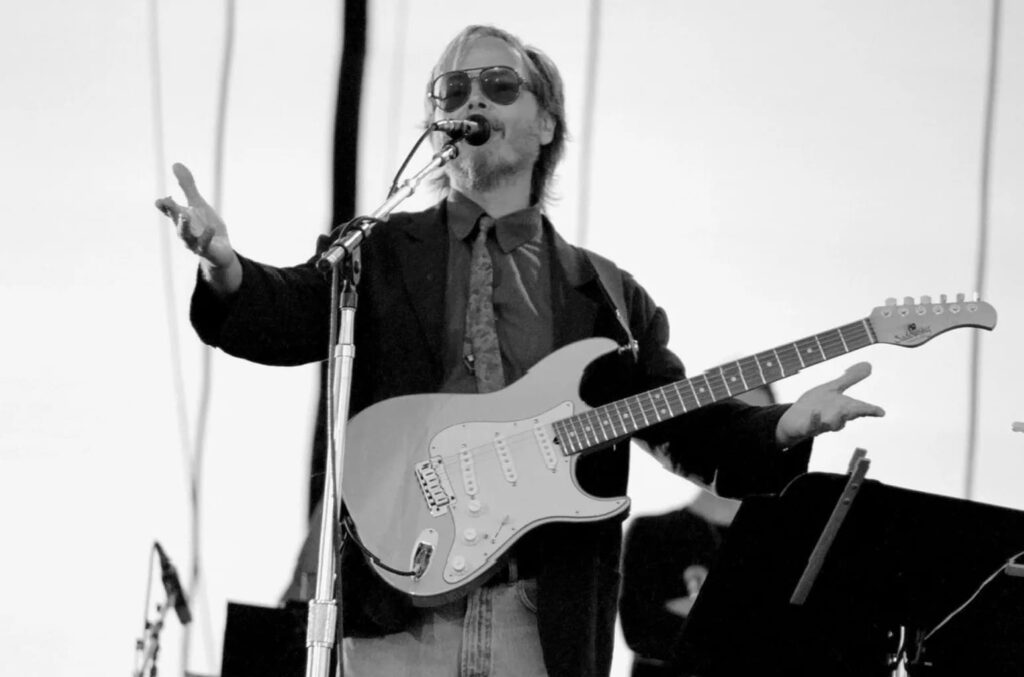
An Ache for a Long-Lost Promise: A Rare Glimpse into Walter Becker’s Tender Heart, Where Hope Lingers Against All Cynicism.
To the initiated, the name Walter Becker evokes the razor-sharp cynicism and arch, sophisticated detachment that defined Steely Dan. He was the wry, intellectual counterpoint to Donald Fagen, a master architect of jazz-rock perfection whose greatest creations were peopled by losers, creeps, and broken dreamers. Yet, in the quiet corners of the Steely Dan universe—the archives of early songwriting demos and forgotten studio tracks—a dramatically different picture emerges: one of surprising, almost heartbreaking tenderness.
This vulnerability is perfectly encapsulated in the track “This Seat’s Been Taken,” a song that represents a time before Becker and Fagen perfected their signature, ironic detachment. It was not an official single or album track upon release, and as such, it holds no chart position. Instead, it surfaced years later, in 2007, as part of the compilation of early works known as Found Studio Tracks (which itself did not chart, being a collection of demos and unreleased material). These tracks date back to the late 1960s or very early 1970s, a period when Becker and Fagen were working in the Brill Building as staff songwriters, still struggling to find their unique voice while crafting tunes that hinted at their future genius.
The story of “This Seat’s Been Taken” is a dramatic miniature built around a single, agonizing moment: the perpetual wait for a lover on a train. The narrator is sitting, holding a seat for his “baby,” desperately trying to fend off well-meaning or curious strangers (“Don’t ask me where she’s coming from / You’re quite mistaken / You know she’s gonna be here”). The tension is excruciating, a drawn-out agony of hope battling creeping doubt. The lyrics describe the mental justifications of a man staring into an empty future: “She must have a reason I will understand… She’ll tell me how she couldn’t find a pay ‘phone / She’ll start to cry, I’ll realize I’m not alone.” Every reason is a lie, a thin veil over the terrifying probability that she is simply not coming.
The profound meaning of the song is the enduring, pathetic hope of the lonely heart. It’s about the sheer willpower required to maintain a belief in fidelity and reunion, even when all empirical evidence suggests abandonment. The act of holding that vacant seat is a powerful symbol of clinging to a relationship, a dream, or even a sense of youthful optimism that has long since passed the point of no return. It captures the universal human tragedy of waiting for someone—or something—that is never going to arrive.
For those of us who grew up with the cold, gleaming perfection of Aja and Gaucho, hearing this early Becker piece is a deeply nostalgic, emotional gut-punch. It is a portal to the past, revealing the softer, more conventionally romantic songwriters lurking beneath the armor of Steely Dan irony. The song’s simple, major-key melody and earnest vocal delivery—likely by Fagen, but embodying the spirit of both young writers—feels devastating precisely because it lacks the customary sardonic sneer. It evokes the memory of youthful vulnerability, of having our own “seat” reserved for a person who ultimately left us stranded on the platform of life. It’s a beautiful, raw piece of forgotten history, offering a rare, unguarded look at the dramatic, yearning heart of a man who would soon learn to mask that ache behind a wall of dazzling, impenetrable cool.