
A Country Outlaw Finds New Shadows Inside a Jazz Born Puzzle of Desire and Consequence
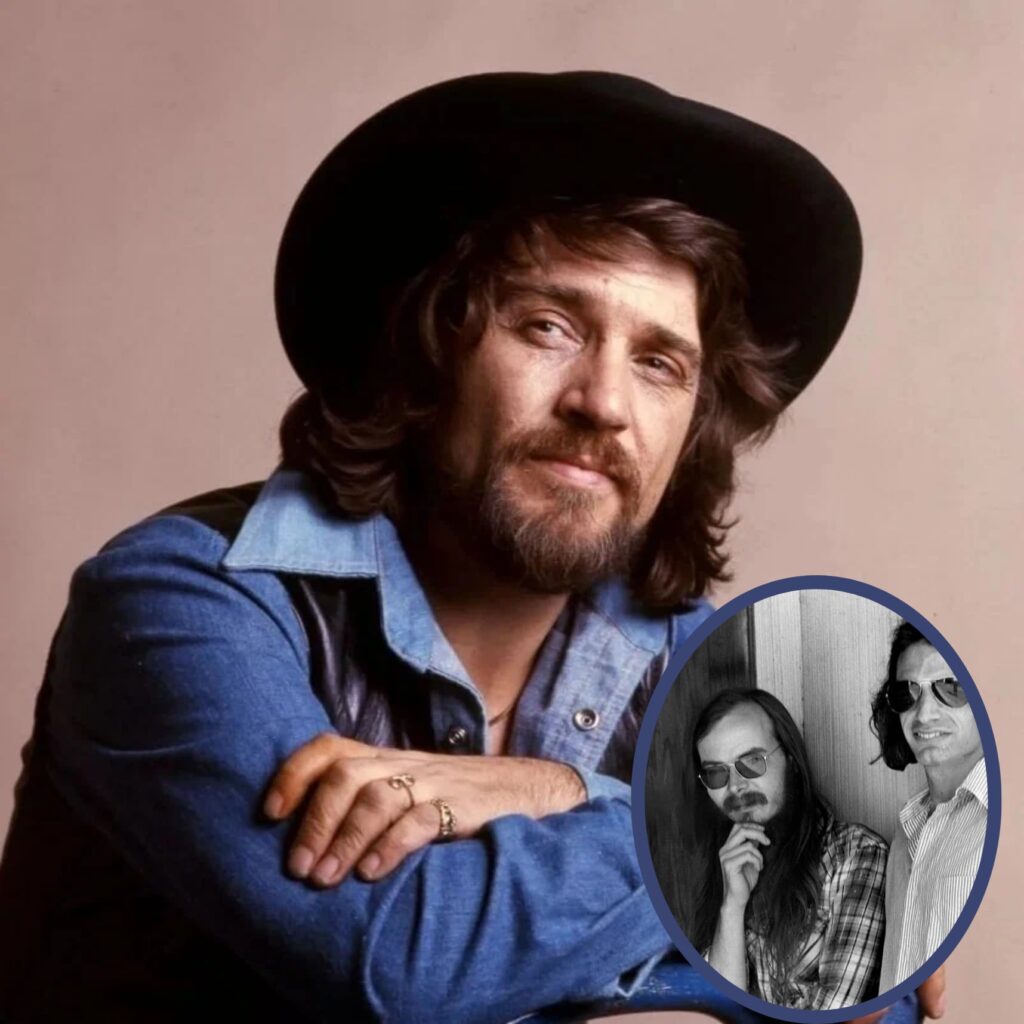
On Waylon Jennings’s 1980 album Music Man, his cover of “Do It Again” stands out as a bold convergence of two musical worlds that rarely meet so naturally. The song, originally written by Walter Becker and Donald Fagen for Steely Dan, never charted in its country incarnation, yet its presence on the album added a surprising depth to Waylon’s late seventies and early eighties creative streak. By the time he recorded Music Man, Waylon was already a towering figure of the outlaw movement, a man trusted for his grit, his truth telling, and his refusal to bend. Tackling a song as intricate and enigmatic as “Do It Again” was an artistic choice that revealed just how wide his musical curiosity ran.
What makes Waylon’s interpretation so compelling is how he translates the slippery, jazz inflected paranoia of the original into something earthier, more fatalistic. The bones of the song remain unmistakably Steely Dan, yet Waylon extracts a different essence from them. His version turns the tune into a dusty meditation on cycles of self destruction, a place where regret and resignation sit side by side. The arrangement shifts away from the urban sophistication of the 1972 recording and into the sonic territory Waylon inhabited so naturally: warm low end, slow burn rhythms, and a sense of wandering through life with a cigarette haze for company.
Lyrically, the song fits him in a way that feels almost uncanny. The story of a man caught in an endless loop of bad decisions and haunting temptations echoes the darker corners of Waylon’s own mythology. Yet instead of leaning into melodrama, he approaches the lyrics with a grounded, lived in honesty, as if the narrator is too tired to hide behind metaphor anymore. His signature baritone gives the words a weary gravity, suggesting a man who understands every mistake not as a moment of shock, but as part of a long, familiar pattern.
Placed within the context of Music Man, the track becomes a moment of introspection amid an album defined by charisma and confidence. Waylon had always possessed the rare ability to reinterpret songs without losing himself inside them, but “Do It Again” shows something more: a willingness to enter someone else’s emotional architecture and rebuild it in his own image. The haunting pulse of the original becomes a slow country heartbeat, steady and unpretentious.
In the end, Waylon Jennings’s “Do It Again” is not just a cover. It is a transformation, a quiet but potent reminder that great songs are living structures. In the hands of an outlaw philosopher, Steely Dan’s cynical labyrinth becomes a dusty road toward reckoning, where a man keeps walking even when he knows he might trip again.
 Great Songs