
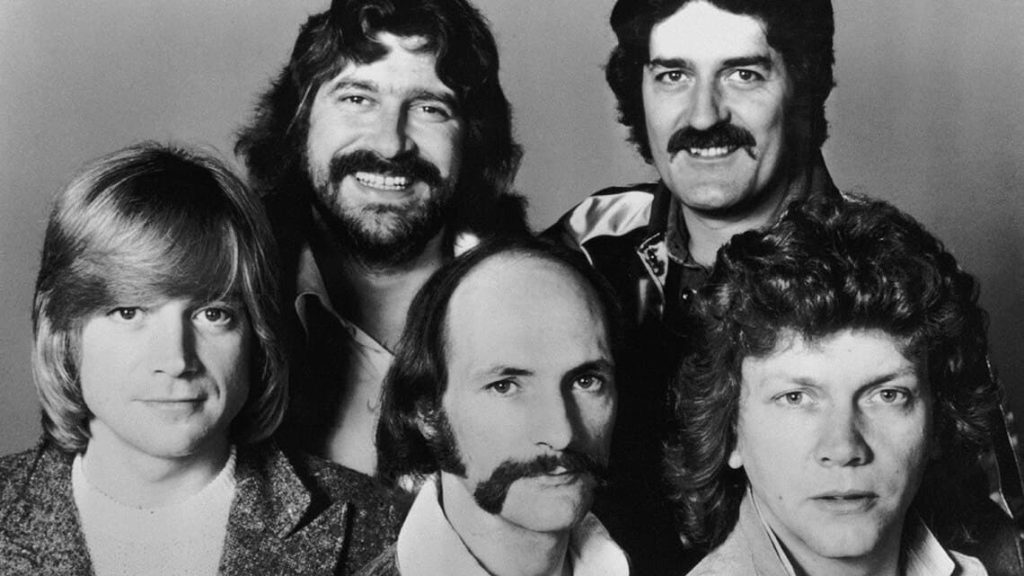
A Cry for Meaning Amid a World in Turmoil
When The Moody Blues released “Question” in April 1970, it surged onto the UK Singles Chart, peaking at an impressive number 2, while across the Atlantic, it reached number 21 on the Billboard Hot 100 later that year. For those who came of age in an era of unrest, this song—lifted from the album A Question of Balance—wasn’t just a hit; it was a mirror to the soul, reflecting the ache and urgency of a generation wrestling with war, love, and the search for truth. Its chart success was no fluke; it arrived as a clarion call when the world felt unmoored, and older listeners today can still feel the shiver of its opening chords, a sound that once spilled from crackling radios into rooms thick with cigarette smoke and hope.
The story behind “Question” is one of instinct and urgency, penned by Justin Hayward in a burst of raw emotion. Written in late 1969, it was born from two separate fragments Hayward had been carrying—one a furious strummed protest against the Vietnam War’s endless grind, the other a tender lament for a love slipping away. In a haze of frustration and longing, he fused them late one night at his Surrey flat, the words tumbling out as if the universe demanded they be heard. Recorded at Decca Studios in London, the band—Hayward, John Lodge, Mike Pinder, Ray Thomas, and Graeme Edge—wove it into a tapestry of contrasts: the galloping acoustic attack crashing into a lush, orchestral swell. For those who remember 1970, it’s the sound of youth standing at a crossroads—fists clenched against injustice, hearts open to fleeting dreams. The sessions weren’t without tension; the band was pushing to balance their symphonic roots with a rawer edge, and “Question” became their bridge, a testament to their evolution.
At its heart, “Question” is a plea—a desperate, soaring demand to understand why love falters and why humanity stumbles through cycles of chaos. “Why do we never get an answer / When we’re knocking at the door?” Hayward sings, his voice a blade cutting through the fog of disillusionment. It’s a question that haunted the late ‘60s and early ‘70s, when protests filled streets and answers felt like whispers in the wind. Yet beneath the rage lies a fragile hope—a lover’s vow to hold on, to find solace amid the storm. For older ears, it’s a bittersweet echo of days when every headline stung, yet every melody promised redemption. The song’s duality—its furious gallop softening into a fragile reverie—mirrors the lives we led: bold one moment, vulnerable the next, always seeking.
To hear “Question” now is to step back into a time when music was our torchlight, guiding us through shadows we couldn’t name. It’s the crackle of a needle on vinyl, the glow of a lava lamp casting patterns on a wall, the weight of a friend’s arm slung over your shoulder as you pondered what it all meant. For those who’ve carried it through decades, it’s a relic of resilience—a reminder of when we dared to ask, to feel, to fight. The Moody Blues didn’t just craft a song; they captured a moment, and for anyone who lived it, “Question” remains a voice from the past, still asking, still aching, still beautifully unanswered.