
The Innocence Lost: A Child’s Plea in a World Unseen
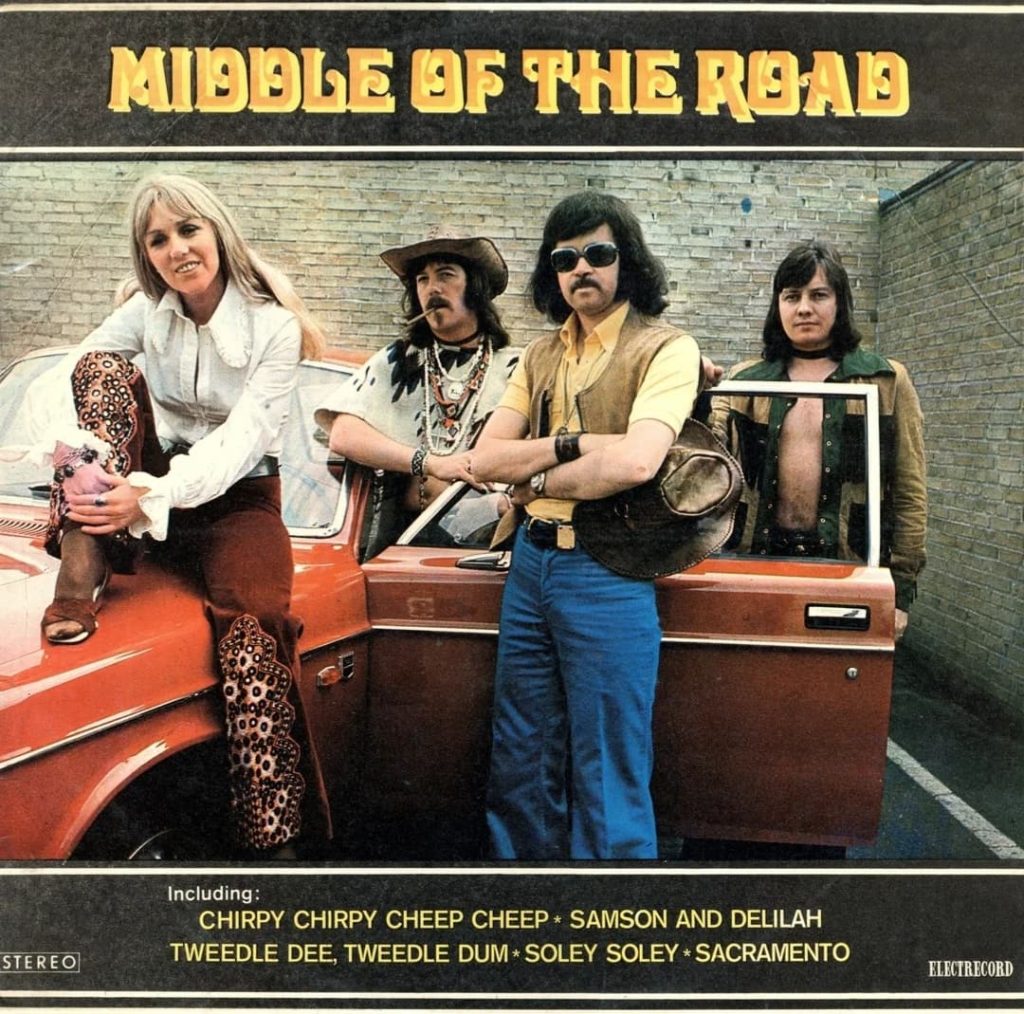
There are songs that, upon first listen, seem to possess an almost disarmingly simple charm, their melodies bright and their lyrics straightforward. Yet, beneath this seemingly guileless surface often lies a poignant depth, a message that, with the wisdom of years, reveals itself to be far more profound than initially perceived. Such is the enduring, if somewhat bittersweet, legacy of Middle of the Road‘s “Chirpy Chirpy Cheep Cheep,” a song that, for many who remember its pervasive presence, evokes a distinct blend of nostalgic warmth and a subtle, melancholic understanding of the world’s complexities. For those of us who recall its ubiquity on the airwaves, this track isn’t just a catchy tune; it’s a time capsule, embodying a particular moment in pop history and, perhaps, an innocent perspective that time inevitably alters.
Released in 1971, “Chirpy Chirpy Cheep Cheep” quickly became a global phenomenon, a testament to its undeniable earworm quality and its universal appeal. While it might not have made a significant splash on the main U.S. Billboard Hot 100, its success across Europe and beyond was nothing short of meteoric. It soared to number one in numerous countries, including the UK, Ireland, Italy, Spain, and Australia, dominating the charts for weeks on end. Its widespread popularity meant that even if it wasn’t a domestic American chart-topper, its infectious melody and distinctive vocal hook permeated popular culture, reaching ears across continents and leaving an indelible mark on a generation. Its success wasn’t merely about sales figures; it was about its sheer omnipresence, becoming a ubiquitous sound of early 1970s pop, particularly for younger audiences and families.
The story behind “Chirpy Chirpy Cheep Cheep” is less about grand artistic statements and more about serendipity and the power of a simple, compelling idea. Written by Lally Stott, an Italian-born British singer-songwriter, the song was initially recorded by him before it found its true global fame with Middle of the Road. The band, a Scottish pop group, infused it with their distinct vocal harmonies and bright, upbeat instrumentation, transforming it into the chart-topping sensation it became. At its heart, the song is sung from the perspective of a child, seemingly bewildered by the sudden disappearance of their parents. The “chirpy chirpy cheep cheep” refrain mimics the sound of baby birds calling for their absent mother, a metaphor for the child’s desperate, innocent cries for their missing guardians.
Imagine the lyrical narrative: a child wakes to an empty house, the familiar sounds of their parents replaced by the silent absence. They call out, their voices small and vulnerable, punctuated only by the imagined sounds of birds echoing their own confused pleas. The repeated question, “Where’s your mama gone?” resonates with a profound, almost primal fear of abandonment, a fear that, as adults, we might rationalize or intellectualize, but as children, feels utterly devastating. The bright, almost cheerful melody of the song forms a stark, unsettling contrast to the inherent sadness of its lyrics. This juxtaposition is what gives the song its enduring power and its complex emotional resonance for older listeners. It’s the innocence of the child’s perspective, unable to fully comprehend the reasons for absence, that strikes a particularly poignant chord.
This seemingly lighthearted pop song, for those who grew up with it, now carries an unexpected weight. It reminds us of a time when the world seemed simpler, yet simultaneously highlights the raw, unfiltered emotions of childhood, particularly the profound vulnerability associated with separation. For older readers, “Chirpy Chirpy Cheep Cheep” might evoke memories of their own childhood anxieties, or perhaps the worries they felt as parents watching their own children navigate their early fears. It’s a song that, with the passage of time, transforms from a catchy tune into a subtle, melancholic reflection on the fleeting nature of innocence and the inevitable discovery of life’s more difficult truths. The “chirping” becomes not just a simple sound, but the enduring echo of a child’s innocent hope in the face of an uncertain world, a hope that, even as adults, we still sometimes cling to.