
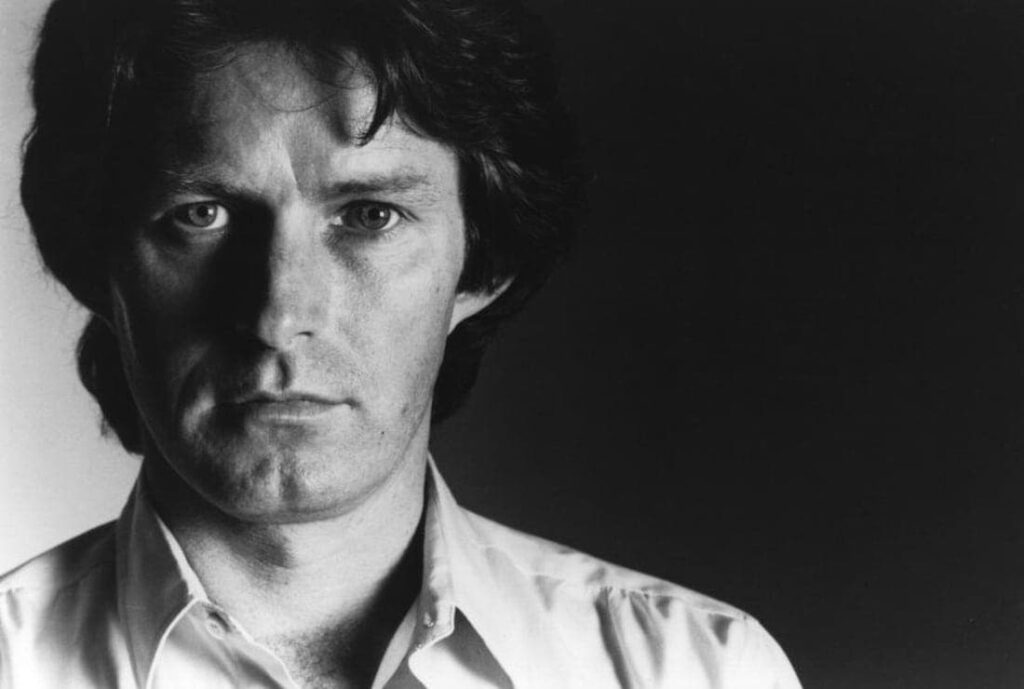
A poignant reflection on lost idealism and the complexities of adulthood, “The End of the Innocence” marked a mature and introspective turn in Don Henley’s celebrated solo career.
Released in June 1989 as the title track and lead single from his third solo album of the same name, “The End of the Innocence” became an instant classic, resonating deeply with a generation grappling with the realities of a changing world. While it reached a respectable number eight on the Billboard Hot 100, its true impact lay in its lyrical depth and the evocative musical landscape crafted in collaboration with Bruce Hornsby, who also lent his signature piano work to the track. Coming five years after his successful Building the Perfect Beast, this song signaled a more contemplative and perhaps even disillusioned Henley, trading some of the sharper edges for a more nuanced exploration of societal and personal shifts.
The story behind “The End of the Innocence” is a testament to the power of musical collaboration. Don Henley, known for his sharp songwriting and keen observations, teamed up with Bruce Hornsby, whose distinctive piano style and thoughtful compositions provided the perfect backdrop for Henley’s reflective lyrics. Hornsby had already achieved considerable success with his own music, including the hit “The Way It Is,” and his contribution brought a melancholic yet beautiful foundation to the song. Henley’s lyrics, in turn, built upon this foundation, crafting a narrative that touched upon the fading ideals of youth and the often harsh realities of adulthood in a rapidly evolving social and political landscape.
The meaning of “The End of the Innocence” is a multi-layered exploration of disillusionment, the loss of youthful idealism, and the search for solace in a world that often falls short of its promises. The opening lines, “Remember when the days were long and rolled beneath a deep blue sky,” immediately evoke a sense of nostalgic yearning for a simpler, more carefree past. However, this idyllic memory is quickly juxtaposed with the harsh realities of the present: “But ‘happily ever after’ fails, and we’ve been poisoned by these fairy tales.” The song touches upon themes of broken promises, societal decay (“They’re beating plowshares into swords for this tired old man that we elected king,” a pointed reference to the political climate of the time), and the struggle to maintain hope amidst cynicism. Yet, within this sense of loss, there’s also a yearning for connection and a search for a place of refuge (“I know a place where we can go to wash away this sin”). The recurring chorus, “Offer up your best defense, but this is the end, this is the end of the innocence,” serves as a poignant acknowledgment of this loss, a bittersweet farewell to a more naive time.
For those who came of age in the late 1980s, “The End of the Innocence” likely resonates with a sense of shared experience – the dawning realization that the world wasn’t always as simple or as just as childhood dreams might have suggested. Henley’s mature and introspective delivery, combined with Hornsby’s evocative piano melody and a beautiful saxophone solo by Wayne Shorter, creates a powerful and enduring listening experience. The song isn’t simply a lament for lost innocence; it’s an acknowledgment of the complexities of life and a quiet call to find meaning and connection in a world that has inevitably changed. It stands as a sophisticated and deeply felt reflection on the passage of time and the challenges of navigating adulthood with a sense of both realism and a lingering hope for something better.