
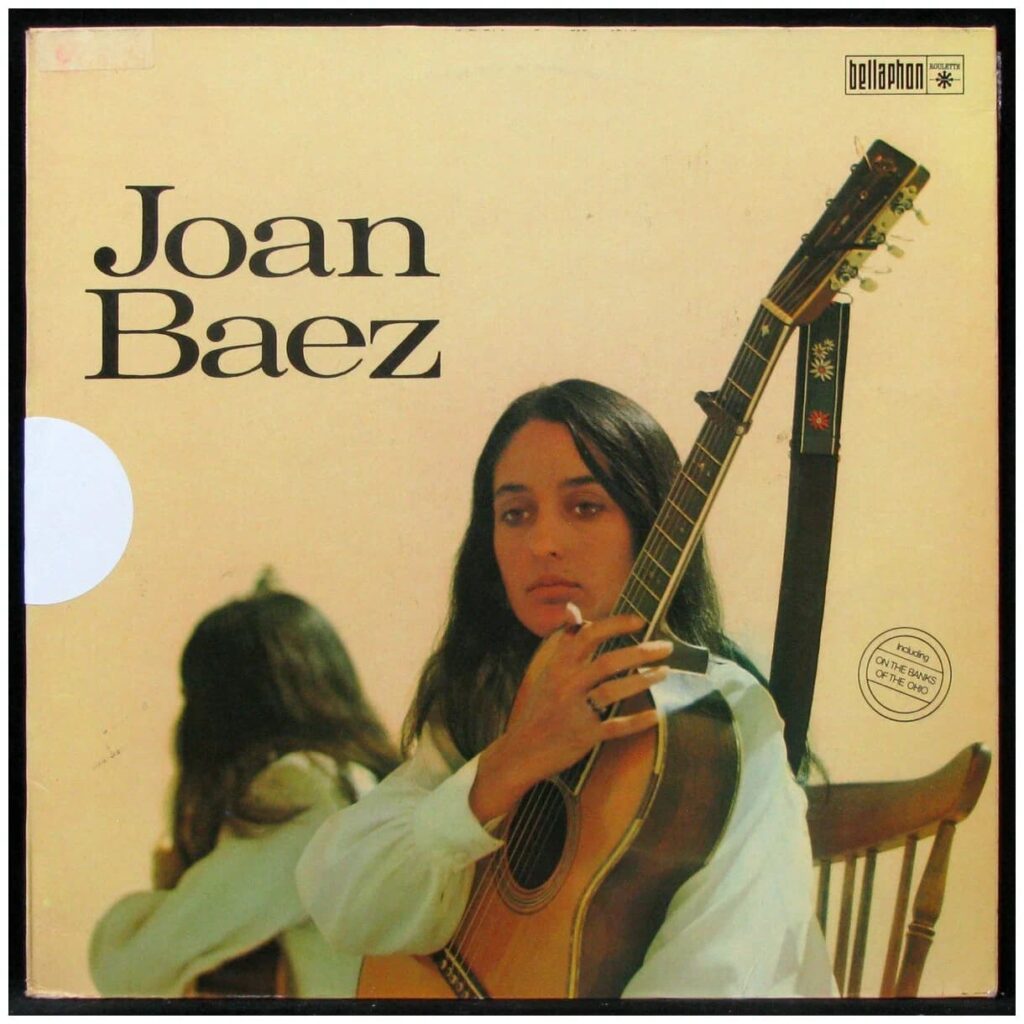
“Here’s to You”: Joan Baez’s Poignant Ode to Injustice and Enduring Spirit
Ah, the early 1970s. For many of us, this was a time of heightened political awareness, fervent protest, and a deep yearning for justice in a world grappling with profound social issues. Amidst the rising tide of rock and pop, Joan Baez stood as an unwavering voice of conscience, her crystalline soprano resonating with moral clarity and a steadfast commitment to human rights. While renowned for her interpretations of traditional folk songs and her protest anthems, a particularly moving and historically significant piece that she lent her voice to is the hauntingly beautiful “Here’s to You.”
“Here’s to You” was released in 1971 as a central component of the soundtrack for the Italian film ‘Sacco e Vanzetti’, directed by Giuliano Montaldo. The song was a powerful collaboration between Baez, who penned the evocative English lyrics, and the legendary Italian composer Ennio Morricone, who crafted its distinctive and instantly recognizable melody. While not a conventional pop chart hit in the US or UK, its impact was profound and far-reaching, particularly in Europe where the film gained significant traction, and among activists and advocates for social justice globally. The song transcended typical chart metrics to become a powerful anthem, sung in demonstrations and featured in other media, gaining an enduring legacy as a symbol of protest against injustice. For those of us who engaged with the political and social movements of the era, “Here’s to You” was more than just a song; it was a rallying cry, a lament, and a reminder of past struggles that echoed in contemporary times.
The story behind “Here’s to You” is rooted in one of the most controversial and tragic legal cases in American history: the trial and execution of Nicola Sacco and Bartolomeo Vanzetti. These two Italian immigrant anarchists were accused of robbery and murder in Massachusetts in 1920. Despite widespread international protests and considerable doubt about their guilt, they were convicted and executed in 1927. The case became a global symbol of judicial injustice, xenophobia, and political persecution, as many believed their conviction was based more on their anarchist beliefs and immigrant status than on concrete evidence.
Joan Baez, a lifelong activist and advocate for the marginalized, was deeply moved by the story of Sacco and Vanzetti. Her lyrics for “Here’s to You” directly quote a powerful statement attributed to Vanzetti by a reporter shortly before his execution: “The last and final moment is ours. That agony is your triumph.” These lines encapsulate the song’s profound message, transforming a moment of despair into a defiant act of martyrdom and a victory for their ideals. Morricone’s haunting, almost cinematic music perfectly complements Baez’s stark and direct words, creating an atmosphere of both sorrow and steely resolve.
A Tribute to Martyred Ideals and Enduring Hope
At its core, “Here’s to You” is a solemn yet defiant tribute to those who suffer injustice and are persecuted for their beliefs, even to the point of death. It transforms the agony of wrongful execution into a “triumph” – a powerful legacy that inspires others to continue the fight for tolerance and justice. The song highlights the idea that even in the face of overwhelming odds and ultimate sacrifice, the spirit of resistance and the quest for a more just world can endure through the memory of those who fell. It speaks to the universal struggle against oppression and the enduring hope that their suffering was not in vain. For older, well-informed readers, this song resonates with a profound historical weight, recalling a time when the lines between justice and prejudice were blurred, and the courage to stand for one’s convictions often came at an unbearable cost. It’s a powerful reminder that the fight for human rights is continuous, and that the voices of the past continue to echo, urging us to remember and learn.
Listening to “Here’s to You” today, one is immediately struck by its minimalist yet immensely powerful arrangement. Morricone’s signature orchestral swells and the almost hypnotic rhythm create a somber, reflective mood. But it is Joan Baez’s voice that truly elevates the track. Her delivery is restrained, yet imbued with a profound emotional depth and quiet dignity. She doesn’t belt out the lyrics; she intones them, as if delivering a eulogy and a solemn promise simultaneously. The simple, repetitive structure of the lyrics (“Here’s to you, Nicola and Bart / Rest forever here in our hearts / The last and final moment is yours / That agony is your triumph”) makes them intensely memorable and reinforces the song’s almost hymn-like quality. “Here’s to You” isn’t just a soundtrack piece; it’s a timeless folk anthem, a profound statement against injustice, and a testament to Joan Baez’s enduring legacy as a fearless champion of humanity. It continues to whisper its powerful message, inviting us to reflect on history and honor those who sacrificed for a better tomorrow.