
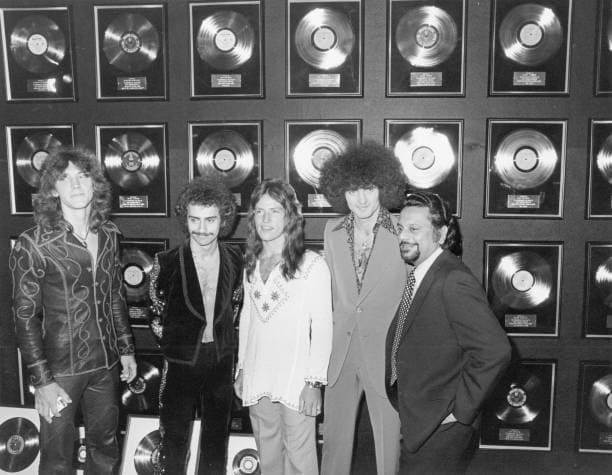
A Bleak and Heartbreaking Confession of Isolation, Revealing the Profound Emptiness Behind the Arena Rock Glory.
The year 1973 marked the absolute commercial zenith for Grand Funk Railroad. With their bold shift into a more polished, radio-friendly sound, the release of the album We’re an American Band was a colossal success, storming the charts to hit number 2 on the Billboard 200. This album was a dramatic statement of power and confidence, featuring their first-ever chart-topping single, the iconic title track. Yet, deep within this celebration of American rock excess, there lies a stark, powerful counterpoint, a moment of profound vulnerability that shatters the image of stadium invincibility. That song is “Loneliest Rider.” It was never released as a single and therefore never charted, but its power is derived from its dramatic, heartbreaking role as the internal soundtrack to their relentless, isolating fame.
The story behind “Loneliest Rider” is the emotional drama of extreme isolation. The entire album was recorded in Miami during a brief break from a non-stop touring schedule, a period where the band members were physically together but emotionally adrift in the vortex of fame. This song is the raw, unadulterated confession of Mark Farner, the chief songwriter, detailing the immense psychological cost of living life in the constant spotlight. The “Loneliest Rider” is the protagonist, not a literal cowboy or biker, but a metaphor for the rock star isolated by the barriers of celebrity, perpetually moving but never truly connecting. The drama lies in the realization that achieving the ultimate dream of rock stardom had only amplified the feeling of profound, soul-crushing loneliness. The music, in this context, becomes an anguished cry for connection from a man surrounded by millions of adoring fans, yet feeling completely unseen.
The meaning of the song is a direct confrontation with the lie of celebrity happiness. It speaks to the universal ache of finding success, only to discover it doesn’t solve the core human problem of being alone. The lyrics paint a devastating portrait of emotional fatigue, the narrator’s exhaustion making him unable to even lift his weary head. The music is a masterful piece of dramatic contrast to the album’s title track. While “We’re an American Band” is all celebratory funk, “Loneliest Rider” is a slow, methodical, almost mournful blues-rock ballad. The track is built around a heavy, deliberate tempo that feels like the slow, painful march of time on the road. Farner’s vocal delivery is stunningly sincere, stripped of his usual stage swagger, revealing a quiet, almost defeated tenderness. The heavy blues guitar solo is not a triumphant riff; it’s a long, sustained wail of sorrow, acting as the dramatic centerpiece that embodies the depth of his isolation.
For those of us who lived and breathed the music of the 1970s, “Loneliest Rider” is a truly nostalgic and essential piece of the Grand Funk puzzle. It’s a testament to the emotional complexity beneath the sheer volume of hard rock. The song stands as a timeless, deeply emotional, and profoundly dramatic piece of musical truth, a devastating reminder that no amount of fame, money, or adulation can shield the human heart from the cold reality of solitude.