
A Soaring Anthem of Hard Rock Devotion and the Power of Shared Passion, Forged in the Fiery Crucible of a Band’s Internal Turmoil.
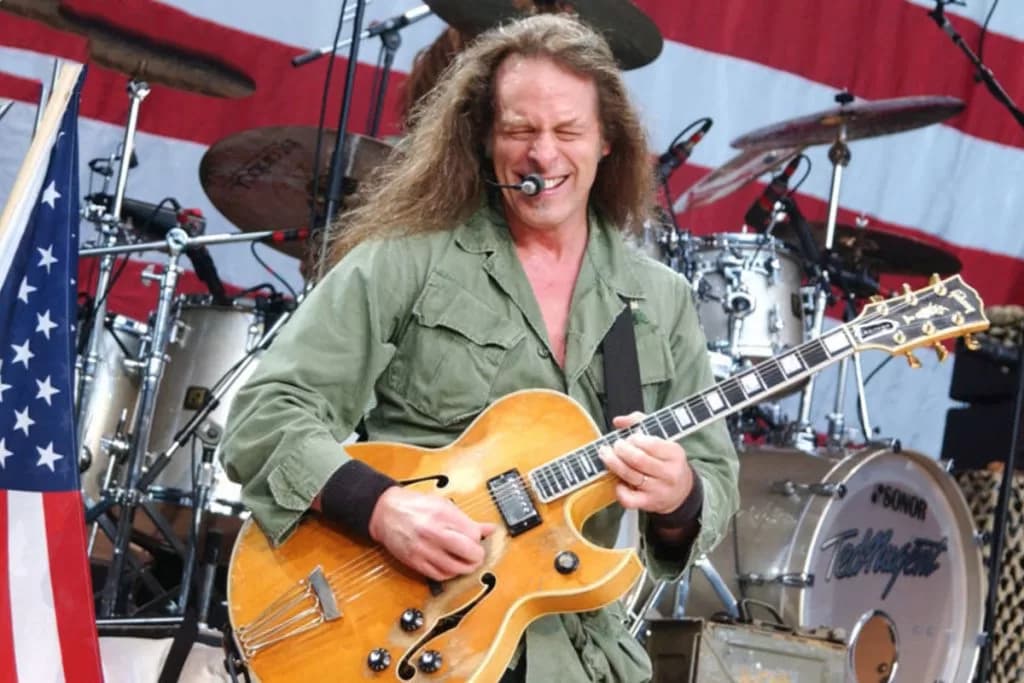
To those of us who came of age with the roar of a Gibson Byrdland slicing through the air, the year 1976 was a watershed moment defined by pure, unapologetic hard rock. And leading the charge was the Motor City Madman, Ted Nugent, whose second solo album, Free-for-All, provided the soundtrack to countless youthful indiscretions. This record, a true testament to the thunderous vitality of the era, was a massive commercial success, surging up the charts to a peak position of No. 24 on the US Billboard 200 and achieving 2x Platinum certification in the US, while also hitting No. 33 on the UK Albums Chart.
Nestled amidst the high-voltage chaos of tracks like the title cut and “Dog Eat Dog” lies the album’s emotional and structural anchor, “Together.” A sprawling, slow-burn epic that clocks in at nearly six minutes, “Together” was never released as a single and therefore has no individual chart history, making it one of those glorious, essential deep cuts that only the true faithful will remember with genuine nostalgic warmth. Yet, its story is intimately tied to one of the most dramatic behind-the-scenes shake-ups in Nugent’s career.
The dramatic backstory centers on the clash between the album’s pure rock aggression and the need for a versatile lead vocalist. Ted Nugent himself, renowned for his incendiary guitar work, handled lead vocals on the first solo album, but by the time Free-for-All was being recorded, tensions had flared with his established frontman and rhythm guitarist, Derek St. Holmes, who ultimately left the band for a period. Into this sudden void stepped a name that would soon become legendary in his own right: a singer then primarily known for musical theatre—the one and only Meat Loaf. Yes, the soaring, operatic baritone that would soon define Bat Out of Hell is the very voice that graces “Together” (along with four other tracks on the album), giving this hard rock ballad a unique, powerful theatricality that sets it apart. The song is a living, breathing artifact of this brief, bizarre, and brilliant collaboration.
The meaning of “Together” transcends its simple title, evolving beyond a mere love song into a declaration of commitment to a shared existence—or perhaps, a deeper commitment to a shared rock and roll passion. With Meat Loaf’s powerful, pleading delivery carrying the melody, the song explores the theme of two people who are different in every way but are bonded by an essential, unbreakable need for connection. The narrator is not just asking for a relationship; he’s laying his entire vulnerable self at the door, offering a shared future—a life where two disparate spirits can truly become one. The lyrics resonate with a powerful, almost desperate sincerity that contrasts sharply with the “Motor City Madman” persona, allowing a glimpse of the yearning for permanence beneath the savage rock veneer. The repeated, climactic pledge, building up with every measure and accentuated by Nugent’s searing, emotional guitar solo—a moment of soaring, melodic beauty that proves his talent runs deeper than just raw noise—is a cathartic release.
For those of us who first heard it echoing from a cheap stereo or a late-night FM broadcast, “Together” is more than just a song; it’s a time capsule. It reminds us that even in the high-octane, guitar-shredding world of 1970s hard rock, the most enduring themes were often the simplest: devotion, longing, and the profound, electric thrill of finding someone—or something—worth fighting for. It is the heart that beats fiercely beneath the Free-for-All facade.