
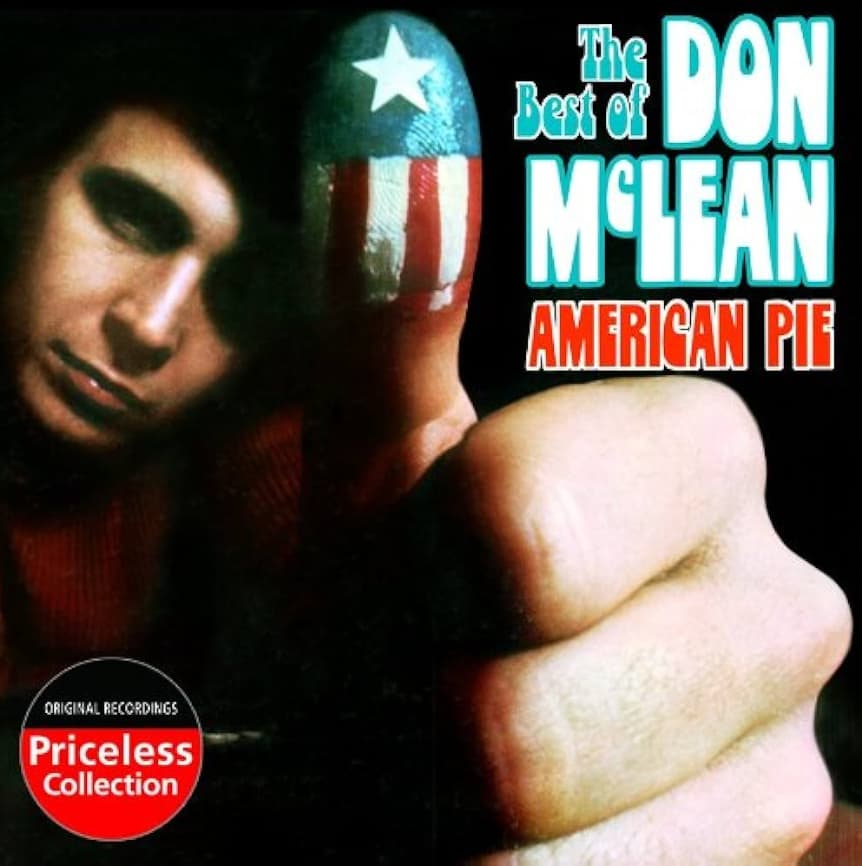
“American Pie”: An Epic Ballad Lamenting the Death of Innocence and the Transformative Shifts in American Culture.
For those of us who lived through the tumultuous, hopeful, and ultimately complex decades following the mid-20th century, certain songs transcend mere entertainment to become cultural touchstones, encapsulating the very zeitgeist of an era. Don McLean’s magnum opus, “American Pie,” is precisely one such monumental creation. Released in 1971 on his album of the same name, this sprawling, eight-and-a-half-minute folk-rock epic is far more than a catchy tune; it is a meticulously crafted, deeply symbolic narrative, a musical elegy for the loss of American innocence and the seismic shifts that reshaped its social and musical landscape. For older, well-informed readers, it serves as a profound historical marker, triggering a cascade of reflections on a bygone era and the indelible impact of its defining moments.
Upon its release, “American Pie” was an immediate and overwhelming success, defying its extended length and complex lyrical structure to become a global phenomenon. It soared to number 1 on the Billboard Hot 100 chart in the United States in January 1972, holding the top spot for four consecutive weeks. The single also achieved significant international success, reaching number 2 in the UK Singles Chart and charting highly across Canada, Australia, and parts of Europe. The accompanying album, American Pie, was equally successful, peaking at number 1 on the Billboard 200 album chart. This chart dominance was a testament to the song’s remarkable ability to resonate with a vast audience, who found themselves captivated by its enigmatic lyrics and powerful emotional core. It wasn’t just a song you heard; it was a song you discussed, debated, and pondered, often for hours on end, trying to decipher its layered meanings.
The genesis of “American Pie” is rooted in a deeply personal and culturally significant event: the tragic plane crash on February 3, 1959, that claimed the lives of rock and roll pioneers Buddy Holly, Ritchie Valens, and J.P. “The Big Bopper” Richardson. McLean, then a young newspaper delivery boy, learned of the crash from headlines and later reflected that it marked a profound turning point for him personally and for the optimism of early rock and roll. He famously referred to this date as “The Day the Music Died,” a phrase that has since entered the popular lexicon.
However, the song’s meaning extends far beyond this single event. Over its many verses, “American Pie” weaves a rich tapestry of American cultural history from the mid-1950s through the late 1960s. McLean employs a complex web of metaphors, allusions, and thinly veiled references to touch upon key figures, events, and musical styles of the era. He charts the evolution of rock and roll from its innocent beginnings (Buddy Holly) through the rise of Elvis Presley (“the King”), the folk revival (Bob Dylan as “the jester”), the British Invasion (The Beatles), and the counterculture movements, ultimately lamenting what he perceived as a loss of idealism and authenticity. Each verse unpacks a different chapter, from dance halls to protest movements, from teenage dreams to disillusioned realities.
For older readers, “American Pie” is a powerful mnemonic device, an intricate mosaic that conjures a wealth of memories and emotions. It evokes the innocence of the 1950s, the rebellious energy of the ’60s, the hopes, fears, and eventual disillusionment that many experienced as the decade drew to a close. The song is a lament for lost heroes, failed revolutions, and the fading of a dream. It asks profound questions about where America went, and what became of its “pie” – perhaps a metaphor for the American dream itself. The bittersweet melody and McLean’s evocative storytelling invite a deep, nostalgic reflection on personal histories intertwined with national narratives. It remains a timeless, endlessly fascinating piece of music, a sprawling lyrical canvas that continues to spark discussion and remind us of the complex journey of a nation and its soundtrack.
 Oldies Songs