
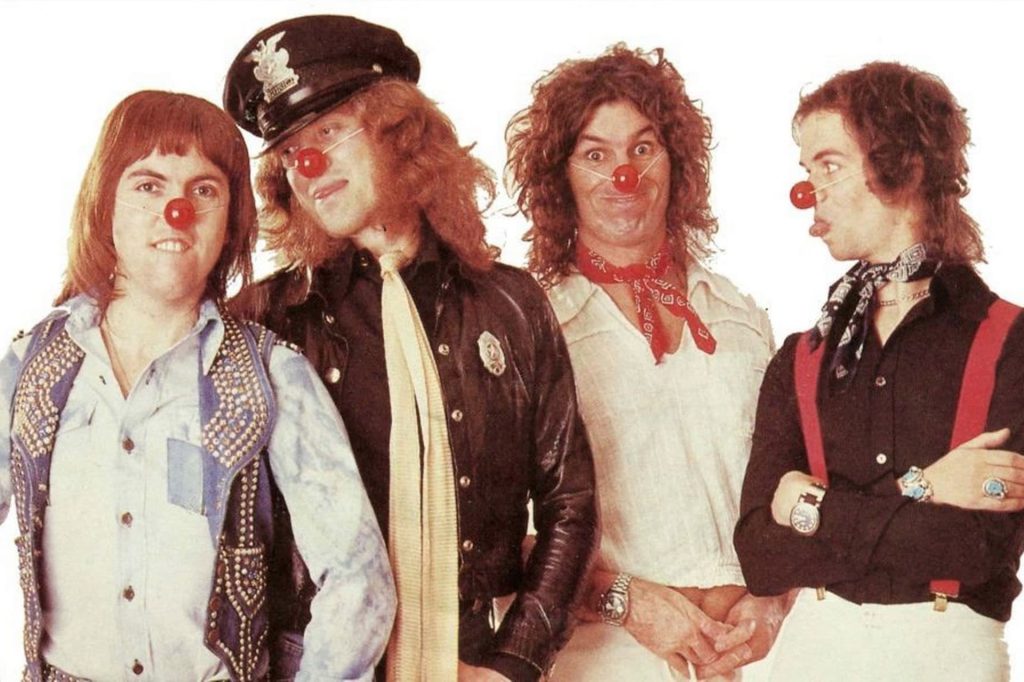
A Theatrical Farewell to a Wild Encounter, a Glorious Glam-Rock Chronicle of a Public Row in a Foreign Land.
In the early 1970s, as the air crackled with the rebellious energy of glam rock, a band of working-class heroes from the Black Country stomped onto the scene, bringing a raw, unapologetic swagger that set them apart. That band was Slade, and their music was a powerful, no-nonsense tonic for the times. While their peers were often shrouded in androgynous mystique, Slade was all about pure, unadulterated rock and roll, and their 1972 album Slayed? was a testament to that ethos. Tucked within this iconic record, which reached number one on the UK Albums Chart and became a worldwide sensation, was a track that captured a real-life drama with the kind of vivid, chaotic energy that only Slade could deliver. That song was “Gudbuy T’Jane.” Released as a single, it was a smash hit, thundering its way to a peak of number two on the UK Singles Chart. It even found a surprising, though modest, audience in the United States, peaking at number 68 on the Billboard Hot 100, a rare victory for a British glam-rock act at the time.
The story behind “Gudbuy T’Jane” is a piece of rock and roll legend, a true tale of observing chaos and turning it into art. The year was 1972, and Slade was on their first American tour, a world away from the gritty, familiar pubs of Britain. The band, along with their manager Chas Chandler, found themselves in Los Angeles. The drama unfolded right before their eyes when they witnessed a heated, very public argument between a man and a woman in the hotel lobby. The woman, a striking and dramatic figure, was making a theatrical exit, leaving her male companion in a state of emotional turmoil. This very real, raw scene of human conflict—a volatile, tearful, and ultimately theatrical breakup—became the core inspiration for the song. The band, with their keen eye for a great story, turned this fleeting moment into a three-minute rock epic.
The lyrics, with their trademark phonetic spelling, are not a deep philosophical statement but a masterful piece of observational storytelling. They are a direct, witty chronicle of what the band members saw and felt. Noddy Holder’s inimitable vocal delivery—a mixture of a full-throated roar and a guttural, joyful snarl—brings the scene to life. He sings from the perspective of a slightly bewildered but thoroughly entertained observer, capturing the sheer spectacle of the moment. The music itself is a character, too. The thumping, driving rhythm section and the insistent, blues-infused guitar riff by Dave Hill mirror the emotional turmoil and the frantic energy of the scene. It’s a sonic whirlwind that perfectly encapsulates the drama, the spectacle, and the glorious absurdity of human conflict. The song doesn’t judge; it simply chronicles a moment of high drama and transforms it into a joyous, singalong anthem.
For those of us who came of age with this music, “Gudbuy T’Jane” is a time capsule, a powerful reminder of an era when rock music was about raw emotion and big, uncomplicated fun. It evokes memories of air-guitar sessions in the living room, of watching the band’s chaotic, unpolished performances on Top of the Pops, and of a time when music felt dangerous and alive. It is a song that tells a story, not through delicate metaphors, but through a loud, proud, and beautifully messy rock and roll spectacle. “Gudbuy T’Jane” stands as a testament to Slade’s unique ability to take a slice of everyday life and turn it into something utterly unforgettable. It’s not just a song; it’s a memory, a moment of fleeting drama forever preserved in the glorious annals of glam rock.