
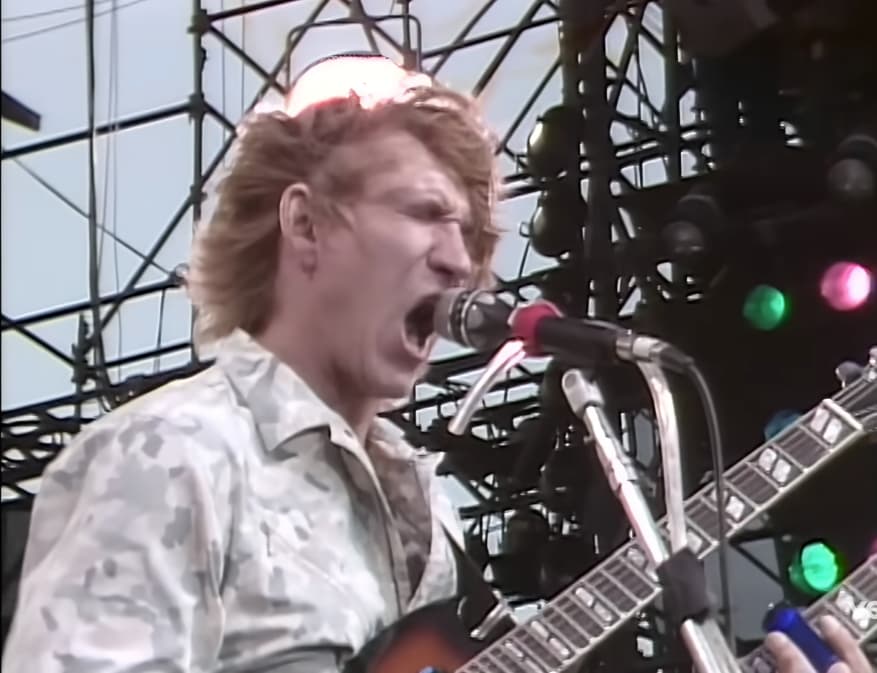
Joe Walsh Reclaims a Rock Classic with “Rocky Mountain Way” in a Powerful Live Performance
The live performance of “Rocky Mountain Way” captured in this official video stands as a vivid reminder of why Joe Walsh remains one of American rock’s most distinctive and influential guitar voices. Far more than a routine rendition of a familiar hit, this performance showcases Walsh reconnecting with a song that helped define both his solo career and the rugged, guitar-driven sound of early 1970s American rock.
Originally released in 1973 on Walsh’s second solo album The Smoker You Drink, the Player You Get, “Rocky Mountain Way” quickly became his signature track, blending a heavy mid-tempo groove with one of the era’s most recognizable talk-box guitar lines. In this live setting, decades later, the song loses none of its power. If anything, it gains weight. Walsh approaches the material with restraint and confidence, allowing the groove to breathe rather than forcing nostalgia.
Vocally, Walsh delivers the song with a weathered ease that suits its themes of escape, independence, and clarity found away from chaos. His phrasing is relaxed but intentional, reflecting an artist who no longer needs to prove anything to the audience. Instead, the focus rests squarely on feel, timing, and tone, all hallmarks of Walsh’s playing since his earliest days with the James Gang.
The guitar work remains the performance’s defining feature. Walsh’s tone is sharp yet controlled, and his use of space demonstrates a maturity often missing from modern live rock performances. The iconic talk-box section is executed with precision, drawing a strong audience response without overshadowing the song’s core groove. Rather than embellishing excessively, Walsh allows the riff to carry the moment, reinforcing why it became a cornerstone of classic rock radio in the first place.
Equally important is the band’s tight, unflashy support. The rhythm section locks into a steady, driving pulse, giving Walsh the freedom to stretch slightly while never losing momentum. The result is a performance that feels grounded and authentic, rooted in live musicianship rather than spectacle.
This live version of “Rocky Mountain Way” serves not only as a celebration of a classic song, but also as a statement of longevity. Joe Walsh proves that the essence of rock and roll is not tied to youth, volume, or excess, but to conviction, groove, and identity. For longtime fans, it is a reaffirmation of Walsh’s legacy. For newer listeners, it is an invitation to understand why this song, and this artist, continue to endure.