
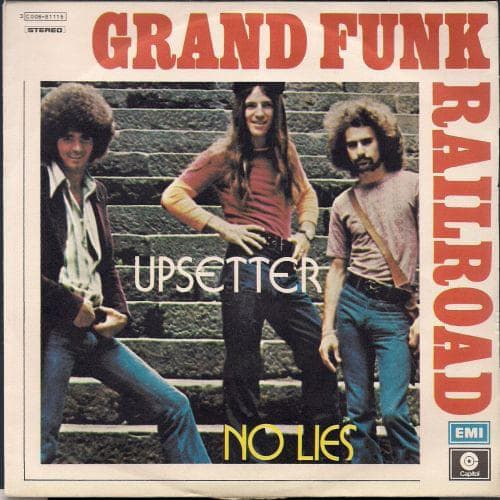
A Defiant and Gritty Anthem of Retaliation, a Working Man’s Musical Middle Finger to the Hating Critics.
In 1971, Grand Funk Railroad was an unstoppable force, a band that had achieved a kind of commercial success that was baffling to the music establishment. They sold out stadiums, moved millions of albums, and commanded a loyal, almost fanatical, following. Yet, despite their monumental success, the critics hated them. They were dismissed as crude, simple, and unmusical, a “people’s band” with no artistic merit. The feud between Grand Funk’s hard-rocking, no-frills style and the snobbish, intellectual music press was a long-running drama, and it reached a powerful climax on their iconic album E Pluribus Funk. This record, which famously came in a round sleeve, was a massive hit, soaring to number five on the Billboard 200. Tucked within its raw, explosive tracks was a song that served as the band’s definitive response to their detractors. That song was “Upsetter.” Never released as a single, its power lay not in chart position, but in its defiant, emotional honesty.
The story behind “Upsetter” is a classic tale of the underdog fighting back. For years, the band, particularly lead singer and songwriter Mark Farner, had been reading scathing reviews that not only dismissed their music but seemed to mock their very existence. The critics called them “incompetent” and “talentless,” missing the point entirely that Grand Funk was never meant to be a band for the critics. They were a band for the people, for the kids in industrial towns who wanted a sound that was as raw and real as their lives. The song is a direct, confrontational response to this relentless criticism, a moment of theatrical retaliation. It’s a powerful monologue from a man who is tired of being told he is not good enough, a man who knows his worth lies not in a critic’s words but in the thunderous roar of a sold-out stadium.
The lyrical drama of “Upsetter” is delivered with a kind of defiant pride. Lyrics like “People keep on telling me I don’t know how to play” and “People keep on telling me I’ll never have my day” are not just lines; they are direct quotes from their reviews, thrown back in the faces of their accusers. The song is a boast, a challenge, and a rejection of the establishment’s judgment. Mark Farner’s signature guttural, full-throated vocal delivery adds a layer of raw, emotional fury that makes the song feel incredibly personal. The music itself is a character in this drama. It’s a relentless, powerful rhythm section that feels like a punch to the gut, a heavy, driving guitar riff, and a simple, direct structure that proves they were unafraid to embrace the very “crudeness” they were criticized for. They weren’t trying to impress anyone; they were simply being themselves, and in doing so, they created a powerful and enduring piece of music.
For those of us who came of age with this music, “Upsetter” is more than a song; it’s a testament to the band’s resilience and their unwavering connection to their fans. It’s a nostalgic reminder of an era when a band could succeed by sheer force of will and a direct, emotional honesty that bypassed the critics entirely. It’s a song that proves that the most powerful form of protest isn’t always a chant or a sign, but a raw, unapologetic rock and roll anthem. The song endures because the emotion it portrays—the need to stand up for yourself and your art—is timeless. It remains a deeply human and beautifully rebellious piece of hard rock history, a perfect document of the drama that played out between an artist and the establishment.